98 audiobooks? How heavy are they?

If I told you that I have 98 audiobooks in my Audible account, you would most likely drop off your seat. If I told you that I nearly weigh as much too, you then, I guess, would uncomfortably displace yourself in your armchair trying to find a suitable position to hold the ground to absorb and digest the news. You then would most likely predict that since Audible compresses its files rather nicely, I do not feel the discomfort around the amount of listening items I accumulated over the years, but I do feel it when it comes to the weight I have gained. Here compression comes slowly and with much more effort, so it seems.

The pressure to talk about weight and obesity in society is huge, especially if you are a person who is suffering from it and no, I do not think it is a sign of great maturity to talk about it without boundaries. In fact, in my opinion, talking about obesity can exacerbate the problem. How can I explain it? It’s a little bit like talking about your ex or a job interview that went wrong or sensitivities that we sense other people possess and that have not been fully absorbed or as Matt Kay from The Centre of Healing in Australia would call them, they could be small traumas or undigested life experiences. Some topics, simply, are no go zones if they are not handled with care by a specialist because they are other people’s psychological fields and in all honesty we should not be going there if we are not invited and/or we are not sure if we could handle the topic aptly.

And I can hear some people saying: ‘But this is all I want to talk to her about?’. Then I would ask: Why? I have just told you that I have 98 audiobooks on my Audible, why don’t you want to talk about that?

A skilled interviewer puts an interviewee in a good light if the aim of the interviewer is to strengthen the interviewee. What if the aim is the opposite? How would you make a person feel less able?

Conversations have intentions.

What’s the one behind the topic of obesity? Intentions vary, in my opinion, and I am not quite happy to be at the receiving end of that variety.

That said, if you want to be a friend, a gentleman or simply be perceived as a cultured person, what would it mean to handle the topic well? I can’t speak for all, but I know what I would be happy with in this situation.

1. Figure out what the person wants to talk about.

2. Talk about that.

3. If a topic of obesity has been triggered, see if it was triggered by you looking at the person’s stomach, double-chin, etc. If it was triggered by your stare, then the person did not want to talk about it. They are trying to escape judgement and will not want to talk to you again.

4. People who are overweight or obese have other interests and a sense of humour. Find out what they are. See a human.

5. Back off. There is enough advice online and many specialists. In fact, it’s probably best to say, that you are not after this type of conversation and you would like to talk about something that interests both of you but you liked, enjoyed reading this or that on that topic. And then move on, don’t linger, do not go into sensitive psychological areas.

6. And no, it is not OK to say: ‘You are not looking after yourself enough.’ This is finger-pointing. This is not care. It is much nicer to say: ‘Friend, when did you have a truly nurturing weekend last time? One that nurtured your body and soul.’ You are more likely to hear then what the real reasons behind the overeating are and no one will feel pushed or blamed. Who knows, it might be even possible that you both discover that a simple car purchase has affected their lifestyle considerably and they haven’t made reasonable adjustments to their diet to account for that change. You may also remind your friend what was it that sustained them in the past. Where did that they find their plenitude and what, if anything, they are missing?

On my Audible, I have these three titles on the topic of health, food and obesity. One in English and one in Polish:

  • Oprah Winfrey & M.D. Ph.D. Ania M. Jastreboff, Enough. Your Health, Your Weight, and What It’s Like to Be Free.
  • Dalej Martyna Wojciechowska, Single episodes on the topic.
  • Jamie Oliver, Reset Your Health

I enjoy them. I can intellectually relate to them and appreciate their point of view and honest intentions:

  • care
  • understanding
  • strong mind and body.
  • fulfilling life.

So back to the theme on this blog that I want to write about, i.e. focusing on emptying, I am not going to talk about empty calories here. I do not want to talk about my weight at length publicly but if you want to talk about your weight in those terms, how can you do it without making yourself anxious? Perhaps by calling them ‘public vulnerabilities’ if that’s the case. Carrying the whole lot on one’s shoulders is a lot to take on.

Food is essential but it cannot replace everything. It can bring joy and comfort but it’s not everything.

I’ll finish with this poem. Let me know your thoughts on this.

Could we make dinner for two

A soup or warm noodles?

So that steam tickles our nostrils

And chest takes deep breaths of goodness.

Could we make dinner for two?

It won't take long

And it won't be expensive

But the plates will choose to live

A bit fuller.

Alicja Pyszka-Franceschini, 2026

All rights reserved. Copying without the author’s permission is not allowed.


Stress loads and paper

Every morning I drive through a broad road. Now, this is worth noting when you live in England and in my city where many streets are very narrow, traffic quite intense and an average street is heavily parked on both sides. This may not be a natural state of affairs if you live in open spaces where front gardens are not obstructed by tall vans and houses are built on somewhat raised grounds. Here, we primarily see the cars but when I drive to a more affluent part of the town I can actually see the houses and have my own side of the road for myself. It feels airy, calm and informative – in a sense that you can actually see the trees and notice that that the seasons have changed.

Anyhow, back to the topic of a broad road vs the narrow road. I must admit I find it hard to handle the claustrophobic city planning. It makes me unhappy. It is not cosy. It feels like aesthetic deprivation or aesthetic discrimination but in reality it also feels like the actual love we have. It is depressing at times though as much as building houses in one style in the same street is. Lack of variety is dull and I guess that some people think this is unifying but in fact it is drab. I used to like Wales for its uniqueness in building and developing areas, I liked its variety and then recently I went to visit some areas and they all look the same with houses red-bricked, unrendered. I know it has its visual climate, it has its distinctiveness, but shouldn’t the architects be seeking their own roots to self-expression? It feels like some talents are squashed under this sameness and with their talents squashed, ordinary people are too because they become aesthetically deprived and there is a lot of value in beauty – we know that.

Back to the broad street. I am thinking now a lot about such issues as stress load and judgements. How we are prone to judge people for their life choices and to accuse them for having a nicer lifestyle than us or with us when we actually do not understand what is contributing to their daily stress bucket or how we contribute to theirs. I was thinking about the caption that I placed under this blog ‘stress-free blog’ which is tempting. Come with me and your life will be stress-free but in all honesty I do not know what your current stress-load is and if my lifestyle or the examples of lifestyles I share here would contribute to your reduction of stress. It feels dishonest, to some extent. I also am not sure anymore if what I thought in the past or I think now, would make you happier or more efficient or better in any way because we are unique and our life is very context-dependent and what fits one person, tightens the other.

But I know what move I need to make to feel better and to feel healthier and I think it’s called ‘focusing on emptying’.

A friend of mine told me years ago that she has problems with papers and with organising papers around the house. I did not share her problem at the time but I think it was because my tolerance for living with papers was much higher than hers. Plus, my husband says that I pretty much bring to the house everything that has a photo on and a nice font plus I never said no to any international friend who was leaving the UK and had to part with their well-read children’s books. These are also on our shelves. And on the floors and on our windowsills and behind the beds. And paper is what I spend my money on too and I find it so hard to part with it.

By the way, what book has dropped behind your bed recently? I am curious to know. Will you keep it? Sell it?

I have been reading quite a few texts recently online and it seems to me that if we do not talk about money in some way we do not participate in any debates. It makes me sad to a large extent as I did not want to talk about money on the very onset of this blog but then I appear unreal to people if I do not tackle the topic in some way. I read that most frequent question asked by people on Mondays is how to save. This I presume is because they overspend during the weekends or could you think of any other reasons for it? Maybe discovering that something needs to be fixed at home?

I think the unexpected expenses are those that trip us up most. For example, one of our roof tiles was loose and we had a low level of water ingress for a very long time. When my husband was trying to prepare one of our rooms for our daughter before she was born he had to remove a lot of plasterboard and noticed that there was a lot of mould growth happening underneath. We had to have our roof repaired which was a significant additional cost to what we had planned before the birth. When our flight from Poland was cancelled, we had to take seven trains to the UK to get there on time. In the first case, our parents helped us out with the cashflow issues, in the second case we had insurance. Better to have insurance, since parents like to know that we are mature enough to handle our life threats.

So that’s it for now.

I have to focus on emptying. But for how long?

I am curious to learn about your challenging life situations and how you’ve managed to do what has to be done. Did you negotiate the cost?

A friend of mine is very good at that. Was it part of your culture when you were growing up to do so?

By for now.

And a tip for self-aware humans: what for you is worth noting down?

x

Ordinary technological cosy homelife

‘Mum, when I was smaller I was so happy playing with my brother but then the computer came and everything changed.’ My daughter complained at the dinner table.

Complaint noted. It takes time and effort to redress issues and create healthy love patterns, doesn’t it? The modern mum is a facilitator of those patterns and a pioneer too as she deals with issues unknown to her own mother and so there are no recipe books on this yet. How well do you think we are all doing here in this regard? Where could we find solutions?

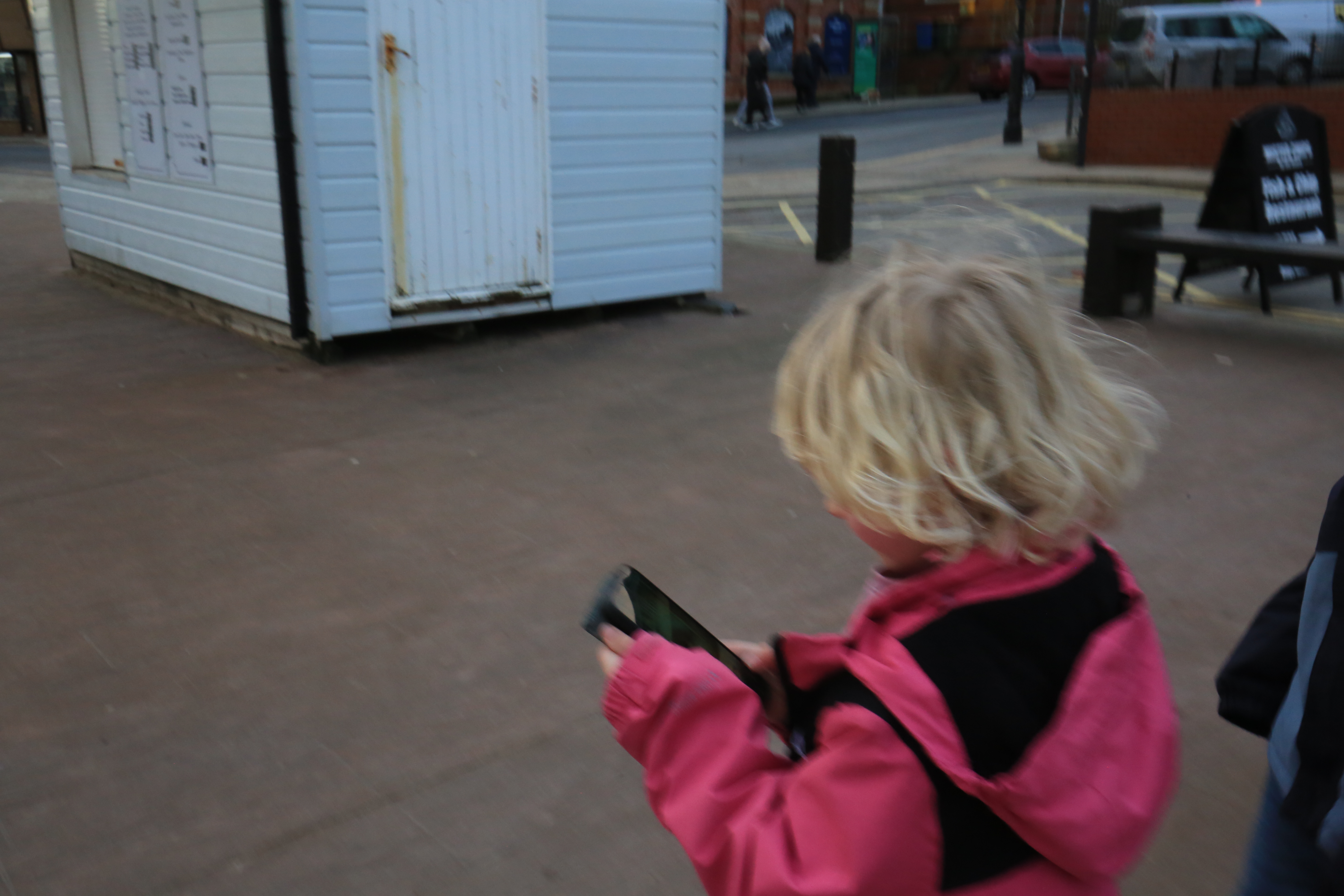
Walking is probably the most natural facilitator for conversations and being together. I’d like to do a series of photographic posts on the importance of walking for the individual and for family life but then I am afraid that the series will finish like this (see the photo below) and I will not address the problem by blogging about it. :) I often wonder what problems can we realistically solve by blogging about them and I am not trying to criticize myself for blogging. This I think would be somewhat cruel to the part in me that likes to reach out to people in that manner but a lonely writer in an AI world feels more and more abandoned and threatened by the things that technology grabs from them without perceived and/or real returns.

I’ll leave the topic open as I feel the discussion is endless.

Till next time. x

How did you manage to have a boy and a girl? Is it worth knowing this?

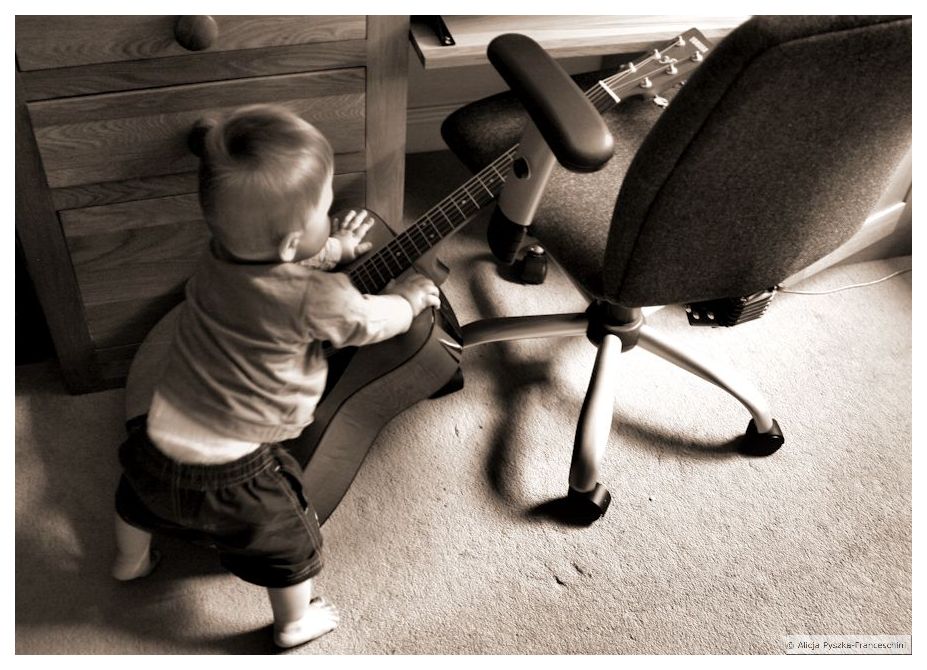
Unfortunately, I never learnt to play the guitar. Neither did my son. He chose hockey instead. Lots of people ask me how did we go about having a boy and a girl and in all honesty we did not leave it entirely to chance. Instead I read this book and applied the knowledge and this is how it was handled. The book is called Taking Charge of Your Fertility and it is written by Toni Weschler. I bought it via Amazon but I read the one with this Taking Charge of Your Fertility (Used) | Toni Weschler | 9780060881900 | Awesome Books. I know this is an unusual post but I also know that there is a lot of pain that surrounds the topic so I hope the pain can be eased or a solution found here.

Maybe it is a message worth spreading.

But of course, I cannot guarantee the results.

Love to all,

Alicja

To acknowledge the worth of things/ Uznać wartość rzeczy


We were driving to the church this morning; I was sitting at the back, next to my daughter, chatting to her. She took a little vaseline lip balm tin out of her pocket. She put some on her lips and then asked me if I would like some for myself. She handed me the round tin, I took some of it and I put it on my lips saying that I love the vanilla smell. She was thrilled, her eyes sparked, she grasped my hand satisfied and said: ‘I love you, Mummy. I love you so much’. She was thrilled.

Often, this is exactly what our children want us to do: to acknowledge the worth of what they like, to give to us what they love and to see that we are capable of appreciating it too. This creates the union, communion and connection.

Have you recently had a similar experience?

Jechaliśmy dziś rano do kościoła; siedziałam z tyłu, obok mojej córki, rozmawiając z nią. Wyjęła z kieszeni puszeczkę z wazeliną do ust. Nałożyła trochę na swoje usta, a potem zapytała mnie, czy chciałabym trochę dla siebie. Podała mi okrągłą puszkę, wzięłam trochę jej balsamu do ust i nałożyłam, mówiąc, że uwielbiam zapach wanilii. Była zachwycona, jej oczy błyszczały, chwyciła moją dłoń zadowolona i powiedziała: „Kocham cię, mamusiu. Tak bardzo cię kocham”. Była wręcz zachwycona.

Często właśnie tego chcą od nas nasze dzieci: abyśmy uznali wartość tego, co one lubią; one dają nam to, co kochają byśmy pokazali, że my również potrafimy to docenić. To tworzy jedność, komunię i połączenie.

Czy doświadczyliście czegoś podobnego ostatnio?