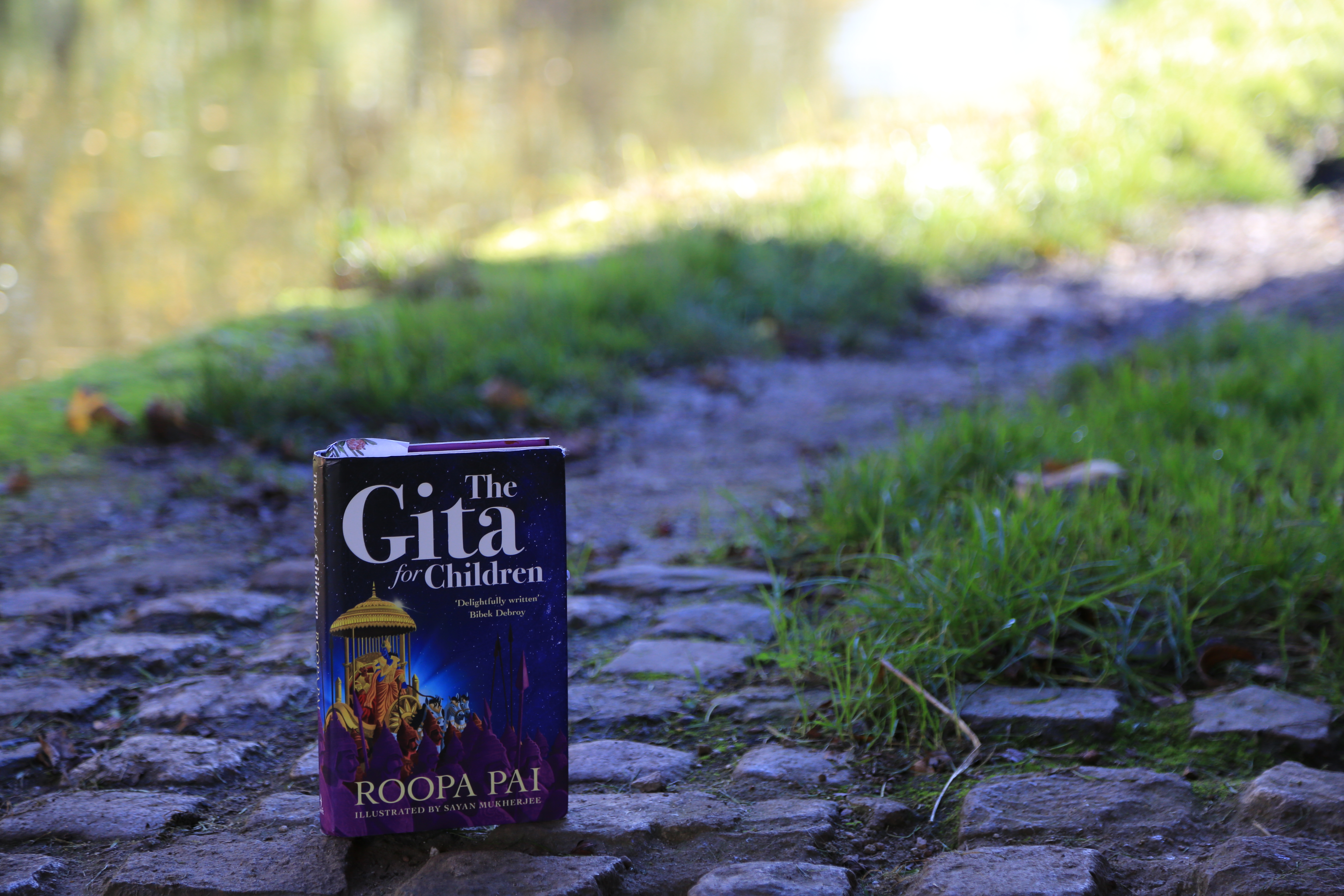
A walk with The Gita for Children by Roopa Pai

If you’ve got a child aged 12 or around, you would most likely have enough data on their likes and interests and you would probably see that some subjects always prick their ears and they like discussing them. Among football, biology, history and Minecraft, religious studies are my son’s favourite. He is very keen on learning and discussing different religious wisdoms, beliefs, traditions, and customs. When I was sent The Gita for Children by Roopa Pai by IBBY (International Board of Books for Young People) two years ago, I was thrilled. I knew that we could have a good time together.

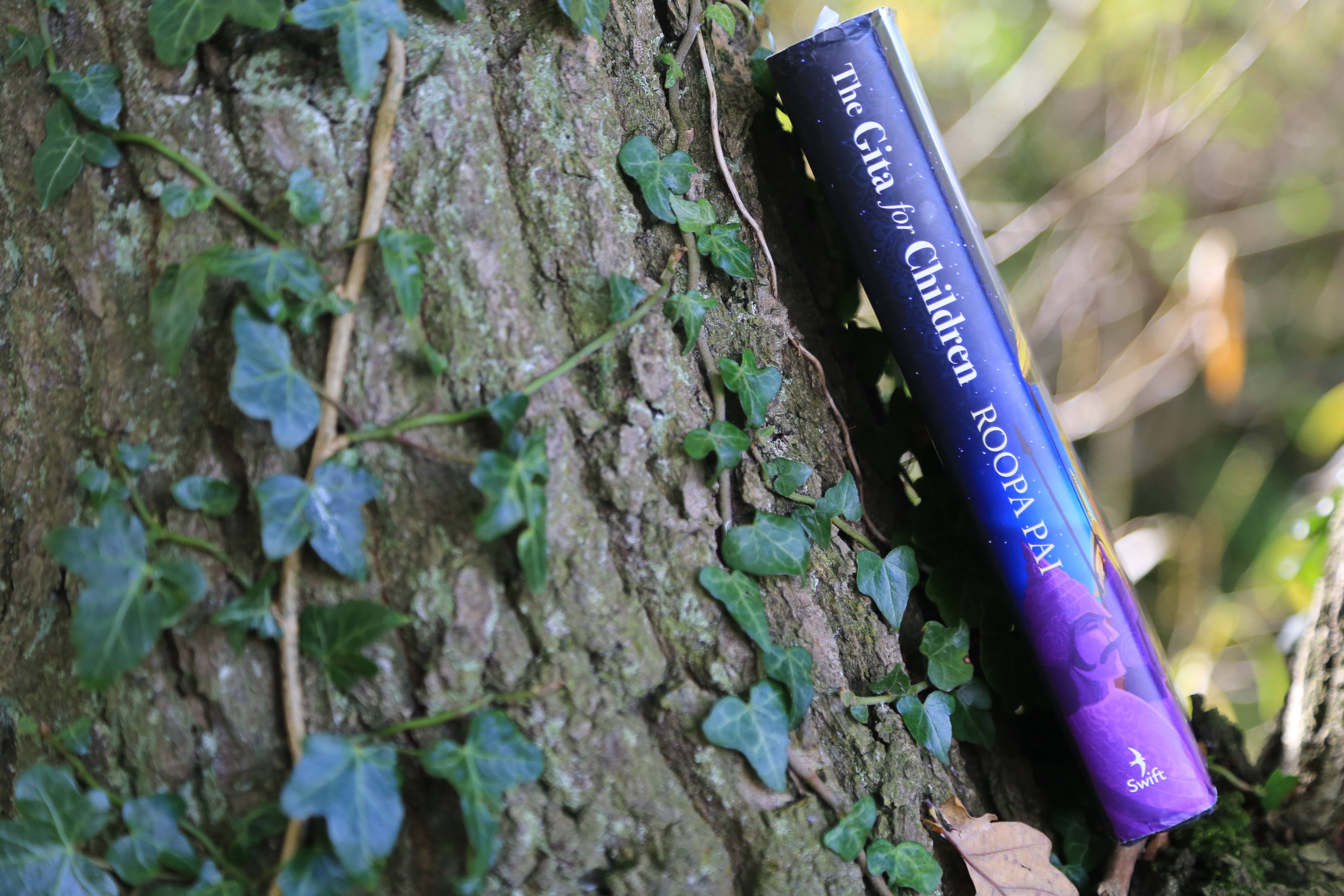
The Gita for Children written by Roopa Pai and it is an introduction to The Gita, the sacred scripture of the Hindus. The book has a very intriguing purple, golden and dark blue cover and beautifully drafted drawings inside by Sayan Mukherjee and the elements of script that I could not recognize or comprehend. The elements of script used in the book are shlokas, otherwise understood as stanzas of Bhaghavad Gita.

Two years ago the book however was a bit too dense and difficult for our son to delve into with my help and on his own, but as we know, children mature and their mind’s abstract conceptual maps grow with them and what was a bit early to access two years ago, may find fertile ground in a boy who has just started his secondary school and is mature enough to admit: ‘Mum, I need your guidance. I need a lot of it.’ Now, this is a terrifying request for most of us, adults, these days as we seem to be navigating without a compass through the obstacles and challenges of our era, unsure which ways lead to greater good and less internal turmoil. If you read the backside cover of The Gita for Children, you are already presented with some answers, as the publisher, Swift, chose the following extract from the book:

The truth is, Partha,’ Krishna said, ‘there is no “better” path. Both paths – the path of knowledge and the path of action – work just as well. It is up to you to pick the one that you are suited to.”

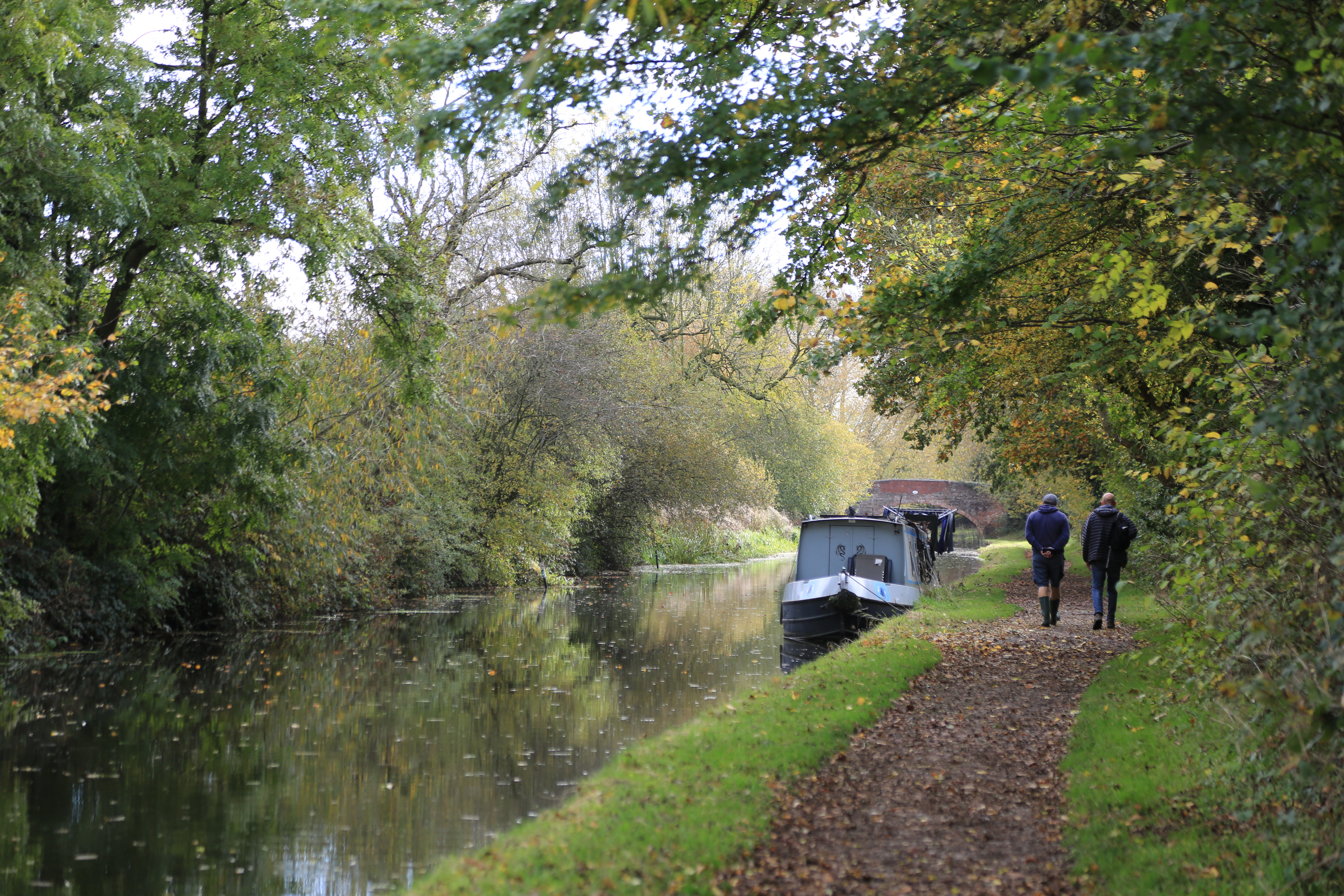
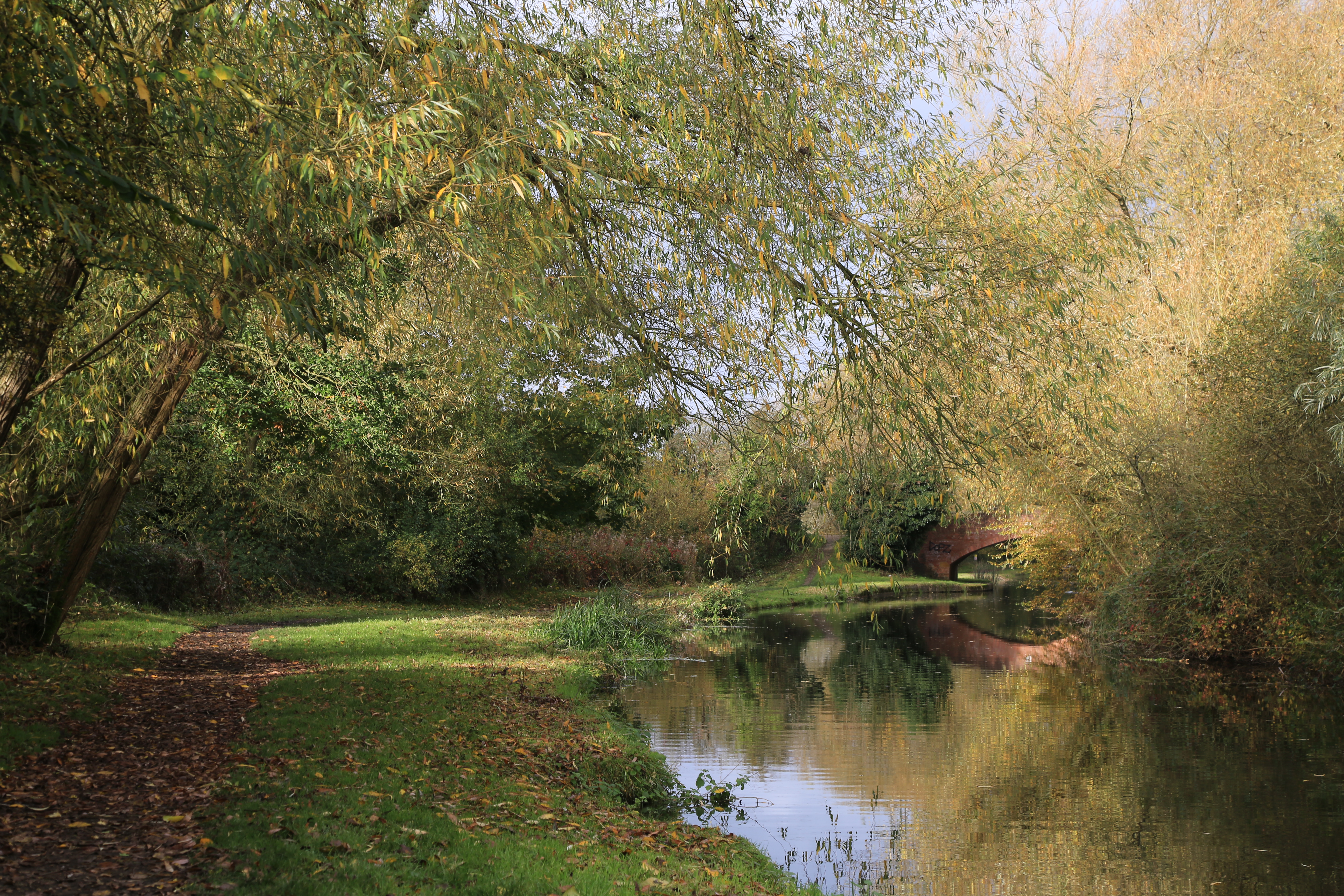
This permission to choose a path encourages you to read on and learn more about The Gita and delve into this introduction to the sacred scripture of the Hindus and to slow down a bit to learn and reflect on wisdoms that we are surrounded with but we do not access. I took Roopa Pai’s book for a walk in Derby around our local canal to breathe in its wisdom with fresh air and I thought I’ll share with you here some of my favourite quotes as they may speak to you too.

“… the soul goes to that which the mind has been thinking about in its last moments.” p. 118

“ God does not belong to the privileged. (…)

All He needs is love.”

“Think of me as infinite space, the space around and above me below you – the grand theatre of the suns and the stars and the might wind; which holds the seed of everything in the Universe” p.132

“I do not favour one being over another; they are all the same to me…”
“Go(o)d will find a way.” p.65
“From goodness is born knowledge, and the fruit of the action is joy; from passion arises greed, and the fruit of passionate action is pain; from dullness arises negligent and wrong action, and its fruit is ignorance.” p. 194

I hope you enjoyed the walk with The Gita.

P.S.1. As if by chance ‘gita’ in Italian means ‘a walk’ while the holy scripture ‘Gita’ means ‘a song’.

P.S.2. For all those who love to walk, this walk started at Stenson Marina in Derby, walk towards Willington Marina (to the right while facing the canal).

(in the next post I will share with you some photographs from the celebration of Diwali that took place in Derby. It does not happen too often when Diwali is celebrated on the same day as Halloween and a day before the Catholic celebration of All Saints (in Poland also knows as the Day of the Deceased when we place candles and wreathes on our ancestor’s graves and reminisce about them).
In and out of the woods: coping with writing anxiety

The Society of Authors has recently justly expressed in ‘The Author The Journal of the Society of Authors’ its strong disapproval regarding authors’ work being sent to to A.I. generators to create texts for education. This is apparently frequently done without authors’ permissions or consultations. Similar doubts, I suspect, appear among online writers and bloggers who simply worry that their writing style, crafted for years, would be hacked into and reproduced in multiple ways depriving the original author of their well-earned and unique voice. These worries are of course not alien to me and I do often question online publishing knowing at the same time that a lack of online presence reduces greatly my own verbal productivity and outreach to minds that also like to create with words (or images). That said, on examining my own writing styles, I can simply say that I am also made out all that I read over the years and my own inner A.I. brain is defiantly activated when I read or hear good writing. Tuning into styles is very common for language learners and decoders and I think it is our common pleasure, just as artists like to create a bit in the style of someone.

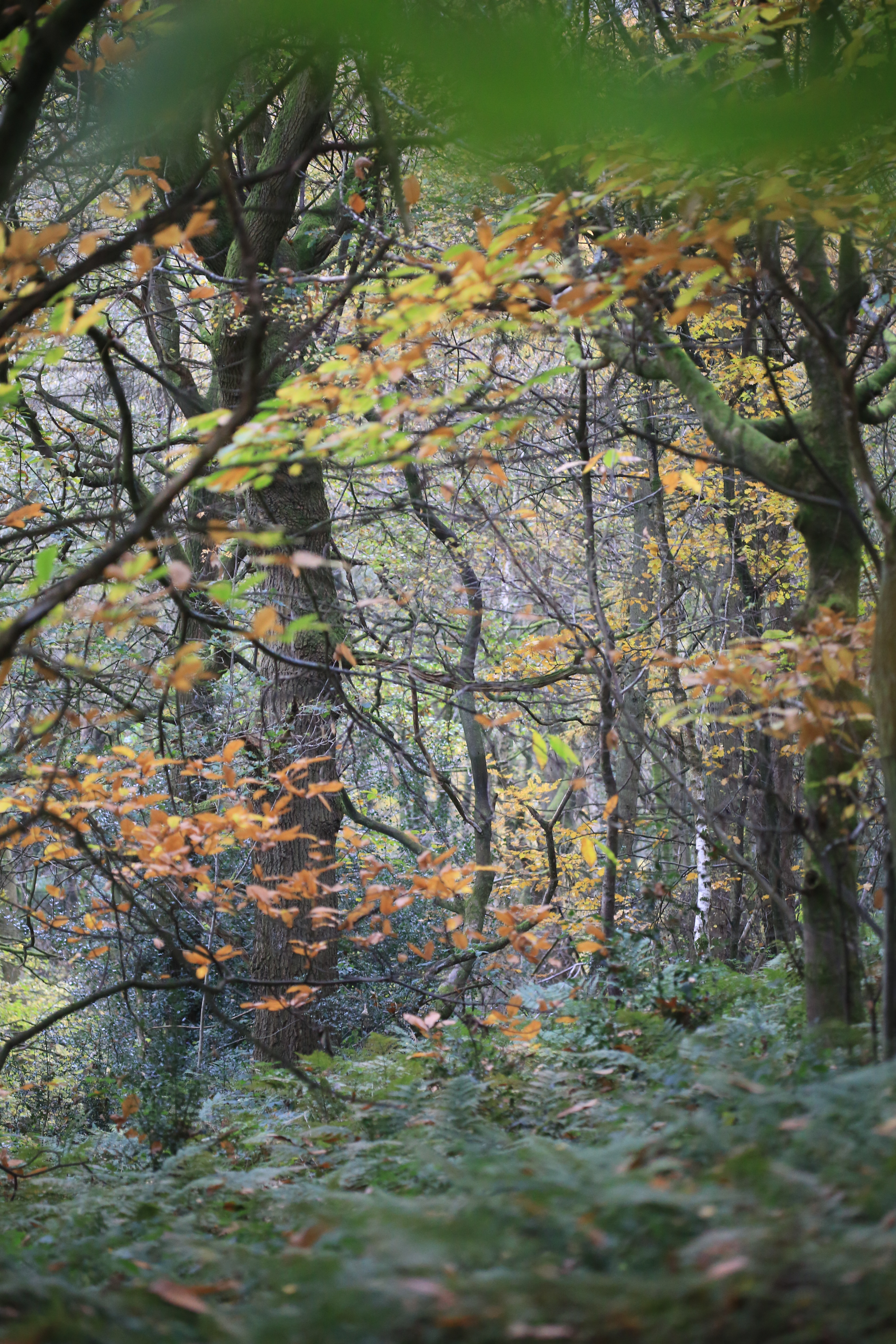
A long time ago I attended a photography talk at a camera club given by Paul Mitchell on woodland photography. I do remember being very much inspired by his work. To copy Paul Mitchell is impossible but to embrace his appreciation of the subject does not require much, especially if you happen to grow up next to a forest but were somehow dissuaded from heading that direction and then felt cheated when the adults went there themselves just before Christmas to find evergreens to decorate. ‘So is the forest safe or unsafe to visit?’

I know what answer The Woodland Trust would give, especially when it comes to visiting their trees, ferns and fungi..

I have been writing for a while now some poetry and fiction that features little bits or significant elements of the woodland and I am overcoming my fear of being eaten by the A.I. monster. I hope you will find it enjoyable and I hope you will visit your nearest woodland soon before all the leaves are hijacked by the wind and pathways turn to mud.

Apparently, it’s going to be misty tomorrow… time to get the cameras ready.

Bye for now.

Poem

how sweet the sound of shadowed grass

made no disturbing threat unkind

how sweet the blacks on the bark unlit

that survived the wisdom

and the wit

of loving being so obtuse

that gave me no silence

no choice

but to refuse

the darkness so unkind to self

that went undone through childish maze

how kind of him to make me free

of liberty

to be all

I can be

i.e.

one

at

a

time…

Copyright Alicja Pyszka-Franceschini 2024

The poem forms part of the anthology ‘Bitter toes: Poems on Immaturity’ (title in development) or some other book of mine.

on unresolved grief

'I cannot hear you anymore.'
'Is that a bad thing?'
'I think so.'
'What can you feel instead?'
'Stomach pain.'
'What does it say?'
'That I miss you.'
'You are so sweet.'
'No. Very bitter in fact.'

~ Alicja Pyszka-Franceschini

On Passions, Poetry and Photography

“And it was at that age.. Poetry arrived

 in search of me. I don’t know, I don’t know where

 it came from, from winter or a river.

I don’t know how or when,

But from a street I was summoned

And something started in my soul,

fever or forgotten wings,

and I made my own way,

deciphering

that fire”

Pablo Neruda, Poetry

There is a huge amount of bravery involved in deciphering the fires that consume our lives and senses; the fires that render each available minute joyful or that turn each minute into ash. Our passions. We know them for their powers to make us feel alive and for their powers to contradict and challenge our other priorities and values. Passions when untamed can turn things into meaningless speckles of dust, they can suffocate our existence to such an extent that we just want to bury our faces in our palms and weep with dismay. For passions are sometimes too much to handle.

They are sometimes too overpowering, too enthralling, too sneaky in the way they operate, to even notice and to ask oneself: What is it that I am trying to cope with here? What is that force that gives me wings in one moment and crash-lands in the next, most likely with hundreds of flashing warning lights that I systematically and stubbornly ignore? What is that force that simultaneously suppresses and expands my skills for self-expression and permeates the scars and sensitivities of my chest, unobtrusively, and just to give an indecent exposure of my longings, misunderstandings, yearnings, cravings and appreciations to the outside world?

When photography arrived in search of me, I felt as if I had a swollen eye from the grasshopper’s bite and I could not quite lift my eyelid – as if part of life was too hard to see. The camera forces you to see what you might omit with one swollen eyelid (although ironically you take a photo with one eye closed), i.e. the evidence for shoddy or meticulous existence. The evidence for fondness, self-care or neglect. See or die, it says. See and never ever go to sleep again. It shakes you, it shakes your perception for as long as it takes for you to awaken to reality.

When we learn to live with passion, we learn to touch the peripheries of our capacity to feel excitement. Sometimes we define and circumscribe our powers to explore things so narrowly that our results are quiet and timid, other times we learn to roar. Passion will always give you a pat on your shoulder though, for the quiet and timid efforts and for the louder ones too. But if you are listening carefully, it will also ask you the big question: Is this sincerely truly, fully and factually what caught your heart and attention in the first place?

When photography is a visual response of the heart and mind to the outside world then it also forces us to rebel against accommodating disappointments in our personal, social or political spheres.  A passion doesn’t want us to be docile. It asks us to match its energy and to prove to ourselves that we can handle it. Passions have got dialogical aims; they don’t like when you lapse into silence. With ease or dis-ease, but we must respond to them. That’s the deal, the eternal deal that we sign off for the continued experience of aliveness. ‘Work on me.’ – says passion, ‘this is how you’ll make your way to joy.’ It woos you, entices you and it hopes that you will put it to shape, that you will give it a character and you know you will, on one condition, that you will put it in service of the higher values, the higher purpose.  And you agree, of course, there is no other choice for you to make, but now you have to train on both hands, lift them up in unison, the passion and the values and then you calm down because it all makes sense for once. You feel safe because you get your head straight and you came to your senses to understand that it is not the spirit that lives in the body but the body that lives in the spirit and now the bait is taken off your heart, you are no longer on a rod, you are no longer pushed and pulled. And passion writes all about it. And it is safe.

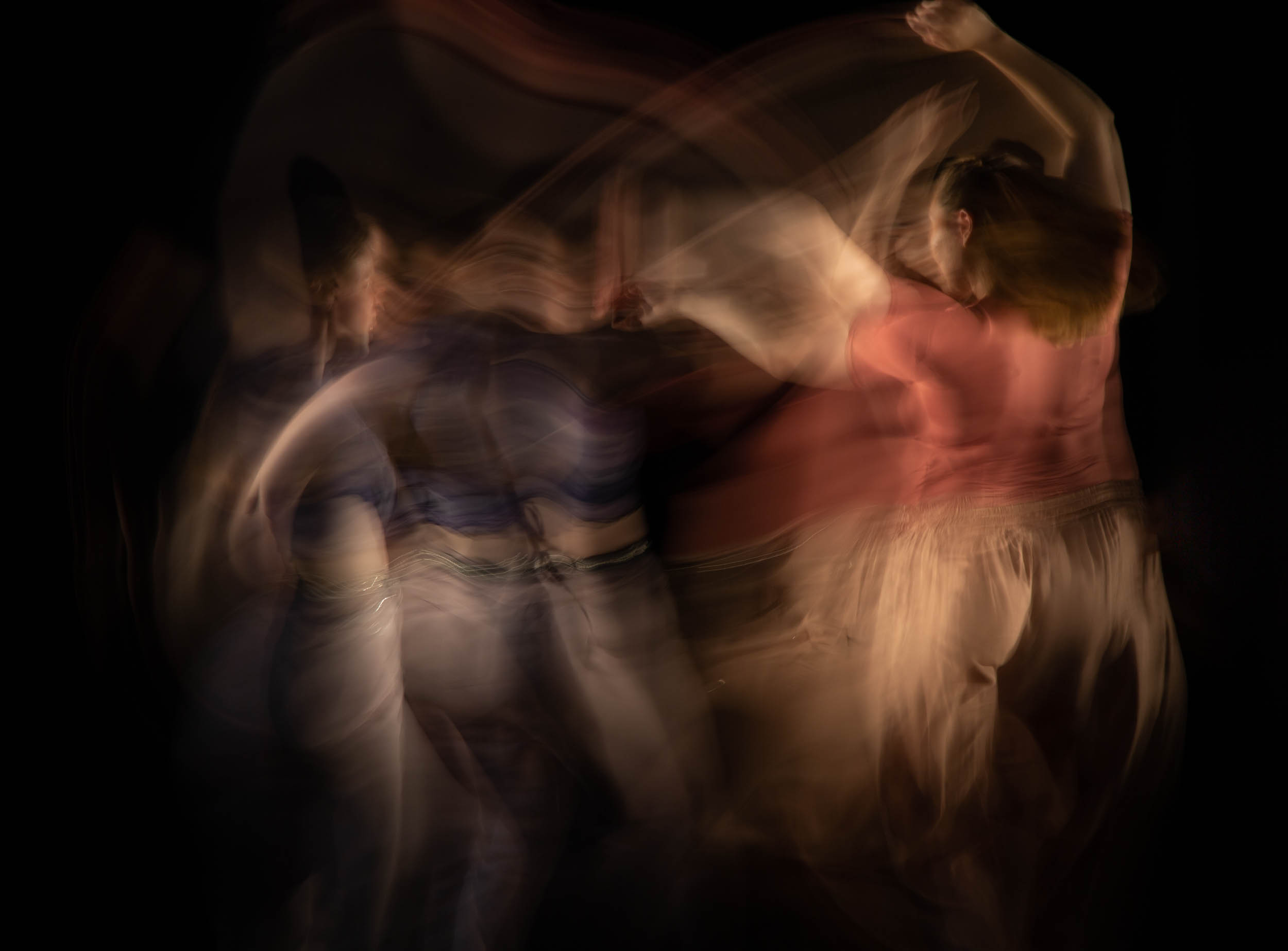
*photograph taken by Alicja Pyszka-Franceschini during a dance photography workshop with Paul Hill and Maria Falconer, Nottingham.

Doubt is good

mr doubt

I’ve got to complete a substantial piece of work for my thesis and submit it towards the end of the month to my supervisor. Criticizing and evaluating other people’s research is not the strongest of my skills. I often doubt my judgement and I must say I have been experiencing a strong writer’s block over the last few weeks. Yesterday, however, something shifted in me… I love going to our parish church on Sunday. There we are given a weekly newsletter not only with parish announcements but also with short articles dedicated to the theme of the Sunday. Well… you all probably know the story of a doubting Thomas and his need to scrutinize the Christ’s wounds before believing in Jesus’ resurrection. Yesterday, in our weekly newsletter, different writers were making commentaries regarding that theme and one of them, Christine Clark, wrote this:

”Doubt is good: it must always be better for something to be challenged. If it’s too fragile to stand up to scrutiny, it’s not worth much.”

I choose to write about this because I think yesterday I have turned a corner in my thinking. Dealing with doubt, criticism and disbelief is an important part of doing research work and I think that only yesterday I understood why having doubts often implies having the courage to think independently.

Doubt is lovely. Welcome doubt.