The Uncertainty of Parenthood

awitch2

When my son was born, I was overwhelmed by the enormity of tender-hearted love that I felt but I also felt shocked, I mean TOTALLY UNPREPARED for the amount of anxiety and uncertainty that characterizes these very early moments and then the subsequent years of parenthood. This uncertainty is caused by different circumstances for each one of us, sometimes it’s lonely mothering, a child’s illness, a changing work situation or a move to a different country, and sometimes the well-known sleepless nights or feeding problems, and sometimes by all these things at once. The fear and anxiety is present and experienced by all – it’s the given and the universal to our parenting experiences.

We deal with this uncertainty in many different ways, we cling to books, we cling to people, we cling to ideas, we cling to our identities or we withdraw, we withdraw from books, withdraw from people, withdraw from each other, withdraw from ourselves. All of this is supposed to help us handle the physical exhaustion and the cocktail of emotions that appear in the early phases of parenting. Pema Chödrön once quoted a Times article which said that we are more afraid of uncertainty than we are of physical pain.

I think she was right here.

She also wisely advised that in order to deal with uncertainties we must learn to smile at fear. To accept all the complex thoughts and feelings that engulf us in periods of uncertainty. Because it is only then that we will be able to understand what it means to be a human. Because it is only then that we will be able to understand and empathise with other people, but also with oneself. Yes, with oneself.

When we stay open to what’s ahead of us, the road widens and our curiosity grows and that’s what gives us courage to be together with our children and with our loved-one on each section of that road, walking together, with calm curiosity little by little, one intriguing section at a time.

On Valentine’s Day my husband, son and I went for a walk to an area of hills and valleys close to where we live. We just wanted a short walk down the valley and I was wearing a dress and everyday shoes (and my heavy camera without any charged batteries, grrr). Certainly not a type of gear to do any climbing in. I did not know that we would climb, with our son on my husband’s shoulders, in many ways unprepared. We were stepping higher and higher… curious what the world would look like if we went up just another ten more metres. We enjoyed the walk up, checking we had good footholds and letting each other and others know to avoid the wet and slippery bare rock that sometimes presented itself in the path. We enjoyed being given helpful suggestions by passing walkers and most of all we enjoyed the freedom and exhilaration of the climb up into the fresh and gentle cold breeze, periodically heated by a bright but distant winter sun. And then little by little we smilingly reached the top, sat for a moment on the highest point, and stared at the other rocky peaks that we one day might want to climb.

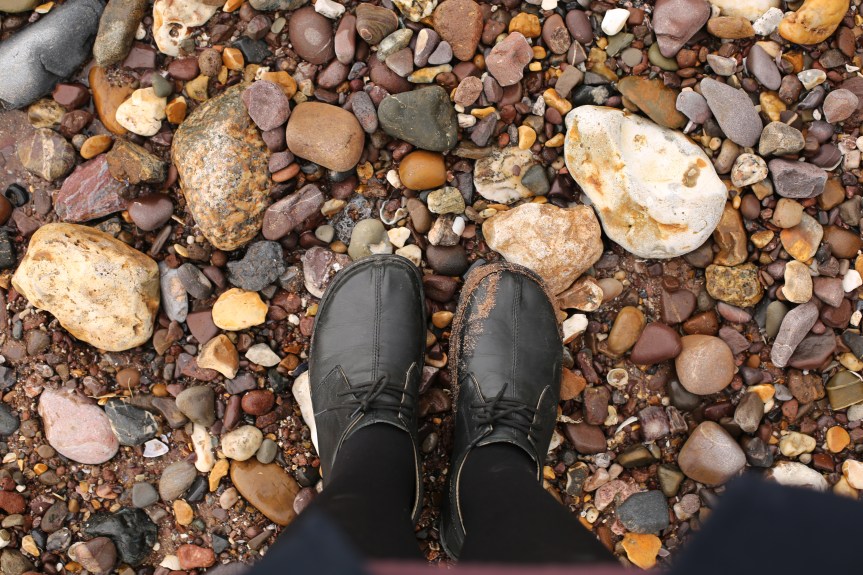
When I return to the time when I gave birth, I see myself as ‘unprepared in so many ways’. I still see myself now as ‘unprepared in so many ways’, but I am convinced that even unprepared we can still climb.
unprepared.JPG

es

, an

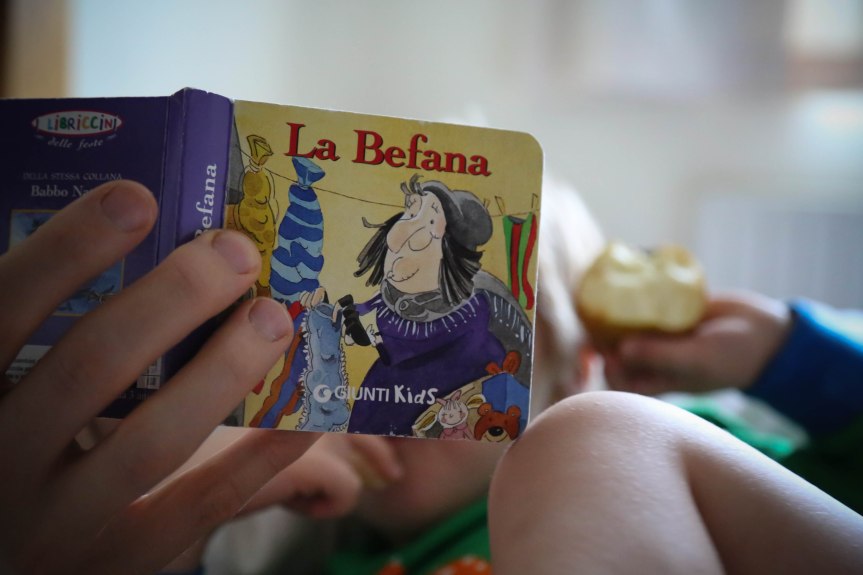
La Befana

Befana_England-2Befana3-7Befana8--2Befana1-8Befana 1Befana4-6Befana6-9

Befana7-3
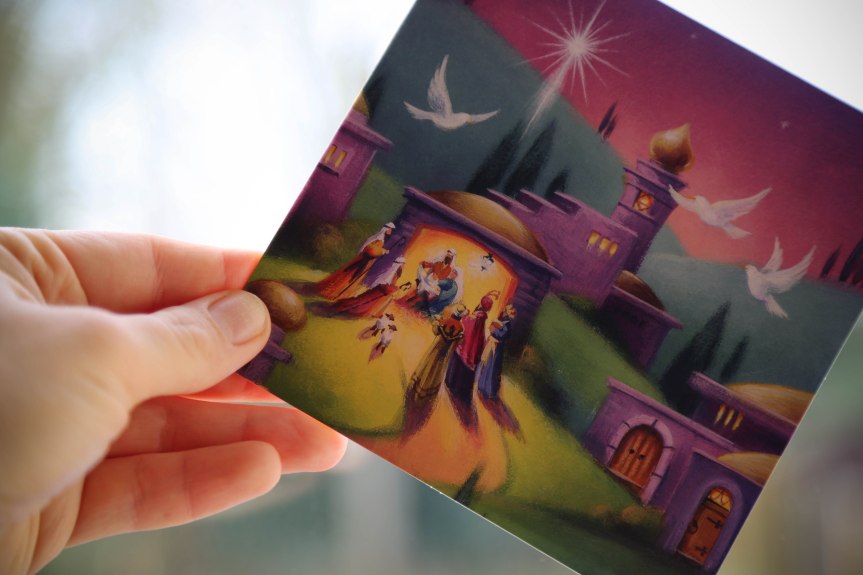
Card by the charity: EMBRACE the Middle East

Befana5-5

Happy Epiphany!

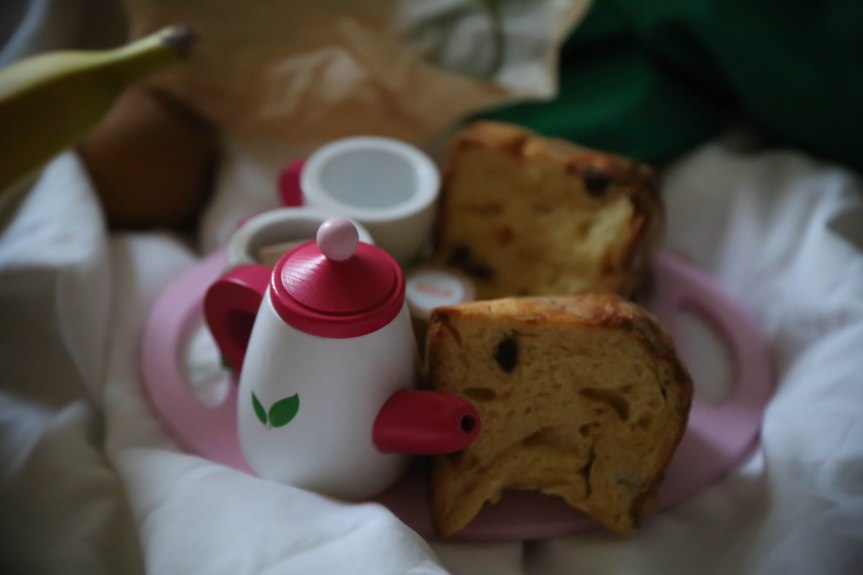
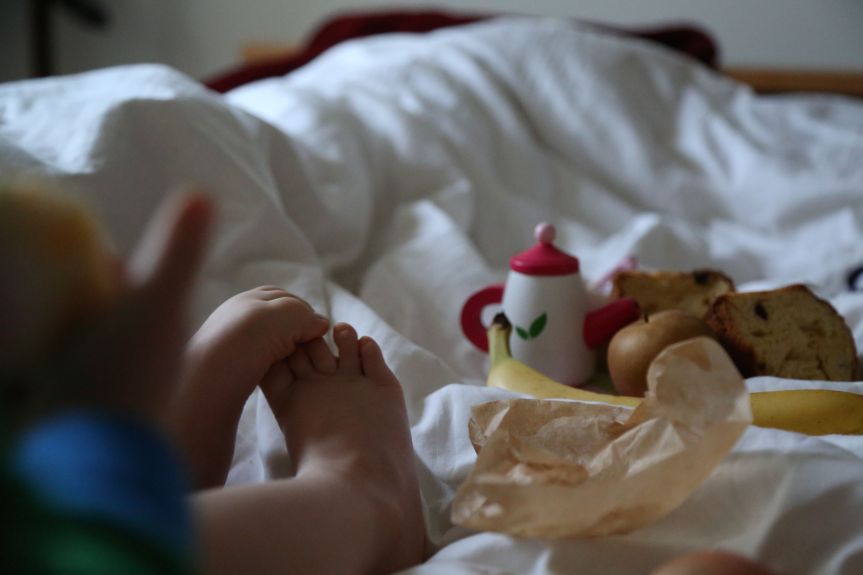
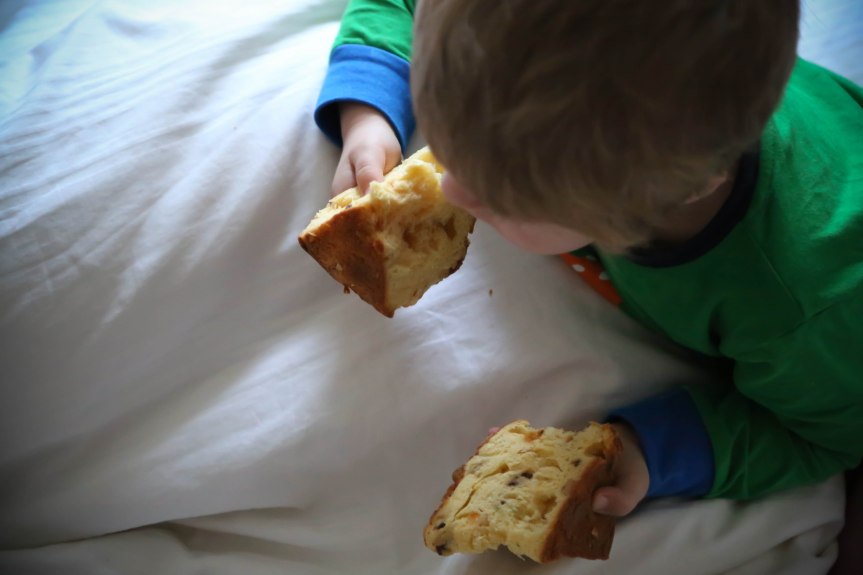
So today we celebrate the Three Wise Men visiting Jesus as a small child. Our little one has also had his own visitor: a very old lady with broken shoes and poor clothes who traveled in the night on her broomstick to leave some small and delicious presents. It turned out that I was the only mischievous child in our house as I was the only one who found onion and garlic in my stocking while my men were indulging in glorious Panettone (paneton in the Milanese language)!

The card with the Wise Men encourages us to remember the Middle East and the whole image evokes thoughts of humble respect and prudence. The three scholars bowed in respect before something much bigger than themselves, God Almighty. Then, they received a gift of prudence to go back to their own countries choosing a path that would make them avoid Herod. This is a story about guidance, respect and prudence. May we all embrace them this year.

Happy Epiphany!


This year I will be posting towards the end of each month. With my very best wishes in this New Year. x Alicja


Losing sleep and buying presents for new-to-parenthood adults

Derby Museum
At Derby Museum and Art Gallery


A new era has started in our house – an era of no afternoon sleep for our toddler (and no cat naps for me by the same token). It’s been on and off for the last three months but it looks like he has decided to drop it for good now. Every transition phase in a family life, even as small as this one, is challenging and tiring at the same time. A lot of miscommunication happens in transition phases – what I once understood as a sign of tiredness on the part of our little boy, now becomes a request for extra entertainment and I must admit it took me a while to grasp it, perhaps a tinge of denial clouded my parental perception, but it looks like I am now a mum of a small boy rather than a toddler. Could this be the case? So soon?

I suspect that our son is also confused by this new wave of energy that embraces him in the middle of each day. So when today, just after midday, my little companion turned into a roaring dinosaur and then into a savage shark that ferociously dived into the tormented sea of our duvet with no intention of reverting into a sweet and sleepy baby-boy the shark once was, I thought to myself that it’s probably a sign that we’re done with afternoon naps and it’s time for something else now…

More serious mothering… maybe? I noticed that there are many no’s to exchange now, more boundaries to set, new negotiations to engage in and I am slowly finding myself within this new parental landscape. But ‘slowly’ is not a word that goes well with being a mum of a 3 year-old. I have a very curious and a very fast son and I love this about him but recently I just find it really hard to keep his pace and you know, as a parent, it’s actually better if you’re a bit quicker than your child, a millisecond will suffice as long as that millisecond is there… And if you are as big a dreamer as I am, you are probably more than one zillion milliseconds behind.

There are two books that mainly helped me (and are still helping) with developing good communication habits with my son. I would not have any qualms in presenting these books as Christmas presents to new-to-parenthood adults. So if you have anyone around you with small children, do not hesitate investing in these two sources as they are really helpful and enlightening.

The first book is by Jesper Juul (2011) entitled Your Competent Child.

The second is by Janet Lansbury (2014) and is called No Bad Kids: Toddler Discipline without Shame.

Two wonderful and helpful guides. They are really kind and understanding in tone and message and I cannot help but love what they recommend and how they explain the role of  parenting and honest communication between children and parents. Of course, I do not necessarily read them as gospel, but I feel that they came to my life just at the right time.

Let me know if they do the trick for you and your loved-ones too. x

Parenting with (Self)Care: Guides and Links To Resources on Postnatal Health, Wellbeing and Nutrition

poppies are gone_copy

Nutrition and postnatal health are the topics that I have, over the last two years, become very interested in. In nutrition because I want my husband and son to be healthy; in postnatal health because I want to be able to enjoy these challenging early years of motherhood. I’ve been reading a lot around those subjects but also attending meetings and events in my town that addressed those topics. I am one of these people that need to be reminded and frequently directed on to the right path if I want good habits to settle in.

Here’s a list of resources that helped me…

The essential guide to foods that heal, Olivier, Suzannah [ISBN: 978-0716023272]. It is actually unbelievable how many ailments can be healed or exacerbated by the food that we eat. This guide is clear, well-written and packed with information. It’s a spring of knowledge that is really worth drinking from.

The 10 Secrets of 100% healthy people, Holford, Patrick [ISBN: 978-0749929114]. Don’t be dissuaded by the strange formulaic title. This book to me seems like a good piece of research, with surveys for you to fill in to provide health signposts. This book has helped me identify what I should focus on in my recovery. It’s not strictly about postnatal health and has wider relevance. I like this book and would easily spend a week reading it again.

Postnatal depletion even 10 years later. This is a title of an article that I have found online (Click on the title to be redirected to the site). It really explains clearly how depleted women can be in the first years of mothering. It’s a very informative and essential read.

Other sources to keep an eye on:

Mothermorphosis – The author, Dr Oscar Serrallach, who writes about postnatal depletion is about to publish a book on the subject. I have looked at its brief and have put my email on the list to be informed of its release.

Nutrition and Wellbeing – Have you heard about FutureLearn? It’s a platform that offers free courses online prepared by British universities. I have just signed up to a course on Nutrition and Wellbeing that will start running in Aug 17. The course promises to “Demystify the complex and conflicting messages we hear about diet, health and lifestyle today” and is run by University of Aberdeen. Here’s the link to the course.

The resources above provided practical knowledge to me and were great change triggers. If you decided to look at any of them or to participate in the course, I hope that you’ll find all the info that you need to increase the quality of your family life.

Developing Good Communication Habits with Toddlers: Book Recommendation

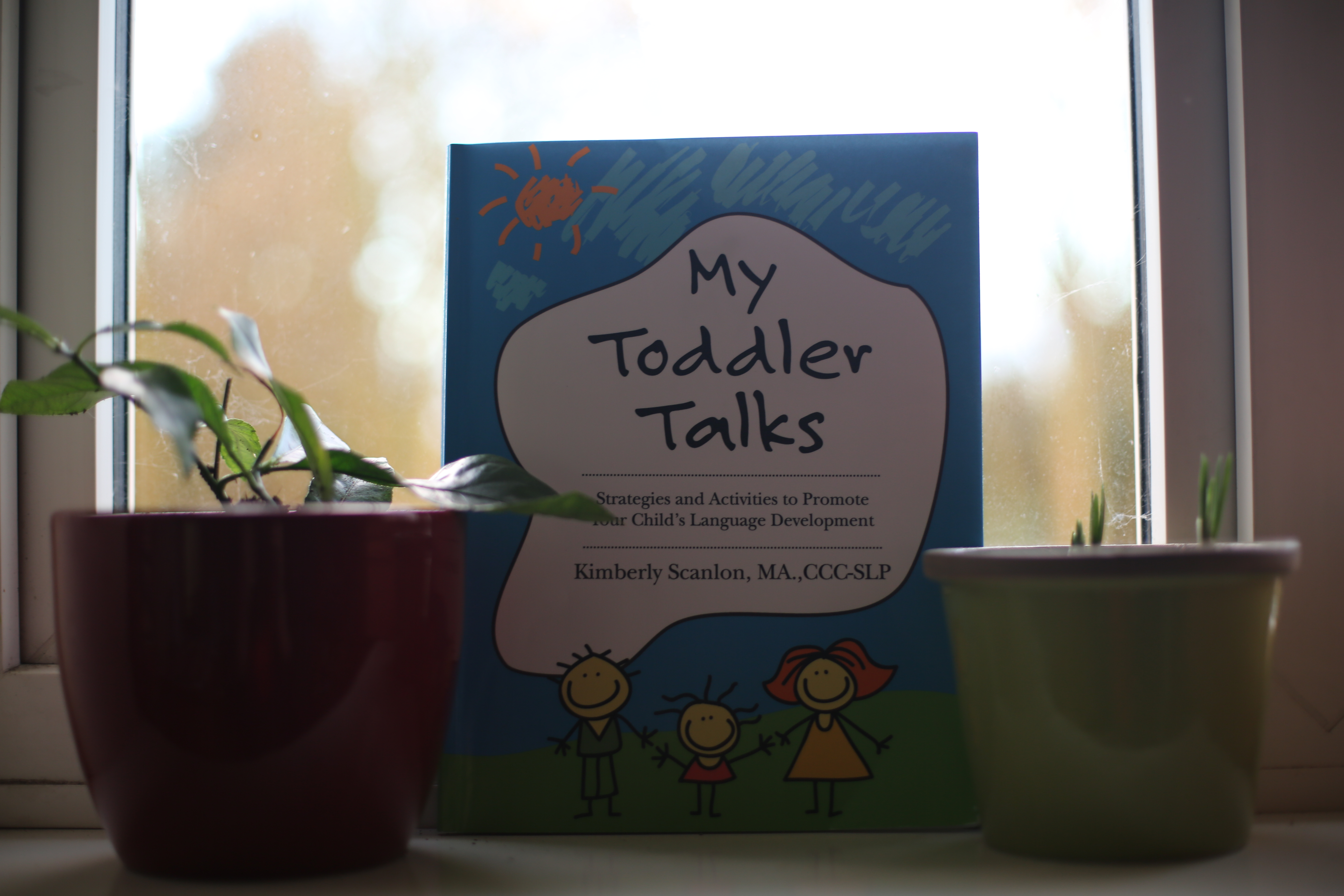
My toddler talks_book recommendation

If you are a parent and you’re interested in your child’s language development, you might have heard of Kimberly Scanlon. She is a speech therapist who throughout her work developed a strong expertise in building up children’s communication skills.

In the book that I am recommending she offers 25 play routines (with toys and arts and crafts) in which she describes the activity and suggests appropriate strategies that the parents can use to elicit responses and expand vocabulary. She also offers tips on What to Do if the Toddler Is Not Imitating You and The Do Not List. I also found the Introduction and How to Use This Book sections extremely valuable as they were both informative and reassuring.

Our son is being brought up with three languages and I am his primary source of Polish language, my husband is his primary source of Italian, and English is the language of the community. At the moment all three languages develop at the same pace but slower than the language development in his monolingual peers. Thus, by monolingual standards, he experiences a language delay. I’ve been looking for a book that would improve my ability to stimulate my child’s language development, but also for a text that I could recommend to my child’s nursery. Although this book is not about how to talk to multilingual children, I like its focus on simplicity, language-wise and play-wise. I like its very practical and realistic tone too. It definitely sets the expectations right and makes you question less and communicate better.
Scanlon, K. (2012) My Toddler Talks: Strategies and Activities to Promote Your Child’s Language Development. Createspace, North Charleston, SC.

train_playtime

This is not a sponsored post. Just a recommendation.