So you want your child to speak Italian.. Important advice on combining reading with experiencing.

mare56J8A9995Dawlish Warren_Postcards 3bw (1 of 1)Dawlish Warren_Postcards 1 (1 of 1)Dawlish Warren_Postcards mare2 (1 of 1)

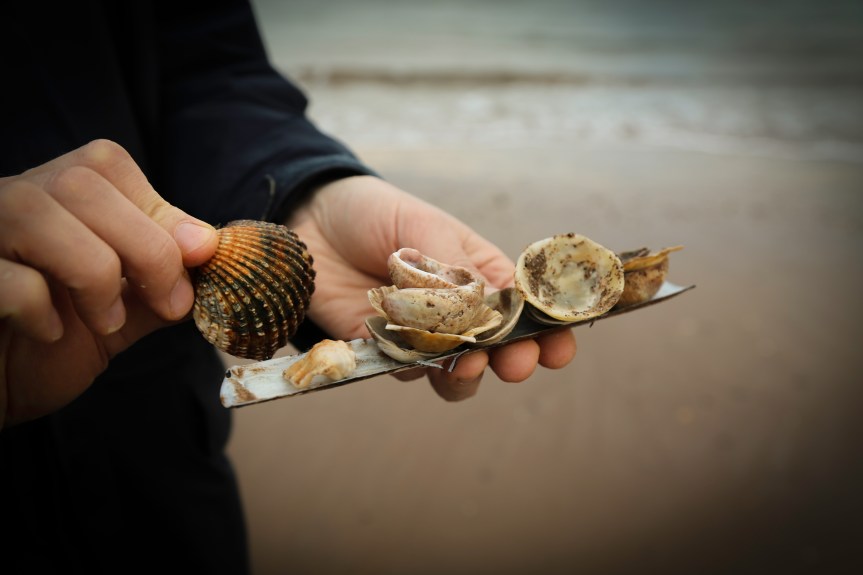
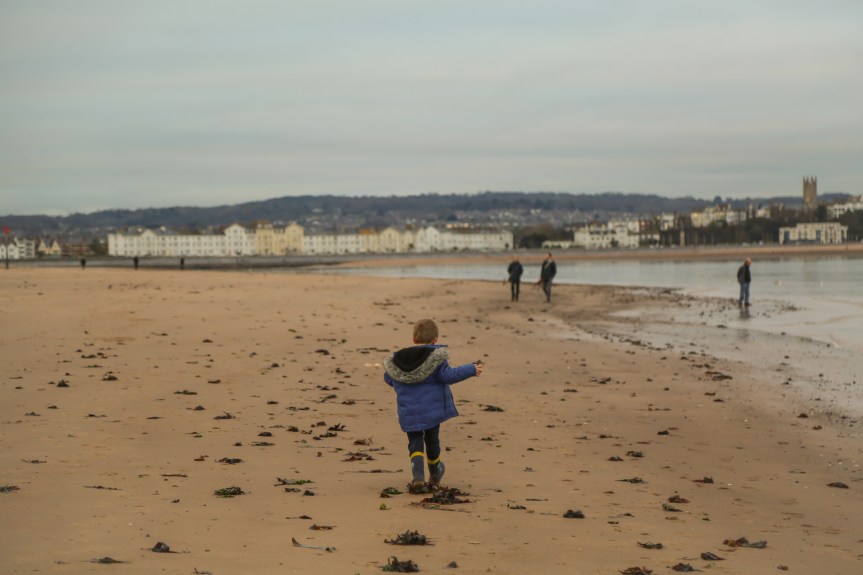
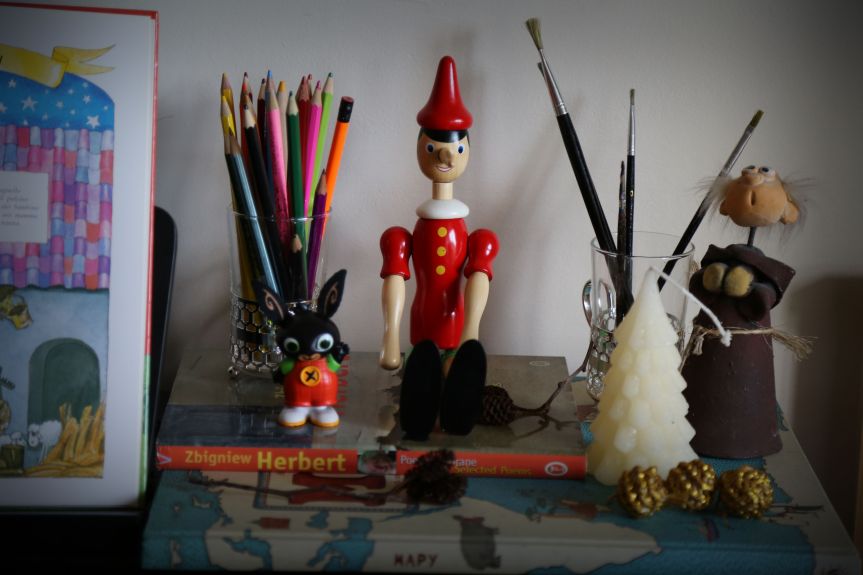
We live in a world that rightly so encourages us to read a lot to our children but research confirms that it’s best for our children when we read books with our own experiences in mind and we continuously make connections between the world on the page and the world around us. So slow down when you read, don’t rush with simple ‘What’s this?’, ‘What’s that?’ but have a conversation with your child, smile, make eye contact and ask open questions such as ‘What did you like most about going to the beach?’, ‘What would have happened if you hadn’t had your wellingtons on your feet?, ‘What was daddy doing over there? And what was grandpa doing?’. For language development ‘the doing’ is as crucial as naming objects. When you talk to your child make sure that you use many verbs (for some reason we like to focus on nouns only) as they help your child build sentences and aid storytelling. This book below is brilliant and I wish we had read it and talked around it (with verbs) when my son was smaller. It is a great introduction to various themes and topics and a great memory trigger. I strongly recommend it for those of you who speak Italian at home.

6J8A01956J8A0196

Disclaimer: This is not a sponsored post. I recommend the book out of my sheer appreciation for it.

If you’d like this post, please share it.

As far as our curiosity takes us

multicultural home

Christmas is abundant in culture in our little home. We’re a trilingual household, with Polish, Italian and English being spoken between us and the members of our family, and so when we celebrate Christmas, there are many customs and traditions to follow and weave into the Christmas season. I often ask myself to what extent it is possible to be a multicultural family, how far can we go in being three at once: Polish, Italian and English.

It’s been only recently that I came up with the answer to the how far question:

We can go as far as our curiosity goes.

For is this not what identity is? All that we’ve been thus far and all where our curiosity takes us to.

I feel that the more we cultivate the three languages, the deeper we dive into the cultures that accompany them. It’s either following one’s interest and enjoying it or living in a state of permanent nostalgia for what we once were (or what we once hoped to become). It’s interesting that we can either answer our curiosity or be saddened by it.

If you follow Elizabeth Gilbert on Facebook, you will learn a lot from her about curiosity-driven life. I love her idea and now it is a perfect moment for me to embrace it. A perfect moment to start learning, exploring and loving our three cultures.

So this is where this blog is going to venture now.

From curiosity to cultures. :)

But where was I… oh yes… traditions and customs. I proclaimed myself a custodian of cultures this Christmas and although we celebrated in England, I made a typical Polish dinner on Dec 24: carp, beetroot soup, ginger bread and pasta with poppy seeds, nuts and raisins. Just before Christmas our Italian friends came over for a short visit. It was interesting for me to learn that where they are from in the south of Italy, they also celebrate Christmas starting on Dec 24 eating fish, opening presents and going to church at midnight. This is different to how my husband’s family celebrated it in the north of Italy – with the main emphasis being on Dec 25. If you happen to be from the north of Italy, I am curious to know if this is still true for you.

Children benefit greatly from celebrating multicultural Christmas. Not only because of the different foods, customs and music but also because presents are given in different places of the world at different times which can mean more presents, or if you think like me, it would mean that not everything needs to be opened from everyone on the same day and the joy can be spread throughout the weeks. In Poland we tend to give each other the main presents on Dec 24 after our main Christmas dinner, but also something small a bit earlier in the month on Dec 6 for St Nicholas’ Day (Mikołajki). On Dec 6 my mother used to put some nuts, oranges, a piece of chocolate into our shoes and sometimes a little practical winter present like a pair of gloves, warm tights or a hat. Nothing too fancy – the present was just meant to bring a smile to our faces and warmth to our bodies. Practical and simple. In England, the main presents are opened on the 25th and in Italy, something small is also given on the 6th of January, for la Befana – Befana is an old witch-like woman who brings candies and fruit to good children and garlic and coal to the naughty ones. If you are a cook, you are lucky, you can purposefully misbehave and you will get garlic and fuel with which to start cooking many of your pasta sauces. :)

Have a great curiosity-driven year!

Where do you think your curiosity will take you in 2016?

Why do we do what we do?

why do what we do what we do

I’ve been thinking many times this year about quitting blogging or quitting photography or quitting my research or one of the three languages that we speak at home – this one was initiated by someone’s suggestion rather than personal doubt – but anyhow…

This year has been a struggle – a continuous ping-pong of rejecting and accepting of who I am and what I do. When I tried to quit any of the things above, I felt terribly unsettled, I felt that I was betraying someone and this someone was me. Fortunately, what I was rejecting was coming back – so now I am wiser and I’ve accepted that if what we reject somehow comes back and it brings joy, it’s a signal that this is who we are and that perhaps – Could this be true? – that we have found ourselves. So this is who I am and this is what I do and there is no further story to it. Just acceptance of it all.

I think it’s the joy that makes it ours – it’s this quiet emotion that puts a spring in our steps, the emotion that should not go unnoticed.

If you feel joyful about something, it’s yours. If you feel joyful about returning to something, it’s yours. If you feel joyful about commencing something, it’s yours.

Never underestimate the power of joy for joy is what you are meant to be.

‘Grazie, grazie, grazie, mama.’

Our little toddler babbles a lot, but he doesn’t have many words yet. We are raising him with three languages: Polish, Italian and English and so his speech at the moment is a combination of a small number of words and short phrases in those languages alongside a continuous and imaginative chatter that we politely follow (frequently bewildered). I often wish I was able to understand what he says to us. To join in in his observations and appreciation of the world. To get his perspective.

The word that our son says often is ‘Grazie’ (‘Thank you’ in Italian). I hear him saying it hundreds of times every day. I take him out of his cot, he responds ‘Grazie, mama’. I dress him, he says ‘Grazie, mama’. I give him bread, tomatoes and pears and I hear ‘Grazie, mama’. I put a scarf on his neck, he says: ‘Grazie’, I open the door for him and again, he shouts: ‘Grazie, grazie, grazie, mama.’. I cover him with his duvet in his cot and he quietly whispers: ‘Grazie, grazie, grazie, mama.’

As I switch the light off and I close the door I feel overwhelmed by his appreciation of the smallest of things that I do for him. He never loses an opportunity to acknowledge my efforts, however small, they are recognized.

It’s delightful.

Bringing up a trilingual child – the beginning

Three languages

Those of you who are familiar with my family setting would know that we use three languages at home. I had the great pleasure to write about bringing up a trilingual child for www.trilingualchildren.com It’s a wonderful space full of great advice and wonderful stories. Below are the leading paragraphs to my article:

More delight, less doubt. Bringing up a trilingual child – the beginning

I just came back from the hospital with my small and beautiful little boy. He was an easy-going newborn who settled himself into a nice routine very quickly. I loved holding him in my arms late at night and absorbing his peace. Blissful, wonderful peace. I felt enormously happy. I felt rewarded, blessed and enriched; but my fortune was not made of money, but of affection and attachment that strengthened and deepened with every day, unconditionally, unremittingly, and peacefully.

It was in this peace of a quietly breathing newborn baby, in a room that smelled of baby shampoo, just after midnight, that I realised that I want to bring up my son as a trilingual child, that the biggest gift my husband and I can give to him is the gift of languages, an opportunity to enter and explore his parents and grandparents’ cultures and to draw strength from them.

But there are other reasons too. That night when I was looking at my son, I saw generations of people in our genealogical lines that came before us. My son wasn’t made of me or my husband only… those genes that made him where not ours only. I understood then that my son has already got a heritage, a heritage that he won’t be able to understand or access without knowing and understanding the languages that my husband and I speak. Raising him up with one language seemed unfair… both towards him and those people before us.

So there we are, living in multicultural Britain, bringing up a toddler speaking Italian, Polish and English and doing everyday things just as other families do. We are developing our routines and with those routines our toddler is grasping the languages and learns about the world. Many parents tend to get overwhelmed at this stage of their child’s development because it’s so easy to think that you need to provide additional language input on top of the usual care. To me it’s about using language while exercising daily care, while bathing, while potty training, while putting the shoes on and when collecting toys off the floor. The language comes with care and attention. It’s not separate from it.  Click here to continue reading…