Losing sleep and buying presents for new-to-parenthood adults

Derby Museum
At Derby Museum and Art Gallery


A new era has started in our house – an era of no afternoon sleep for our toddler (and no cat naps for me by the same token). It’s been on and off for the last three months but it looks like he has decided to drop it for good now. Every transition phase in a family life, even as small as this one, is challenging and tiring at the same time. A lot of miscommunication happens in transition phases – what I once understood as a sign of tiredness on the part of our little boy, now becomes a request for extra entertainment and I must admit it took me a while to grasp it, perhaps a tinge of denial clouded my parental perception, but it looks like I am now a mum of a small boy rather than a toddler. Could this be the case? So soon?

I suspect that our son is also confused by this new wave of energy that embraces him in the middle of each day. So when today, just after midday, my little companion turned into a roaring dinosaur and then into a savage shark that ferociously dived into the tormented sea of our duvet with no intention of reverting into a sweet and sleepy baby-boy the shark once was, I thought to myself that it’s probably a sign that we’re done with afternoon naps and it’s time for something else now…

More serious mothering… maybe? I noticed that there are many no’s to exchange now, more boundaries to set, new negotiations to engage in and I am slowly finding myself within this new parental landscape. But ‘slowly’ is not a word that goes well with being a mum of a 3 year-old. I have a very curious and a very fast son and I love this about him but recently I just find it really hard to keep his pace and you know, as a parent, it’s actually better if you’re a bit quicker than your child, a millisecond will suffice as long as that millisecond is there… And if you are as big a dreamer as I am, you are probably more than one zillion milliseconds behind.

There are two books that mainly helped me (and are still helping) with developing good communication habits with my son. I would not have any qualms in presenting these books as Christmas presents to new-to-parenthood adults. So if you have anyone around you with small children, do not hesitate investing in these two sources as they are really helpful and enlightening.

The first book is by Jesper Juul (2011) entitled Your Competent Child.

The second is by Janet Lansbury (2014) and is called No Bad Kids: Toddler Discipline without Shame.

Two wonderful and helpful guides. They are really kind and understanding in tone and message and I cannot help but love what they recommend and how they explain the role of  parenting and honest communication between children and parents. Of course, I do not necessarily read them as gospel, but I feel that they came to my life just at the right time.

Let me know if they do the trick for you and your loved-ones too. x

The bridge where tantrums melt

sunny spellsduck feedingfeeding ducks2

birds feedingthe bridge 2

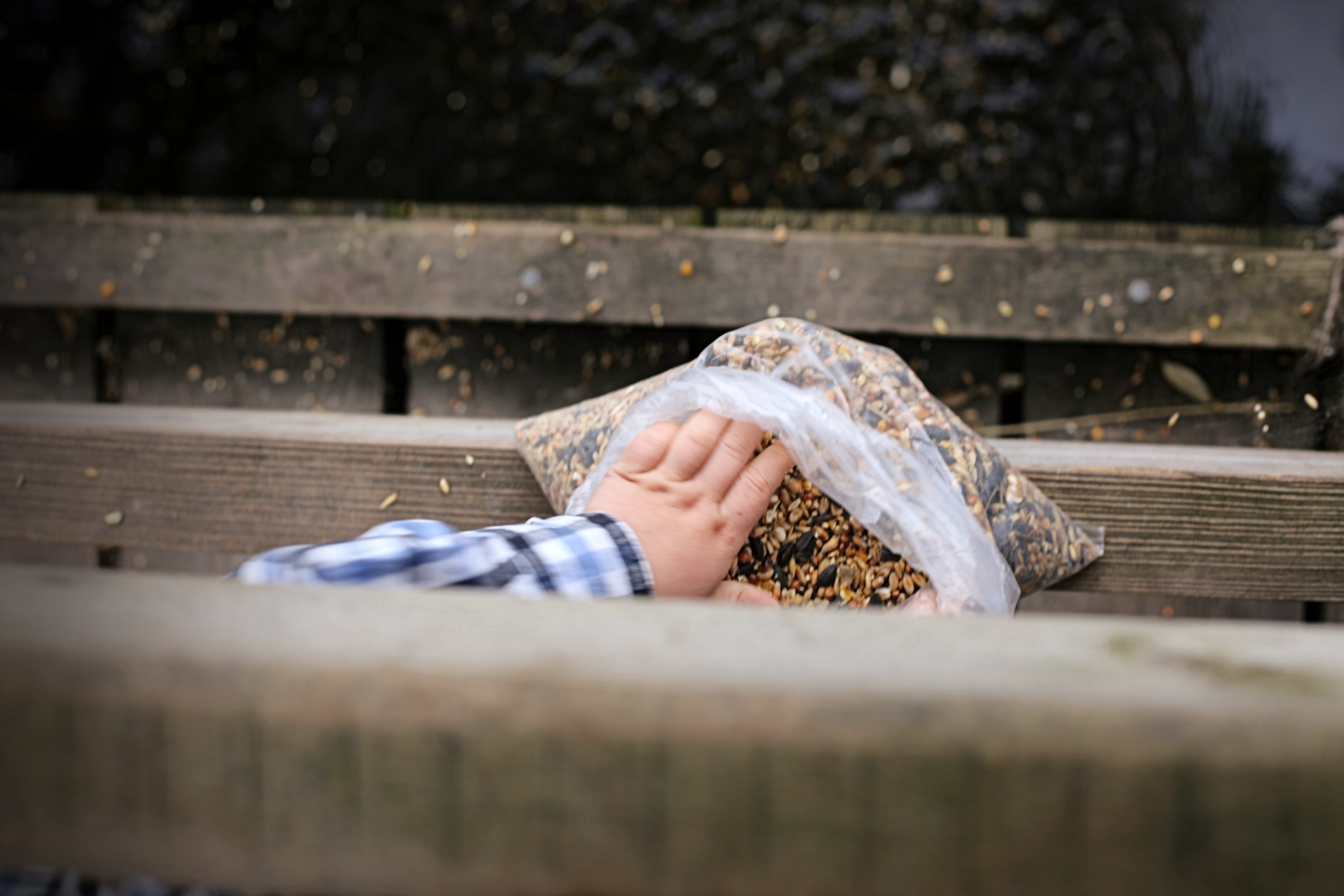
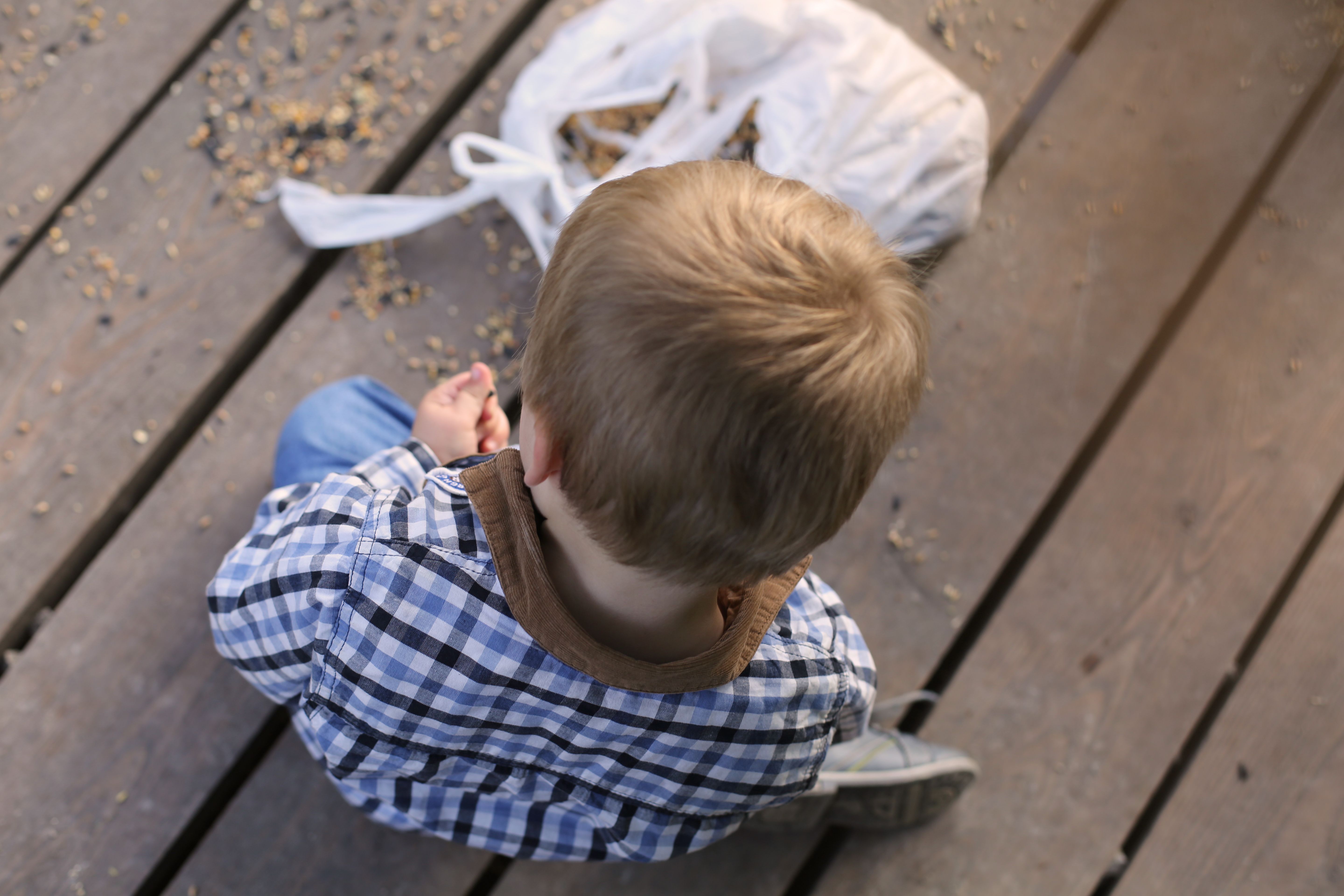
There is a bridge close to my house where tantrums melt and calm proceeds. I’m not quite sure what it is in that place that pacifies difficult feelings and makes more reassuring communication possible. Maybe it’s the joy of reaching a destination that does it or the task of feeding ducks or just being surrounded by nature or maybe all of these things taken together. Life just seems to float there. Just like the water under the bridge.

It’s not only the toddler who needs the bridge. I need it too, to quieten my internal communication with myself. August has been quite intense for me as the next few months are likely to be. When the pressure is high, I really appreciate open spaces more than anything. Perhaps I also have got a kicking and screaming toddler in myself who can only collect herself when out in the wild.

When I used to work in my dad’s orchard, my sister and I would spend a lot of time just looking into the sky, watching the passing clouds, connecting with the heavens. I noticed that my son loves doing it too. Looking up, breathing deeply. It’s reassuring, isn’t it? That under the clouds we are all small people.

Initiate growth inside your family

flowers

These very first years of family life are full of challenges and negotiations that once resolved are actually incredibly satisfying. I like to think of a family as a unit in a state of growth. So when we hibernate for too long, we ask ourselves which of the spheres of life we have recently or over time neglected. In fact, I like to do this very easy exercise in which next to a life sphere we discuss ideas on how to improve it. It is a very simple exercise that, if you wish to do it for your own family, is best done individually for each member and then together as a whole.

Life Sphere:

Spiritual  – effort to make time for meditation, reflection, prayer, quiet space in our busy liveflowers2s

Humane  – effort to make time for helping others outside the family and each other within the family

Emotional – effort to make time for cultivating positive emotions (love, kindness, compassion) and working through the negative ones, scheduling activities that bring about positive emotions

Physical – effort to make time for sport, rest, affection, cooking nutritious food, looking after our bodies

Intellectual – effort to make time for cultural activities (book, cinema, theatre) and stretching our minds, problem-solving activities, formal or informal study

Social – effort to make time for socializing, family-and-community gatherings, family conversation, celebrating, events in your own city, etc.

Environmental – effort to make time for engaging with nature, improving our homes or local areas, repairing the house, making our immediate environment pleasant

When it comes to family growth and well-being I have got one belief: every effort that you’ll make in the space of one year will deliver its shoots the next and if cultivated it will fully blossom in years to come. Do not get dissuaded or discouraged by the instant gratification culture, everything that is worth doing, is worth doing even if the fruit will show later in life.

Have a lovely family life!

This exercise has been inspired by the exercises promoted within Cognitive-Behavioral Psychology. If you’d like to learn more about it, you may like to read: Cognitive Behavioral Therapy: Teach Yourself (2012) by Christine Wilding or any other book or introduction to Cognitive-Behavioral Therapy.

Parenting with (Self)Care: Guides and Links To Resources on Postnatal Health, Wellbeing and Nutrition

poppies are gone_copy

Nutrition and postnatal health are the topics that I have, over the last two years, become very interested in. In nutrition because I want my husband and son to be healthy; in postnatal health because I want to be able to enjoy these challenging early years of motherhood. I’ve been reading a lot around those subjects but also attending meetings and events in my town that addressed those topics. I am one of these people that need to be reminded and frequently directed on to the right path if I want good habits to settle in.

Here’s a list of resources that helped me…

The essential guide to foods that heal, Olivier, Suzannah [ISBN: 978-0716023272]. It is actually unbelievable how many ailments can be healed or exacerbated by the food that we eat. This guide is clear, well-written and packed with information. It’s a spring of knowledge that is really worth drinking from.

The 10 Secrets of 100% healthy people, Holford, Patrick [ISBN: 978-0749929114]. Don’t be dissuaded by the strange formulaic title. This book to me seems like a good piece of research, with surveys for you to fill in to provide health signposts. This book has helped me identify what I should focus on in my recovery. It’s not strictly about postnatal health and has wider relevance. I like this book and would easily spend a week reading it again.

Postnatal depletion even 10 years later. This is a title of an article that I have found online (Click on the title to be redirected to the site). It really explains clearly how depleted women can be in the first years of mothering. It’s a very informative and essential read.

Other sources to keep an eye on:

Mothermorphosis – The author, Dr Oscar Serrallach, who writes about postnatal depletion is about to publish a book on the subject. I have looked at its brief and have put my email on the list to be informed of its release.

Nutrition and Wellbeing – Have you heard about FutureLearn? It’s a platform that offers free courses online prepared by British universities. I have just signed up to a course on Nutrition and Wellbeing that will start running in Aug 17. The course promises to “Demystify the complex and conflicting messages we hear about diet, health and lifestyle today” and is run by University of Aberdeen. Here’s the link to the course.

The resources above provided practical knowledge to me and were great change triggers. If you decided to look at any of them or to participate in the course, I hope that you’ll find all the info that you need to increase the quality of your family life.

The spiritual dimension of childhood

in a church

We talk a lot about how to best bring up our children. We talk a lot about their diet, about their clothes, schooling, meaningful playtime and sleep patterns. We are continuously preoccupied with their self-esteem and skills development but we hardly ever address their spiritual side, hardly ever ask questions about it. I sometimes feel that it is almost a taboo to talk about spirituality for the fear of being recognised as a potential or practicing believer.

I am a practicing believer. I go to church. Once it was part of my cultural practice and upbringing (being brought up in a Catholic family with Catholic values), now it is my choice. I don’t feel constrained by my religion, I feel guided in some manner but not constrained. In fact I am often plagued with doubt but a few years ago a solid seed has been planted in me and now there is a tree growing there, a very healthy tree that supports my core and blossoms with my regular visits before God.

I belong to a gentle and a very balanced community built from people from all over the world: Europe, India, Nigeria, Brazil and the States, to name just a few. We are all there sitting in one church, connected before God, equal before God. It is a very powerful sensation. It is a very powerful understanding. I take my son to church and I think he sees what I am seeing. He sees and breathes this so powerful a statement of equality – for him there is no other world, no other world than the multicultural one, no other than the equal one.

I have got friends of all religions and persuasions, in fact my best friends are of different persuasions to mine but it does not prevent us valuing each other’s friendship or having deep conversations on the topics related to believing, disbelieving and non-believing. Our ability to develop different views and feelings related to the metaphysical is what makes us so wonderfully multidimensional. I want my son to be able to position himself towards the metaphysical with as much knowledge and experience as he can get himself, and as much understanding as I can offer him and so I take him to church (I know that there are other ways, but that is mine). Someone told me once that they stopped attending church because church should be for the people and not people for the church. The main message that I get from the place that I go to is not that people are for the church but that people are for the people. That people are for the people. This is what I would like my son to take with him.

We are very fortunate to live in a multicultural and multi-faith city. The city which totally overwhelmed me when I first arrived here, the city which I am totally indebted to for making me open-minded and curious of differences, and as many British cities this one is also great at coexistence but would definitely benefit from more face-to-face dialogue. I don’t know how it is in schools these days, but I know what it looks like in playgrounds and play spaces. Mums gravitate towards those that look like them. How about breaking that habit? How about initiating conversations that join us together? Getting to know that lonely-sitting, iphone-flicking everymama? Where she’s from, what she values and most importantly why she is alone.