GUEST POST: The Fight Against The Decline Of Book Reading

Tara Vickers Photo
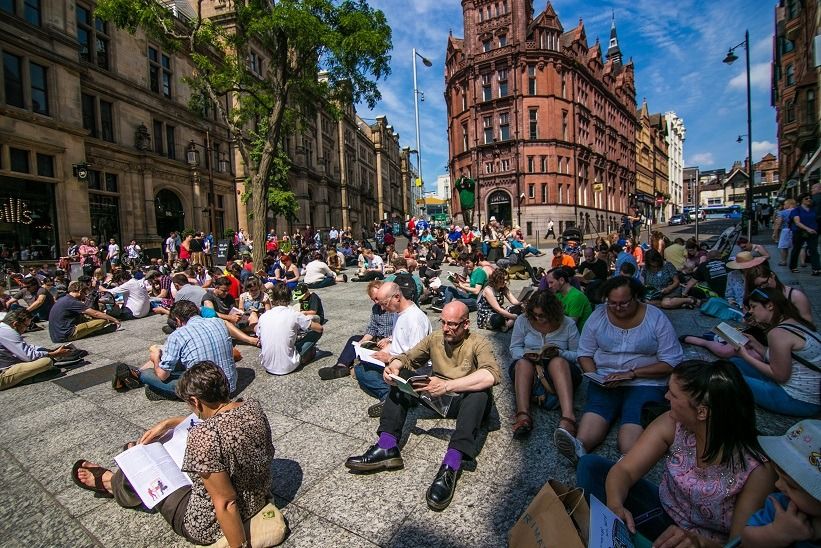
A reading flashmob in Nottingham, July 2014. Photo: Tara Vickers, 2014

I have the great pleasure introducing today’s guest writer James Walker. He is a literary journalist and the editor of the literary graphic novel Dawn of the Unread. Here he writes about the fight against the decline of book reading.

The Fight Against The Decline Of Book Reading by James Walker

On the 12 July 2014 I and a few friends decided to organise a reading flashmob in Old Market Square, Nottingham. 400 odd people turned up armed with books and we joined together in a very silent protest. Our aim was to make reading a visible act, and to show our appreciation to the writers, publishers and bookshops who have brought us joy over the years.

Physical books are slowly starting to disappear from the high streets and it’s not just because of the Kindle. In February, independent bookshops dropped to below 1,000 for the first time. This is largely due to high rents as well as a drop in demand. Bookshops pay the same rates as other businesses yet it is simplistic to categorise them as ‘retail’. Firstly, they are never going to be as profitable as say a clothes shop and secondly, they have an educational function. If councils don’t change their attitude our town centres are going to be nothing but Poundstretchers, Tescos and American coffee shops.

Libraries, when they’re not being closed down altogether, are seeing opening times and staffing numbers reduced due to cuts. The old argument that other services (such as hospitals) are more important is simplistic and divisive. The UK was recently positioned 22 out of 24 industrialised nations for illiteracy. This is particularly worrying given that there is proven evidence that those who don’t read are less likely to vote, become home owners and lack general confidence. Cuts also mean that less books are stocked which in turn impacts on the livelihood of writers who are already pretty much at the bottom of the food chain.

These are just some of the issues that motivated the people in the picture to sit down alone together with their favourite books. Reading is also something that is able to unite every type of person, cutting across cultures, gender, ethnicity and age. Yet despite its ability to unite all communities and its role in developing us intellectually and emotionally, it is something which local government seems to treat with contempt. Now we’ve all sat down together quietly, perhaps it’s time we all started to shout for what we believe in…

James Walker is the editor of literary graphic novel Dawn of the Unread. The flashmob was organised as part of their campaign to raise the importance of reading. Their next public event is a game of zombie mastermind as part of the Nottingham Festival of Words (19 October, 3pm, Old Market Square, Nottingham) which will see four dead writers come back to answer questions about their literary lives www.dawnoftheunread.com

Nothing New: moving forward

mountain_flowers

My Nothing New Project has come to a standstill over the summer. I came across a few situations where I didn’t have a choice but to buy something new for myself and my son. Things like that always happen when you think you can relax, don’t they? For example, when you simply forget to pack that essential jacket you need because the place where you’re staying in the mountains drops to 6°C or when your child’s feet grow almost overnight and you realise that he will not make many steps in the old ones any more. I’m forgiving myself these small departures from the nothing new project as they really are justifiable but there is something else too… my little weakness that I indulged in while in Poland. I love Polish children’s’ songs and stories (written and spoken). I tried to say no to them, but I do see them as an essential part of my son’s childhood. And not just my son’s. They will also be used by a number of children because I am starting a group for Polish kids in my town which will focus on popularising Polish rhymes and stories among the expat children. So it turns out that those books have become a bit of an investment into community building and I’m happy I am making use of this investment.

So all in all, what’s the status of my nothing new project? I’ve slipped but I am carrying on, being mindful of what and where I buy or what I don’t buy. It’s almost the end of September and pre-Christmas shopping madness is about to start – I am sticking to the nothing new project just for the sole purpose of staying true to the message of the Christmas period – that new is born and not bought… that a true and long-lasting regeneration and renovation comes from effort, time and nourishment. So for these next few months I’ll carry on learning how to be patient, more hard-working and nurturing. I hope you’ll stay with me to see to it. ;)

When to read to those toddlers that hardly ever sit still?

running_toddler_Postcards without stamps_blog

“I really would like to read to my toddler but it’s really difficult. She moves so much or when I start reading to her she grabs the book and tears it apart,” a friend of mine said to me. I really knew what she was talking about as my little toddler was doing exactly the same thing. Pulling, biting and tearing the pages ferociously as if turning into that young and wild lion that I’ve just attempted to read to him about.

Reading is important. It is necessary. It feeds imagination and language development so there is little choice really in the matter. It must be done. What should we do then when the reading changes into a chaotic feast?

I went on a mission to look for times when I can peacefully read to my son, get the most of his attention and save the books from being damaged. I had a few Eureka moments and from then on reading has become much loved by my son and easy for me and my husband. Here are our favourite times for reading:

In the morning, during his milk bottle time – I put my son on a sofa, give him a bottle of milk, sit down next to him and we go through as many as 4-5 short stories. He learned to like this morning routine so much that the books are read more than once even after the milk is finished. He likes to choose the order in which they are read too.

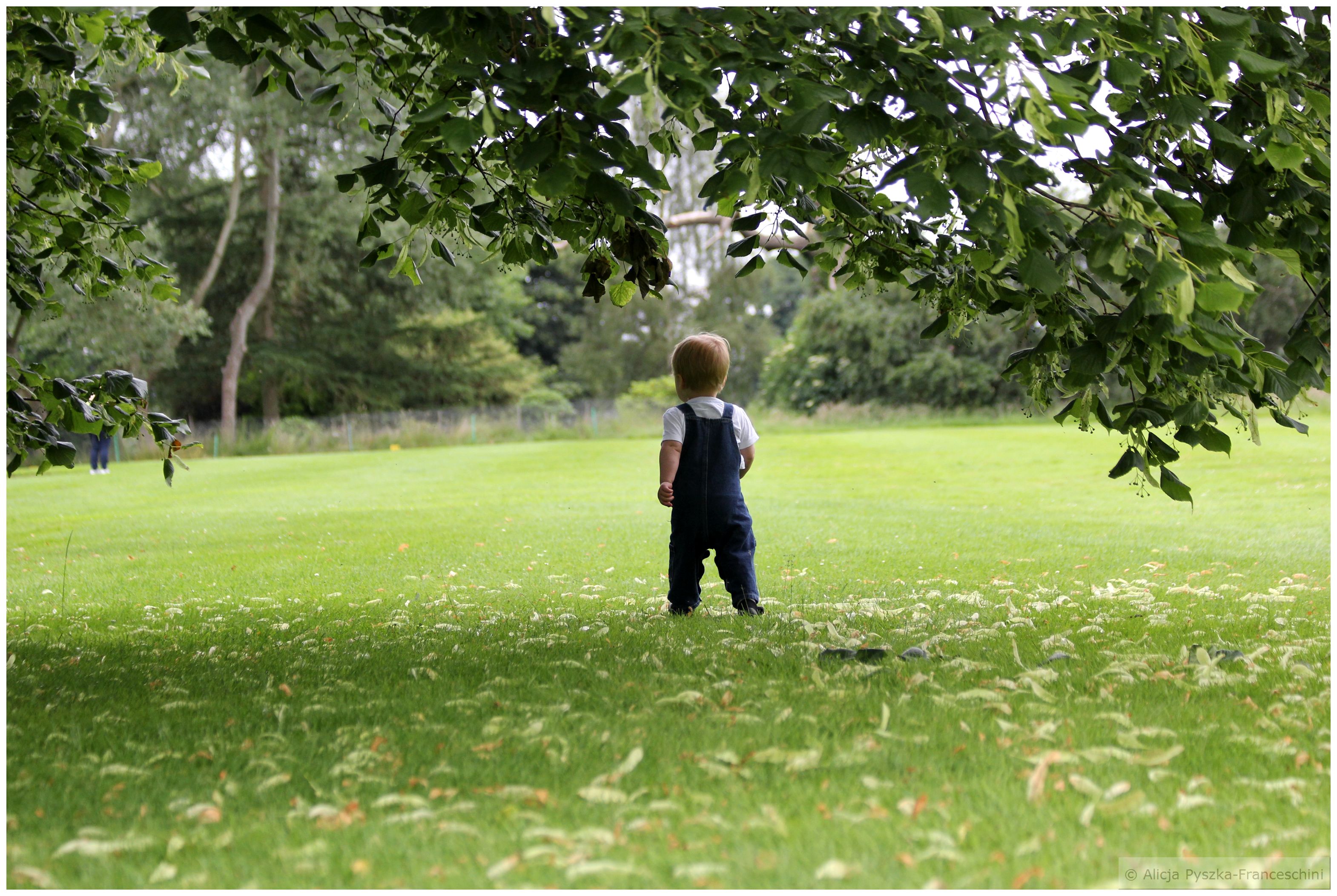
In the afternoon, after a good running in the garden or after being in a playground – Even the strongest and most moving of toddlers like to have a bit of downtime. When I notice that my boy would be happy to have a sit down, I take a book or two to the garden, I sit on the grass or a blanket and I don’t need to wait too long for him to turn up to snuggle under my arm for a story to be read to him. He usually turns up with his favourite ball in his hand and so he leaves the books for me to hold.

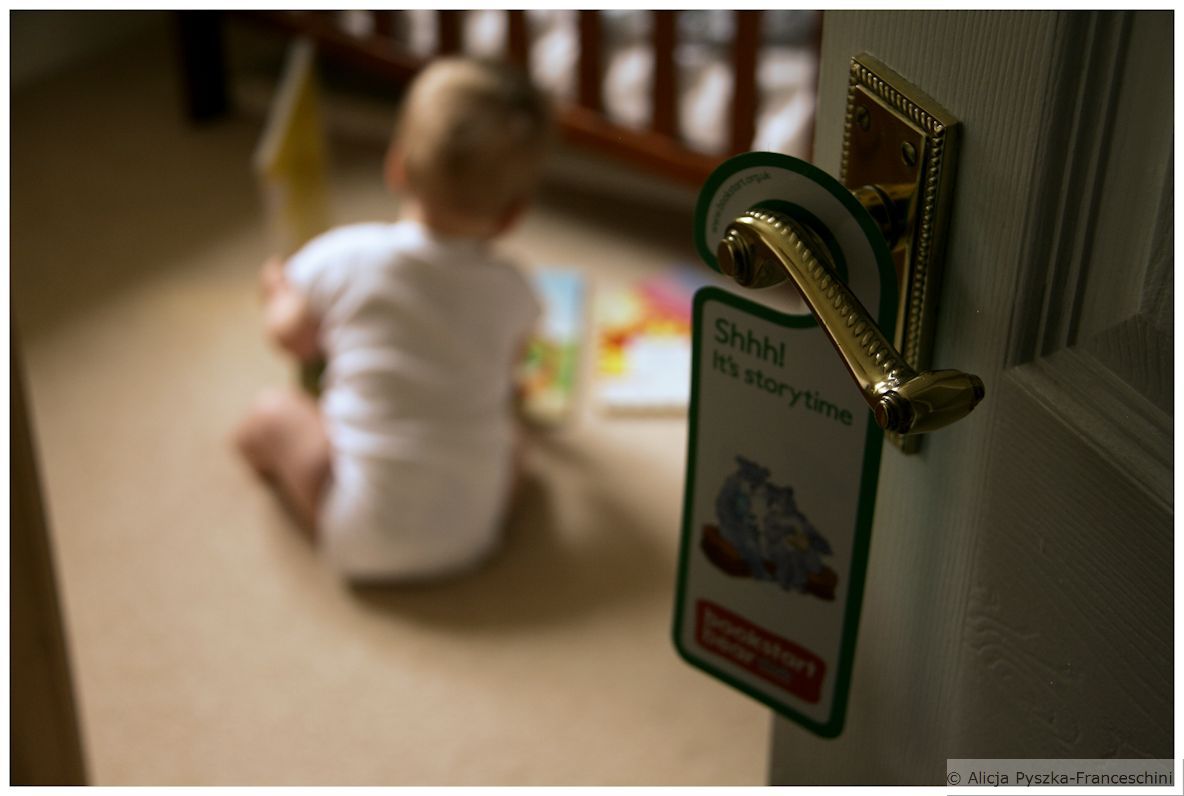
In the evening, again during his milk bottle time – We perch on the carpet or again on the sofa and we repeat the morning routine. Brushing teeth, pyjama wearing and lullaby singing come afterwards. I tried to read to my son when he was already in his bed or cot but that only distracted him and made him want to climb out of his cot.

I love these moments not only because of the opportunity to read and explore the stories but also because of the harmony that they give to our days. They restore the balance to our day and keep me sane.

When do you like reading to your child?

Let the story unfold…

Storytime_a toddler reading a bookI always cared about books. A book was the very first thing that I bought for my son even before I got his first baby grow. Books are integral to our family life. Our spaces seem incomplete without them and our days somewhat deprived if a book is not read or heard being read.

I never had many preconceptions about motherhood or about having a family. But there was always one thing that I didn’t want for my child. I never wanted to create a home where stories are not read, not told, not re-enacted or not invented. I never wanted books to be just lonely physical objects perched on shelves. In fact, I often felt sorry for those children who are given wonderful gifts of tales and fables and nothing is done with them… where those presents are really never unwrapped for them which means that the stories for these children never come to life. This is such a waste. Isn’t it true that to a large extent stories shape childhood? The stories we read, the stories we tell, the stories we repeat…. they make an impact on our child’s character and on the ways in which they perceive the world around them and their own role in it… Stories warn, stories educate, stories entertain and comfort… Stories remain when we are gone.

That first book that I purchased two years ago… There was a wonderland in that book. And I wanted my son to be transported there. There was vibrancy and strength in that book. And I wanted him to be energized by it. There was a meaning within the story. I wanted him to remember its message. And mainly there was joy… a pure joy that I sensed would emerge from engaging with it. A break. For my son and for me. Joyful, peaceful and energizing break.

Mothering with books is a form of simplified parenting. You allow the books to do the hard work of showing, telling, instructing and in many cases they are probably more effective than we are. It’s just much easier to follow a story than a parent. This year I am not buying any books but I am writing stories and poems because I see them as crucial for my son’s development. I see them as essential for his imagination, health and playtime. Without them I wouldn’t be myself and my son would not have the childhood that he deserves to have.

I know I am just a mum of a toddler… of a boy who cannot engage with an elaborate story yet and who frankly has just only recently moved on from the stage of book eating to actually being able to listen to the story. You may think that reading is not really that significant at this stage… that stories do not make as much impact…Well.. you see… I look at this small child and I look at the way he handles his books and I see a very strong need in him… the need to engage with the world that’s presented on those pages… the need to know, the thirst to understand… those small things such as why the little chicken is pulling a bucket full of water from the well or why the small kitten is in bed with a high temperature. How can you not tell the whole story when those small eyes are pleading to know?