Follow your child’s gaze

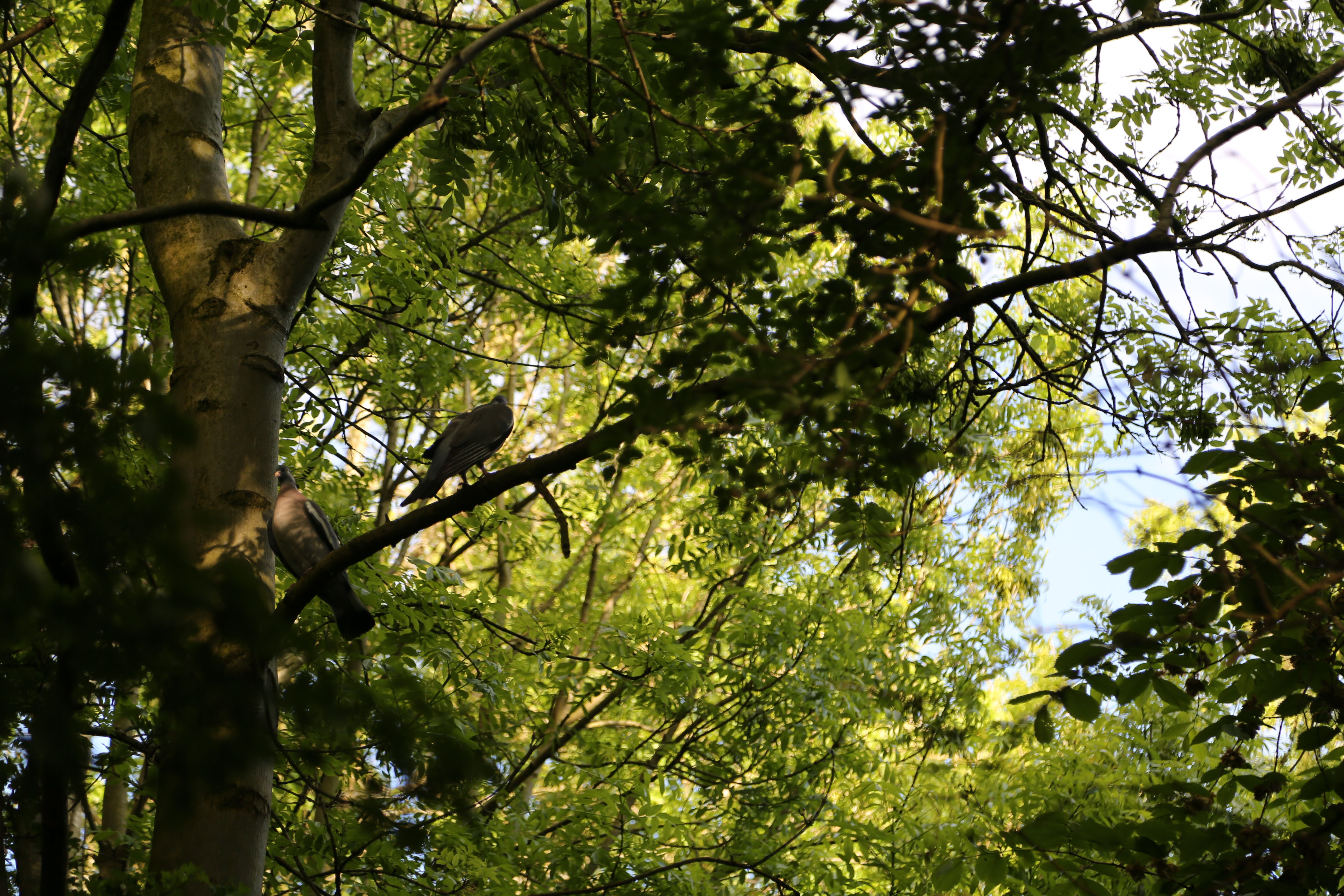
birds

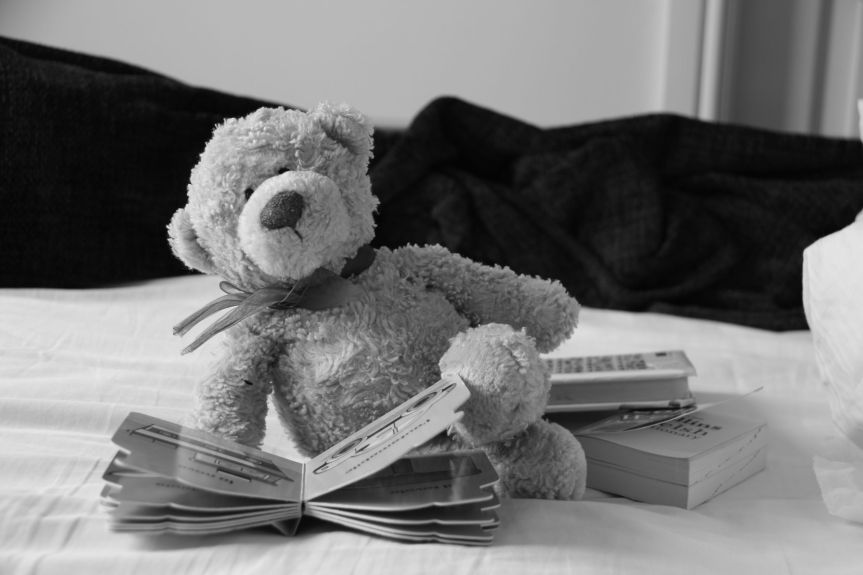
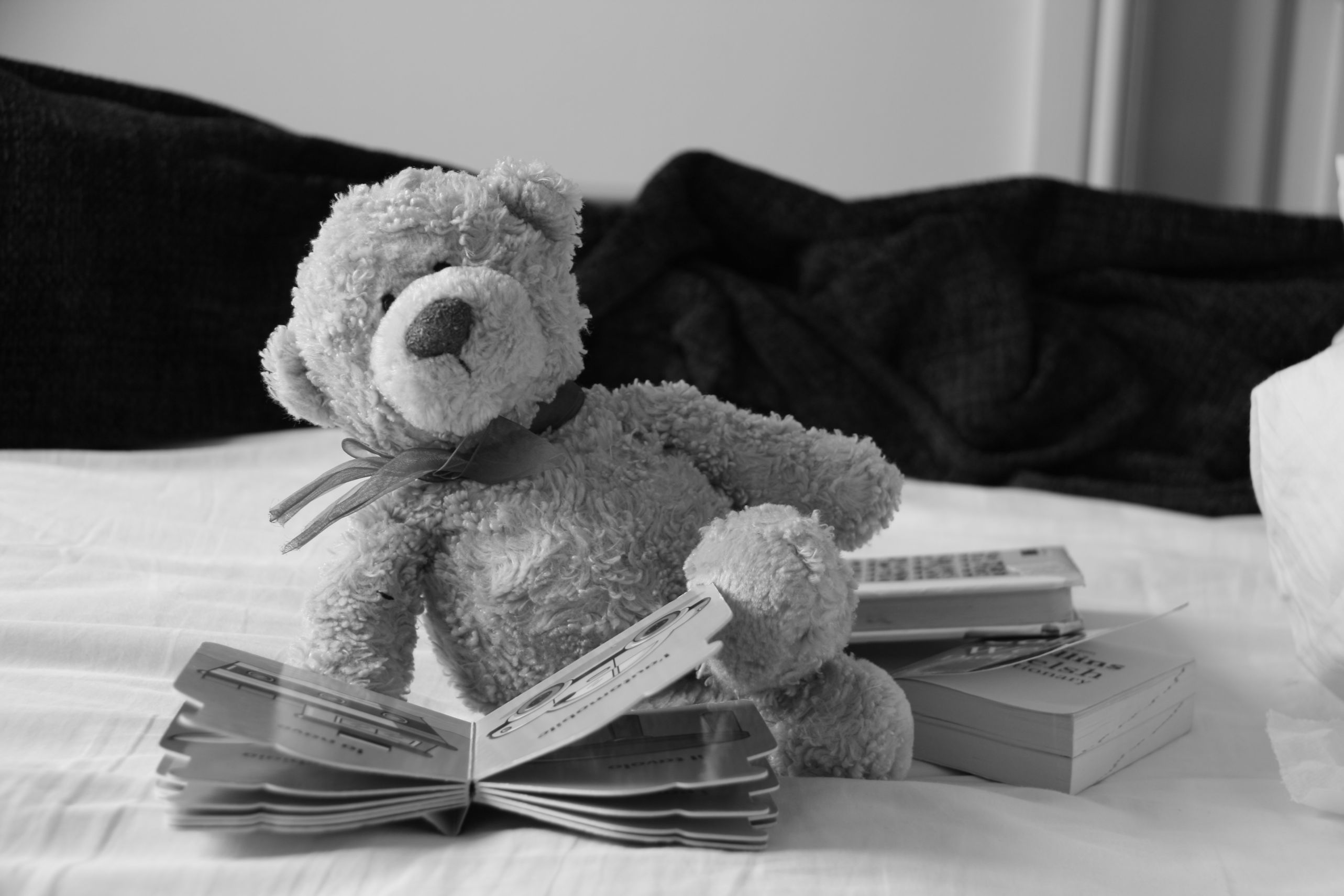
Just before the night sets in I sit down on a bed with my little boy, we surround ourselves with a number of picture books and we look through the images and I read to him. Depending on how busy our day was and how alert we both are this little ritual of ours lasts from 15 minutes up to an hour. I love this daily encounter with different adventures, poems and stories but most of all I love this very peaceful time with my child and the feeling of unity that it creates.

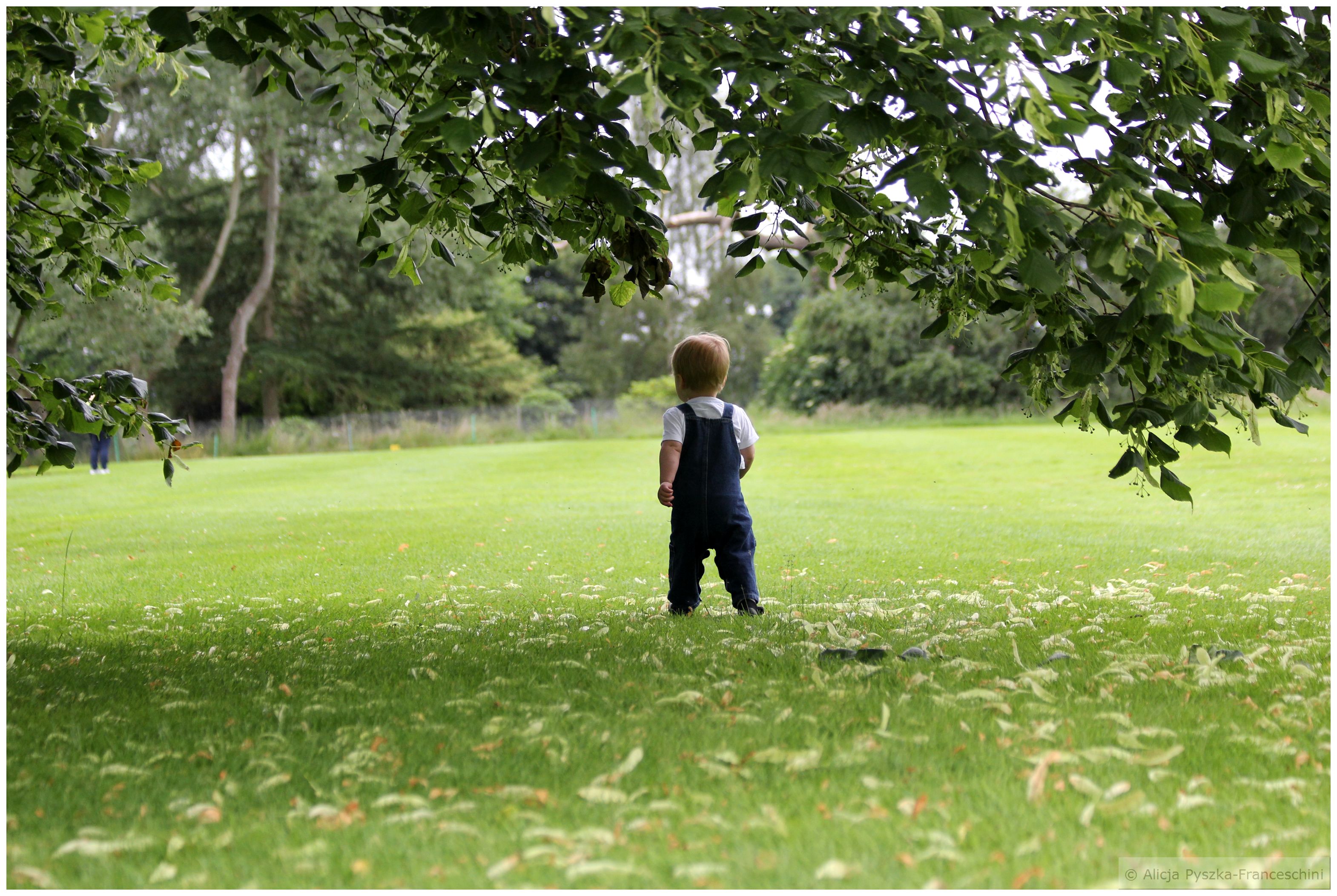
Years ago I was wondering what it is about reading or rather following a particular story which creates this feeling of togetherness. I decided that the answer partially is held in our gaze. We look in the same direction. We see things together.

When we go about our days with my son I try to follow his gaze. I try to look where he looks so that I get to know him better, so that I learn what his interests are. I hope that through this he will find courage to stay true to his interests later on in life and to be sure that whichever direction he will turn to, I will be watching this with interest too.

As part of my own development I often listen to podcasts and interviews on creativity, curiosity and calling in adult life and I like to link them to how I see childhood. Over these very first years of my son’s life I have formulated a very firm conviction that at the moment, at the very moment of being and becoming, curiosity is his only calling.

I owe it to his future to respect this.

Check the podcasts that inspired me to write the post above: http://robbell.com/portfolio/robcast/
Bringing up toddlers with relevant books

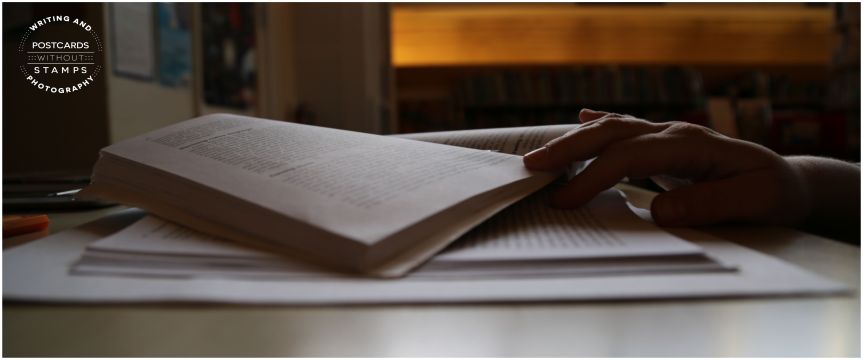
studyingReading is what I do for a good part of my week. Partially because of my research, but also out of habit. If I don’t read daily, I feel a hunger for words and ideas.

However, I wouldn’t call last year the most nourishing reading-wise. I read far too many guides on how to be a better mum that made me actually feel confused and not up for the job. My child entered the ‘terrible twos’ a few months back. He became more demanding. Playtime needs more effort now. The titles that I read then were not giving me the guidance that I sought, simply because they were not practical enough.

I wanted to know more about how to play with a two-year old, how to organize our time together and I was in need of having a good range of games and entertainments up my sleeve that would be safe and appropriate for his age. I thought I was a fairly imaginative person, but the things that I was coming up with were not always enthusiastically received by my little and headstrong bundle of energy.

I’ve done some searching and have come across a few fabulous titles that both my husband and I are really taken with. We pick a few activities out of these books and it’s great to see how our son responds to them and plays along. The same happens when I try them out in one of the playgroups for small kids that I run every so often.

I know that some of you have children in a similar age group so I thought I should write a short series of posts with book recommendations. I am pretty sure that some of these titles you’ll be happy to have on your shelves too.

The first post in the Book Recommendations Series will appear at the beginning of next week.

Looking for answers

Reading books
There is a pile of books on my bedside cabinet. Years of studying have almost conditioned me to research a little bit before I act, before I implement something new into my routines… This has of course its strengths but can also be quite constricting… I noticed this trend among my friends too… they don’t want to explore, try things out before checking online or before consulting an appropriate How to… book. I wonder where this tendency is coming from and if it is really changing us into better people, parents, workers or whether it leaves us more unsatisfied and frustrated? Is it fear of making mistakes or fear of taking responsibility for our choices? Is it information, perfection or reassurance that we’re seeking?

I love reading books. I will always read but I think I wouldn’t like to condition my child to the behaviour that I’ve described above. I would like him to try to figure things out for himself first, to develop a problem-solver attitude to life. The world needs fresh thinkers, people who are not afraid to try things out, to invent…

I know that books can nurture imagination, that they are important, if not crucial, in our children’s development… but not all the answers are in them… not all.

Indeed, the books do not know what our questions are. They might be answering different ones.

looking for answers

GUEST POST: The Fight Against The Decline Of Book Reading

Tara Vickers Photo
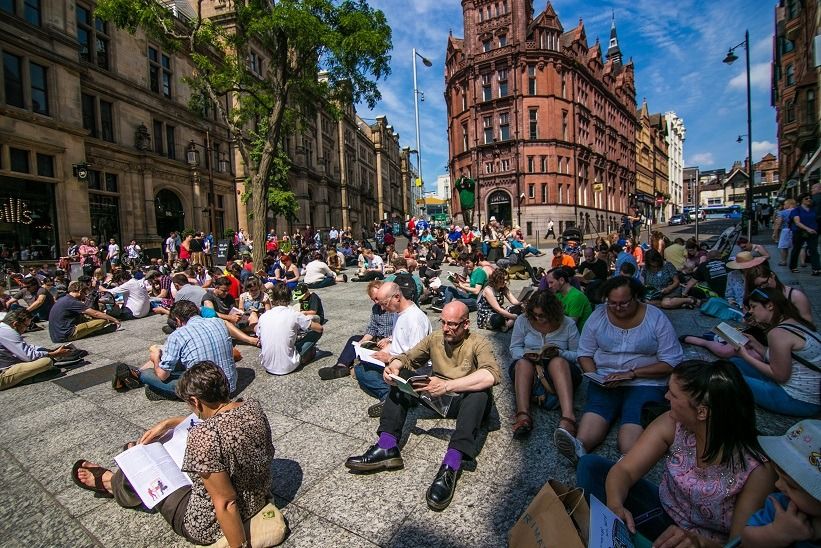
A reading flashmob in Nottingham, July 2014. Photo: Tara Vickers, 2014

I have the great pleasure introducing today’s guest writer James Walker. He is a literary journalist and the editor of the literary graphic novel Dawn of the Unread. Here he writes about the fight against the decline of book reading.

The Fight Against The Decline Of Book Reading by James Walker

On the 12 July 2014 I and a few friends decided to organise a reading flashmob in Old Market Square, Nottingham. 400 odd people turned up armed with books and we joined together in a very silent protest. Our aim was to make reading a visible act, and to show our appreciation to the writers, publishers and bookshops who have brought us joy over the years.

Physical books are slowly starting to disappear from the high streets and it’s not just because of the Kindle. In February, independent bookshops dropped to below 1,000 for the first time. This is largely due to high rents as well as a drop in demand. Bookshops pay the same rates as other businesses yet it is simplistic to categorise them as ‘retail’. Firstly, they are never going to be as profitable as say a clothes shop and secondly, they have an educational function. If councils don’t change their attitude our town centres are going to be nothing but Poundstretchers, Tescos and American coffee shops.

Libraries, when they’re not being closed down altogether, are seeing opening times and staffing numbers reduced due to cuts. The old argument that other services (such as hospitals) are more important is simplistic and divisive. The UK was recently positioned 22 out of 24 industrialised nations for illiteracy. This is particularly worrying given that there is proven evidence that those who don’t read are less likely to vote, become home owners and lack general confidence. Cuts also mean that less books are stocked which in turn impacts on the livelihood of writers who are already pretty much at the bottom of the food chain.

These are just some of the issues that motivated the people in the picture to sit down alone together with their favourite books. Reading is also something that is able to unite every type of person, cutting across cultures, gender, ethnicity and age. Yet despite its ability to unite all communities and its role in developing us intellectually and emotionally, it is something which local government seems to treat with contempt. Now we’ve all sat down together quietly, perhaps it’s time we all started to shout for what we believe in…

James Walker is the editor of literary graphic novel Dawn of the Unread. The flashmob was organised as part of their campaign to raise the importance of reading. Their next public event is a game of zombie mastermind as part of the Nottingham Festival of Words (19 October, 3pm, Old Market Square, Nottingham) which will see four dead writers come back to answer questions about their literary lives www.dawnoftheunread.com

When to read to those toddlers that hardly ever sit still?

running_toddler_Postcards without stamps_blog

“I really would like to read to my toddler but it’s really difficult. She moves so much or when I start reading to her she grabs the book and tears it apart,” a friend of mine said to me. I really knew what she was talking about as my little toddler was doing exactly the same thing. Pulling, biting and tearing the pages ferociously as if turning into that young and wild lion that I’ve just attempted to read to him about.

Reading is important. It is necessary. It feeds imagination and language development so there is little choice really in the matter. It must be done. What should we do then when the reading changes into a chaotic feast?

I went on a mission to look for times when I can peacefully read to my son, get the most of his attention and save the books from being damaged. I had a few Eureka moments and from then on reading has become much loved by my son and easy for me and my husband. Here are our favourite times for reading:

In the morning, during his milk bottle time – I put my son on a sofa, give him a bottle of milk, sit down next to him and we go through as many as 4-5 short stories. He learned to like this morning routine so much that the books are read more than once even after the milk is finished. He likes to choose the order in which they are read too.

In the afternoon, after a good running in the garden or after being in a playground – Even the strongest and most moving of toddlers like to have a bit of downtime. When I notice that my boy would be happy to have a sit down, I take a book or two to the garden, I sit on the grass or a blanket and I don’t need to wait too long for him to turn up to snuggle under my arm for a story to be read to him. He usually turns up with his favourite ball in his hand and so he leaves the books for me to hold.

In the evening, again during his milk bottle time – We perch on the carpet or again on the sofa and we repeat the morning routine. Brushing teeth, pyjama wearing and lullaby singing come afterwards. I tried to read to my son when he was already in his bed or cot but that only distracted him and made him want to climb out of his cot.

I love these moments not only because of the opportunity to read and explore the stories but also because of the harmony that they give to our days. They restore the balance to our day and keep me sane.

When do you like reading to your child?