
Success and community

IMG_1915pm

“It takes twenty years to be an overnight success.” Eddie Cantor, performer

I keep on reminding myself of this quote every time I start a new project. It’s never easy to create something valuable and lasting. It’s never easy to create something that will be well-received, stretching and useful at the same time. Last week I started a new project in our community aimed at Polish children. I wanted the children and parents to meet, sing, read poems and do some craft together. Sounds simple, but it’s not. Children are more unpredictable than I thought and my own child is too. I was able to foresee that he might not want to participate in some activities and that he will try to taste most things, but what I didn’t predict was that he will be regularly running out of the room to press the exit button for wheelchair users to open the main door of the centre. So, as you can imagine, this combined with the efforts to advertise, plan and execute the event didn’t make the job very easy.

Nonetheless, I have made a commitment to create something for the local community and so I will press on (just like my toddler with the door button).

I have chosen a community centre in my neighbourhood rather than a Polish church or a Polish club for the event because I do like when communities venture beyond their comfort zones and when they engage with different places. I think it’s very important not to confine ourselves. It’s liberating. I also believe that once the small children will feel comfortable with coming to the centre to do the Polish activities, they will become happier at attending other activities too (those that are aimed at all children).

What’s more, I have chosen my area because there is nothing more heart-warming than living in a socially accessible neighbourhood. It makes a big difference to our daily sense of contentment. It makes us perceive the world in brighter colours too and reduces anxieties about the people who live a street away from us. Someone told me the other day that they don’t like walking down their street because they don’t know the people who occupy the houses there. Is this fear not something that we should try to counter? Don’t you think that it’s true that we perceive streets to be nicer and friendlier if we know at least one person who lives on those streets? Neighbourhood activities make sense, don’t they? Even if the only thing that they do is to reduce our fear of walking to the bus stop.

Anyhow, I hope I will rise to the challenge of entertaining toddlers and that it will take me less than twenty years…

Any ideas of how I can do it?

IMG_5044

Neighbourhood – an anonymous group of strangers?

A while ago I really started to suffer from being anonymous. I’ve been living in the area where I live now for a few years and the fact that I don’t know even the names of people who live on my street has started really getting me down. When you give birth to a child, you realise the importance of a community, anonymity is depressing – you want to know people and you want the people to know your child so that they can also keep an eye on his safety. But equally you want to look after other children too, as if the sheer fact of you becoming a parent made you a parent to other children too.

Are you not tired of not knowing your neighbours? Are you not tired of being impersonal? Are you not tired of shallow and occasional nods and greetings? I am. It’s certainly not the way I want to live my life. It’s certainly not how I want to bring my child up – within an anonymous group of strangers

Often.. I feel that we’re failing as social human beings. Look at our homes – they are like hotel rooms perched in the same corridor and we just see the other residents when they lock or unlock their doors or sweep their front doormat (that ironically often have ‘Welcome!’ written on it). We cannot treat our neighbours as if we or they were here only for a night. We live here – 52 weeks a year! In this borough, in this street, next to each other! We must do something to get to know each other better. To engage in a community at our doorstep.

I believe that one of the reasons why so many people complain about multicultural society is precisely because we do not spend time with our neighbours. We do not have or make occasions to meet them. What do we do, for example, to find out information? We search the Internet… What if we run out of milk, salt or sugar? We drive to that 24 hour supermarket. In the past it would be neighbours, friends or family at whose doors we would knock without hesitation… We would visit them or call them, they would instruct us, teach us, help us… Now these are the faceless, impersonal tools that we choose or are compelled to choose. Another lost or reduced opportunity in making a human connection with those who are in our proximity, with those who live nearby.

And our children? Why do we keep them indoors? Why do we place them in front of screens all the time? It really doesn’t take that much time to visit the nearest playground. Even 15 minutes a day on a slide can make a new friend to your son or daughter. Take your children out, venture to your local children or community centres, go to the local park, use the playground. They are there for us to be used. They are there for us to visit.

It’s possible to create a community. We just need to meet and talk. We need to create opportunities for conversation and for spending time together. It’s the only condition. There is a limit to the extent to which we can develop on our own… we need groups of people to overcome our limitations, we need each other to realise those limitations, to become truly human we need each other. Call me idealistic, but I really would like to change my neighbourhood and improve myself with it.

In the middle of the week friends visited our house, we ate together, our children played together, we laughed and talked. Usually the middle of the week can feel quite heavy and daunting, that evening was uplifting, it made us feel loved and connected. It made us belong.

I like to get that feeling from walking down my street… that pleasant feeling of belonging and being part of something bigger than myself. Wouldn’t you?

October too, belive it or not

Postcards

Bits of life

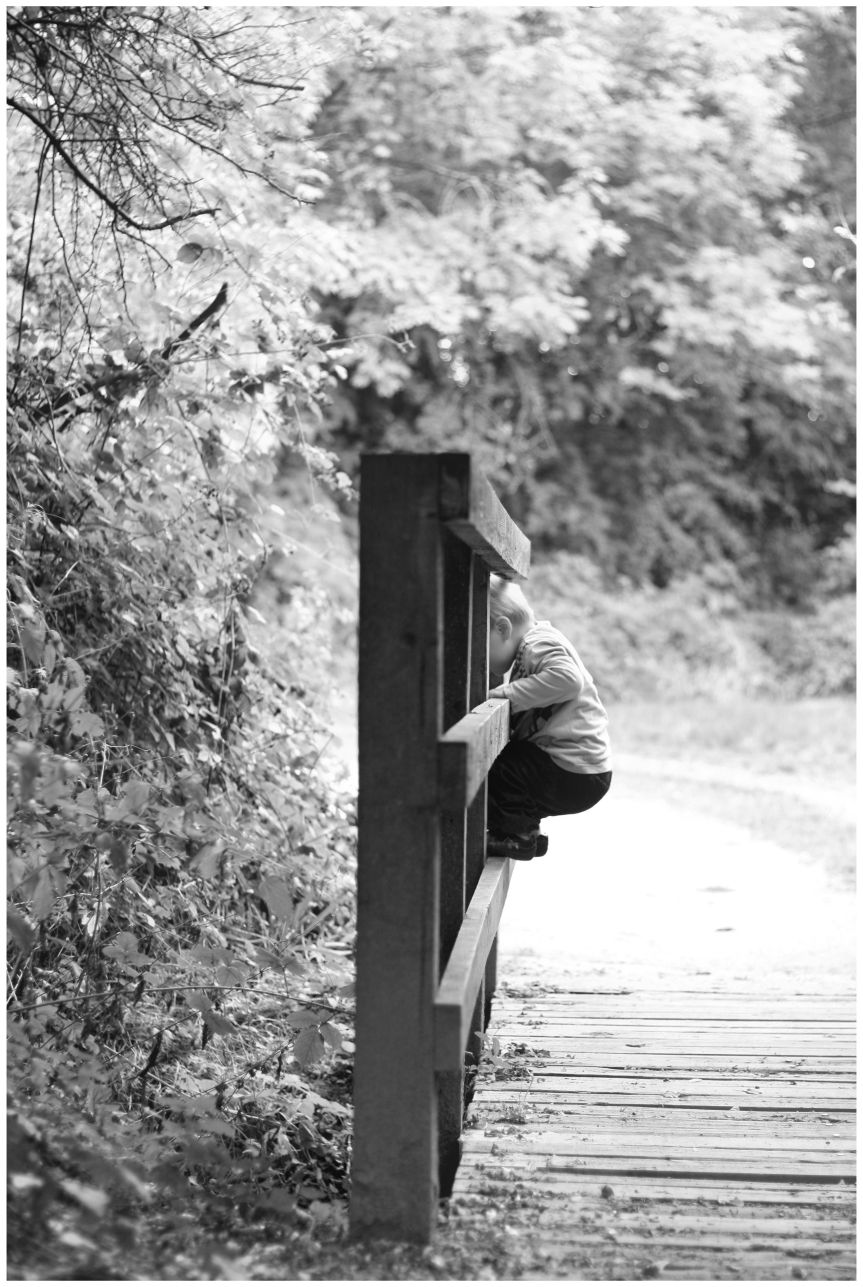
“Whenever I feel the need to exercise, I lie down until it goes away.”  ― Paul Terry  

This is evidently not true of this lovely little boy above.

Finding yourself

green _grass

“The best way to find yourself is to lose yourself in the service of others.” ~Mahatma Gandhi

Nothing New: Both Sides of The Coin

IMG_2625k

Six months without buying anything new seems like a long period of time, but it is not. It is just six months, not six years, not sixteen and not sixty. It is just six odd months of reusing, borrowing, repairing and buying second-hand. Nothing new hasn’t defined my lifetime. But it has and will be defining the lifetime of others.

I must admit I had a moment of panic when I started the nothing new project. It wasn’t about not being able to buy things but it was about losing friends, losing opportunities to socialise and hang around together. I felt trapped. You see… one of the things that I decided to give up was coffee and you know how the world looks like these days – you meet at a coffee shop, you chat and giggle over a steamy black or frothy white drink. It’s isolating not to be able to have a cup of coffee with a friend, isn’t it?

I think this fear was triggered by the memories of my first year in the UK, when as a student I wasn’t really able to afford cups of coffee or dinners. It was serious. I was studying as well as working many hours per week as a waitress in pubs or restaurants. I wasn’t earning much, had no student loan, paid my rent and food from what I earned as a waitress so I really couldn’t afford many indulgences. If I had spent my money on those things I wouldn’t have been able to pay for my electricity bill in winter, the flight back home for Christmas or books for studying. I remember I used to do overtime just to be able to go for a coffee with a friend to discuss essays and literature. Tough time. Glad that it’s over. More than over. Now I have a choice. I have a choice to buy or not to buy and I am making the choice not to buy almost nonchalantly. Just because I can.

It doesn’t make me proud. Very often it makes me feel uncomfortable. “To buy or not to buy?” is not a question that offers two options to everyone. For many, “to buy” is just a matter of upgrading, changing or improving. For others, “to buy” means choosing between two or more necessities, two or more human rights: the right to study, the right to sleep, the right to have warm food, the right to socialise, and even the right to go to work. It feels comfortable and snug to be in the first group. It feels alienating and vulnerable to be in the second one. ‘Nothing new’ is not their choice. It’s not a lifestyle. It’s survival.