Consumers or Producers?

Life in the countryside

In the last few days my mind has moved on from a personal approach to consumerism to its broader aspect. I am thinking of our enormous (societal) ability to consume beyond the level of shopping.

I’ve been greatly privileged with being brought up in the countryside… in a village full of farms, orchards, green and golden fields. The images that I carry in my head are those of hard-working people, of people who care greatly and of people who produce and make every effort at creating quality foods for others. I’ve been observing people who dedicate their days, holidays and weekends to making sure that whatever piece of land they own will yield the desired crop… that they have something to offer to the world once the summer finishes. This isn’t done without sacrifice. It does take a lot out of them… but somehow I cannot imagine them doing anything else… they just grow up with that mindset… that mentality… that you are worth as much as you can offer to others.

This ability and eagerness to produce for others seems to have slipped out of the Western psyche. We’ve been too contented with being consumers for ourselves. It’s not only about the economical dimension but also about personal and social aspects. How much do we give from ourselves to others? How far are we able to extend ourselves? How creative and how hard-working are we?

I think that at least in our purchasing choices, if that is possible, we should not be driven by the price tag only. We ought to be more community-spirited when it comes to shopping. This is so important! To make the region that you live in a sustainable source of nourishment and growth. I stand for buying local. I try to support as many shops and farms in the area where I live as possible as I feel I am not entitled to complain about the economic situation in my local area if I don’t actively support its economy. I feel responsible for doing my share.

This countryside mindset also compels me to ask myself: To what extent am I a producer? What do I produce? What can I produce? With the abilities that I have been given, how can I support my family, society, friends and the environment? How can I be of value to the communities that I inhabit? Are there areas where I am only a consumer? Can I change it? Should I change it? Have I struck the right balance? So many questions to learn from..

Orchard

Seeing the luxurious

Beauty in the basket

There is a Spanish saying: Mejor solo que mal acompañado, which literally means Better alone than in bad companionship. I always thought that this is true of relationships. That a good relationship, be it friendship, romantic partnership or a work team, reflects the beauty of everyone in it. No one is overshadowed. No one is dwarfed. No one is suppressed. The same is true of objects that fill our homes and other spaces. Their beauty is revealed either when they stand alone or in the right company.

There are many items in my house which have lost their charm either because they’ve been swamped by other stuff or have been overshadowed by bigger or gaudier objects. I’ve started giving space to those little beauties by de-cluttering the house or just altering their arrangement. I’ve learnt through making these small improvements that recognizing the luxurious is all about this… about seeing and presenting things as luxurious although they are common, normal, average, typical and trivial.

Things that are given space stand out. We perceive them as special and we take notice of them. If you think of luxury and beauty in those terms it is almost impossible to have a life that is deprived of them. In that sense, you are never poor. It’s just about perception.. about having the eye that’s willing to see beauty in simplicity… it’s about having or training the beautiful eye.

“As you simplify your life, the laws of the universe will be simpler, poverty will not be poverty, nor weakness weakness”

~Henry David Thoreau

orchidred box and a cherrySimple beauty

By the way, have you recently visited any of these blogs: #BehindtheLens or Capturing Little Moments? One of my favourite beauty-spotters recently.

How does a life without a luxury feel?

orangesThe parcel was almost bigger than us. We would dive into it and we would fish out the fabrics and get more and more excited with each item of clothes that we pulled out. We were not poor, we were never destitute but we were, in the early years of our childhood, growing up in Communist Poland, in the country that, although rich in culture, human spirit and intellect, did not offer much or rather nothing to its citizens on the goods front.

We relied on those parcels to be sent to us from our family in Switzerland. They would last us and frequently also our cousins and neighbours for a long long time. We would swap, lend, borrow, alter and exchange clothing with others. Very rarely would my mother get us something new. There was just no option. No clothes available. We were dressed in second-hand garments from top to toes and not for a minute we would feel worse off because of that. We didn’t really notice it. It was just something that we were doing… how we were going about having things to wear. That’s it. No great philosophy behind it. Just the circumstances.

When I was six I travelled with my mum to Switzerland. I remember seeing many things and not really being able to make a lot out of them. I probably admired some of them… I probably tried to play with them… But clearly they didn’t make a very lasting impression on me because I just cannot remember them too vividly. As if I didn’t really have any emotional response to them. My heart back then was stolen by something much simpler and common, by vibrant and juicy mandarins. For me the pleasure of the open market was concentrated in those fruits. I just loved them. Their sweet, invigorating and citrus smell. Their colour. Their shape. Their delicate skin so easy to peel off with my tiny and dexterous fingers. It was a joy to have one of them, happiness to have two, euphoria to have a full netted bag of them. Yes, yes… they were already packed like this in those days. This hasn’t changed much.

So how does a life without a luxury feel so far? It feels like that visit to Switzerland when my mind and heart decided to be oblivious to the goods around.. not to take much notice of them.. to forget them. Instead I think I am able to see mandarins again… I feel that I am fishing out the real goodies out of the life box… the tastes, colours and textures of the Earth. As if my mind was programmed to seek beauty and pleasure and because it is not allowed to do it through shopping it develops its other ways… it seeks and finds those two elsewhere.

It’s so easy to get used to one source of pleasure and to become reliant on it. To play safe. To always go for the familiar. And then to despair when that source is removed.

My resolution of not buying left me a bit uncertain about what I should do with myself after meeting an important deadline. In the past I would have gone shopping in town to treat myself to something nice and new. I really wanted my reward for all the hard work that I did. I needed balance. It’s really interesting to see it in yourself that you were used to rewarding yourself materialistically, with a physical object. When did I learn that? I thought to myself. It wasn’t my default behaviour a few years ago. Or maybe it was?

Now I am beginning to see that my hard work can be rewarded through many other ways. Time for myself, a book, a film, music, a winter walk, crazy dancing with my child, a conversation with a friend, a comedy performance? And you know what? It’s so much nicer to find yourself lost in giggles than lost in a shopping centre!

Eating Well in Winter: Curried Chickpeas (and experiments with food photography)

making curry

It’s winter in the UK. Days are wet, windy and unpleasant and we keep on getting one cold after another. Fighting bugs with medicine doesn’t really work for most us. It’s the warm and nutritious food that strengthens our immune systems enough to complete the recovery. One of the nicest aspects of living in England is that it introduces you to foods from all the corners of the world and so it’s very easy to get all the necessary spices and ingredients to make these amazing dishes at home. I rummaged through our larder and took out a few good and healthy foods to replace the loved and cherished but eaten far too often pasta. There are many alternatives to it, of course, different types of wheat, lentils, pulses, sweet potatoes, brown rice. All good and yummy as long as you get the right recipe. I found one for Cholay (Curried Chickpeas) online at allrecipes.co.uk posted by Shammi Edwards (here). I thought it might work well so I decided to give it a go.

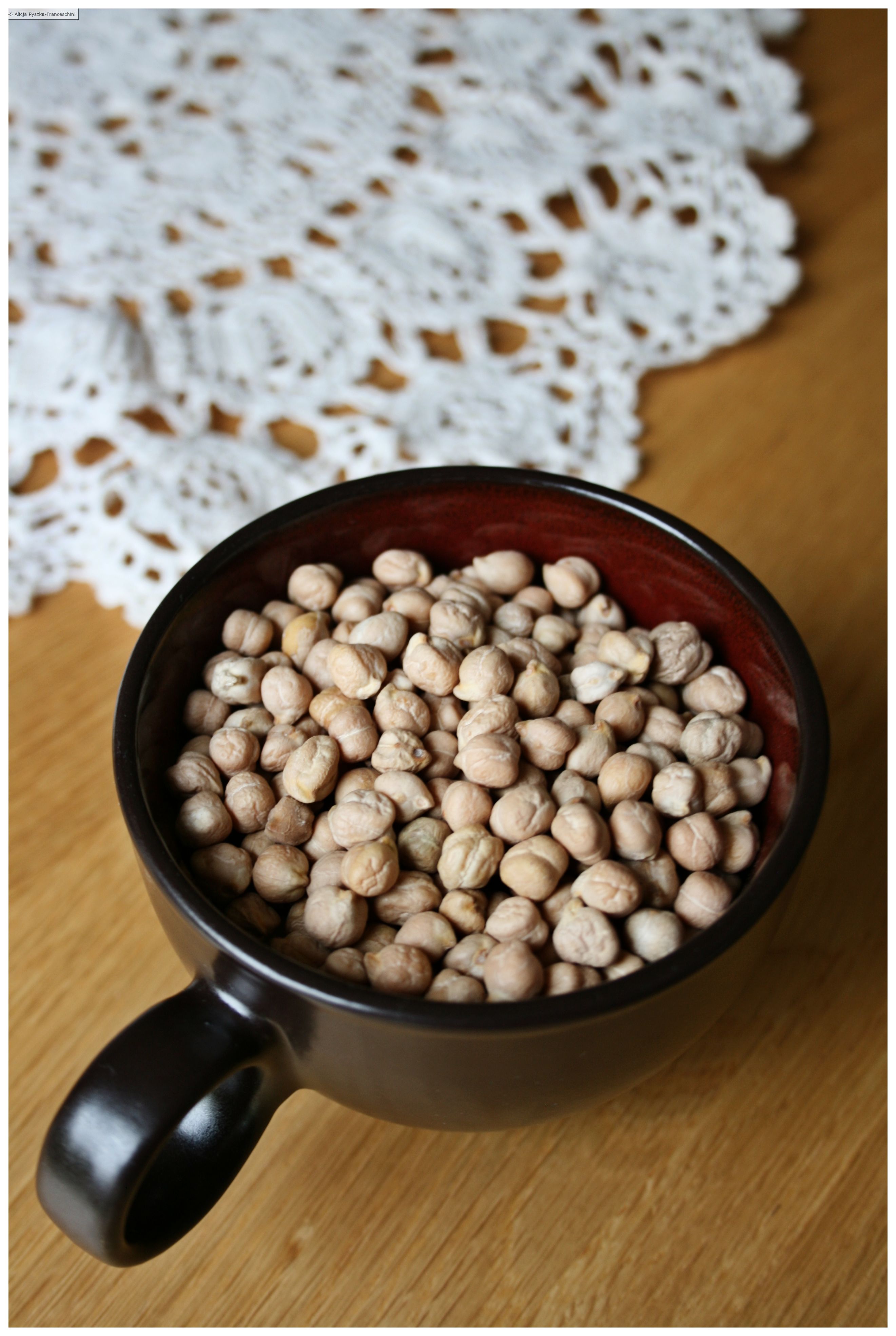
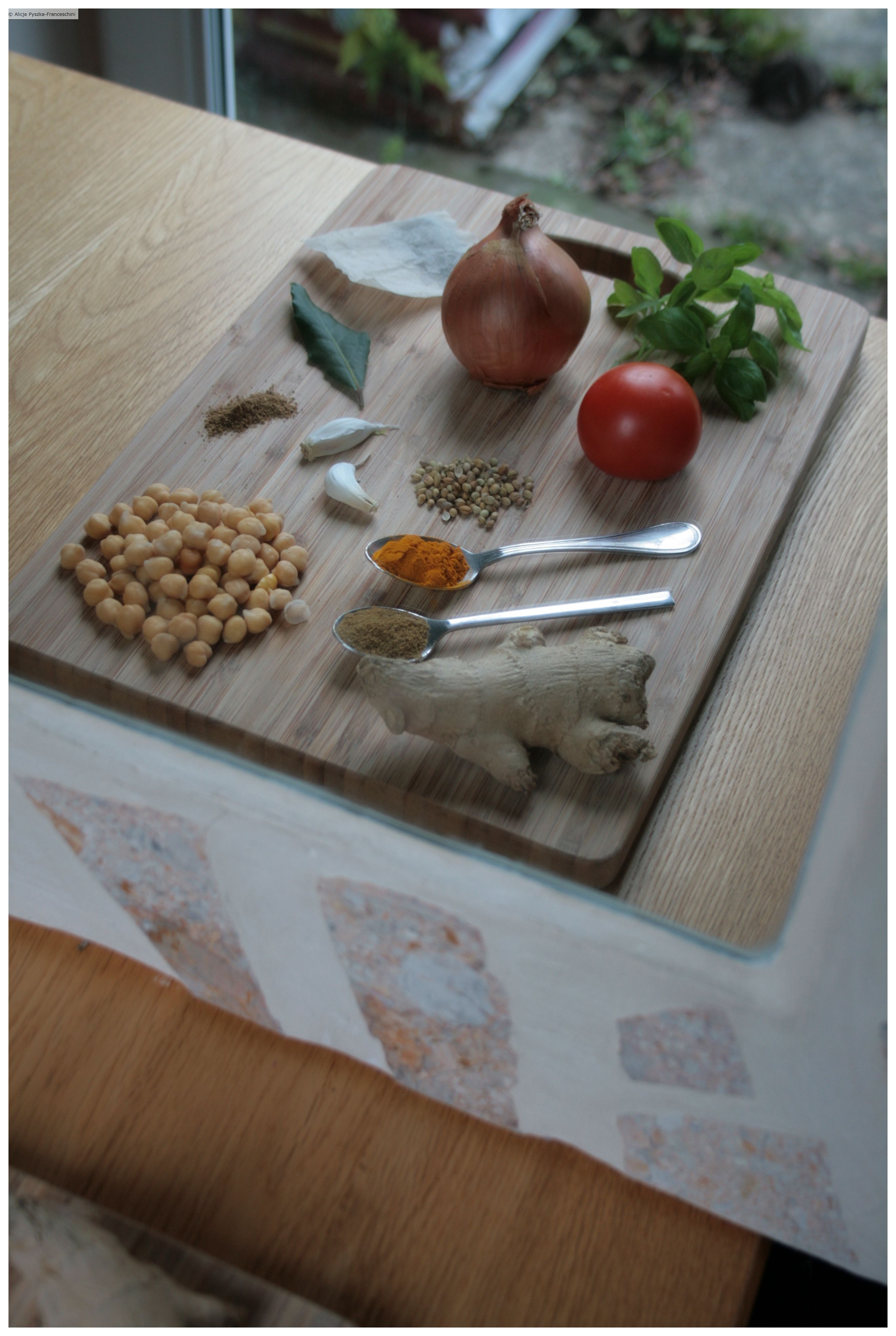
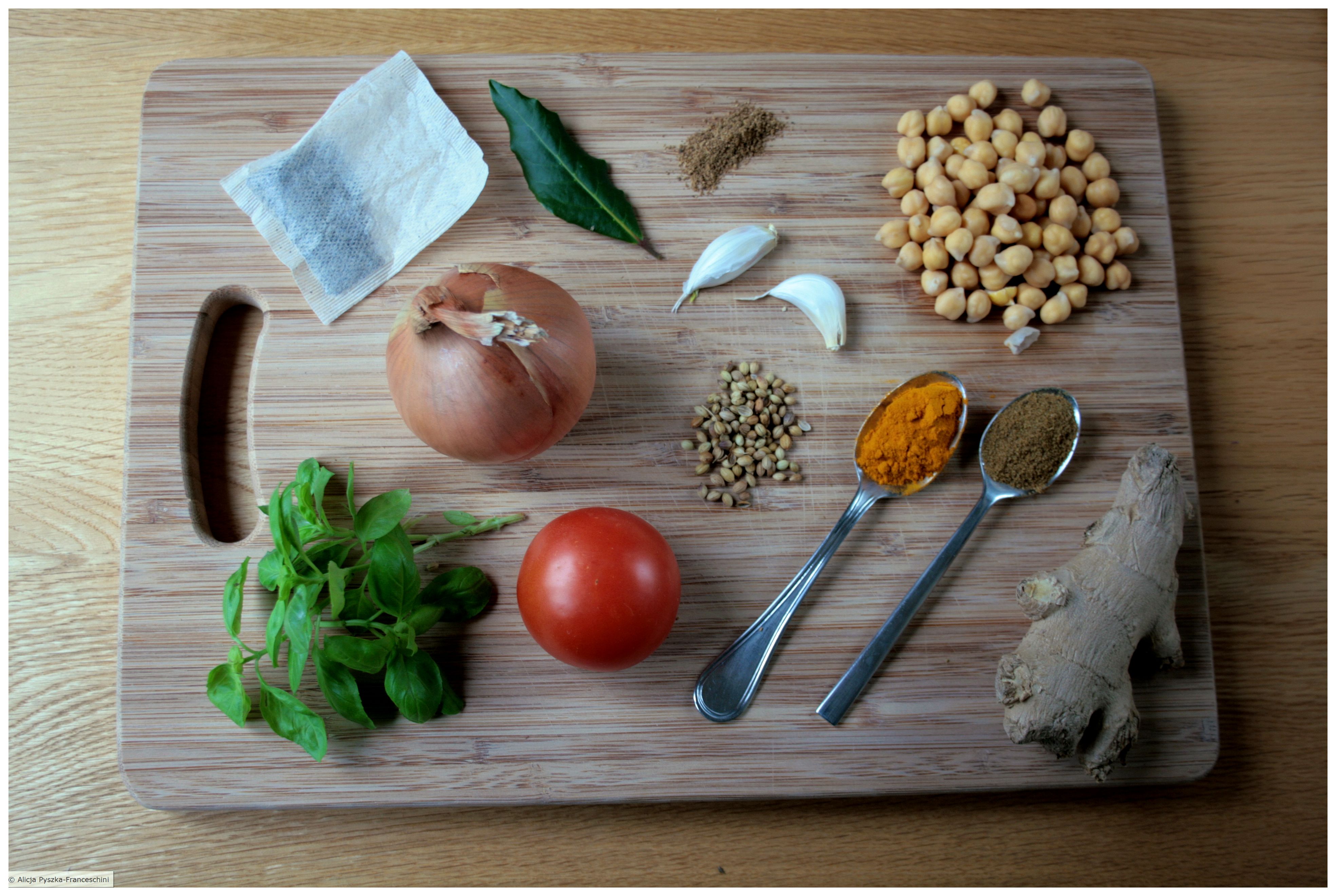
pasta fusilicieciorkaIt took me quite a while to prepare the dish but I wouldn’t worry if I were you… it’s the photographing, a moving toddler in the kitchen and my personal choices regarding the recipe (like using dried rather than tinned chickpeas) that did it… not the recipe itself. Here are the ingredients I used: Assam tea, bay leaf, water, dried not tinned chickpeas, garam masala, garlic, onions, coriander seeds, turmeric, cumin powder, ginger root, tomatoes, basil, salt. If you’d like to do it, you can find the quantities on the original site where I found the recipe. I used basil out of pure necessity as I just didn’t have any fresh coriander leaves to put in and I was pleasantly surprised how well it worked in that dish (made it quite refreshing and invigorating) and Assam tea as a replacement for English Breakfast tea worked fine too. I actually think that this dish lends itself to some manipulation and as long as you get the spices right and add a bit of water here and there in order not to burn the spices or the onions you’ll be fine. You can also make the dish hotter by adding extra garlic and ginger. That was my option and I was happy I used it. I was not too preoccupied with having grounded spices. I just grounded the seeds myself. It adds extra freshness to the dish.

grinding

Dried chickpeas can take a bit of time to prepare as you need to soak them overnight then drain and discard the water. After that you cook them in salted water even up to 40-50 minutes. It felt like ages for me so when my little son went for his afternoon nap I decided to experiment with photography a little. I was trying to find a way of reducing shadows from ingredients on that chopping board that you see on top, normally photographers would use a white sheet of card to disperse the light and I thought that I’ll try a mirror. It worked well and actually it allowed me to take a very interesting shot of the arranged ingredients. Here’s how it came out:

ingredients in the mirror

I finished cooking after sunset so  I didn’t take any more photographs. The light was too poor for it inside the house. But back to food, I served the curried chickpeas with jasmine rice and it was delicious. Honestly, heaven. So much so that I felt slightly guilty about eating it as I seemed to have pledged to have a year without a luxury…  and having this food certainly felt like having one. ;)

This post is a contribution towards: The Caring 2014 Project.

Empty Kitchen But With Soul: Postcards from the Kitchen-On-The-Mend

Part of The Caring 2014 Project:

See also: I will not steal from the giving pot