Natural dreams

walking

Where do you go to escape from the turmoil of the world? I go home. Childhood home. Of course it boils there too. But it boils in a different language, about different matters although with familiarity from the past. We know our childhood homes so well. We know what to expect of them and, who knows, maybe it is this predictability of the place and language that makes it easier for us to truly rest and listen.

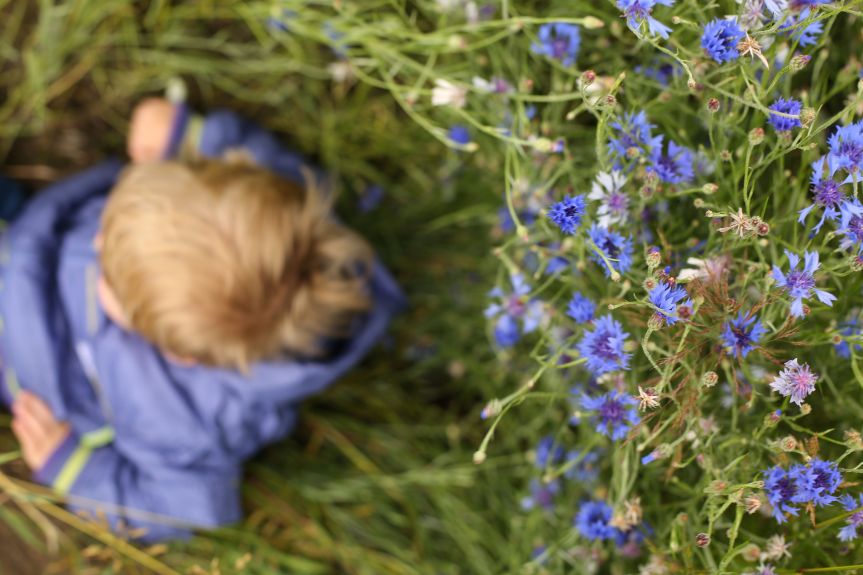
I tend to find myself when I’m in the unchanging landscape of my little village, in its stability. The fields, the trees, the meadows, the orchards, the forest nearby – they are always there ready to embrace me as I am. Ready to welcome me as me.

It’s a powerful sensation. Me as me.

In a world that demands constant change. In a world that asks for continuous development and seduces us with better versions of ourselves it is really difficult to appreciate the people we are and have always been – with our personal dreams, perspectives, and qualities.

In fact, it is even difficult to love our own core dreams when so many things around tell us that there are other, better dreams to dream.

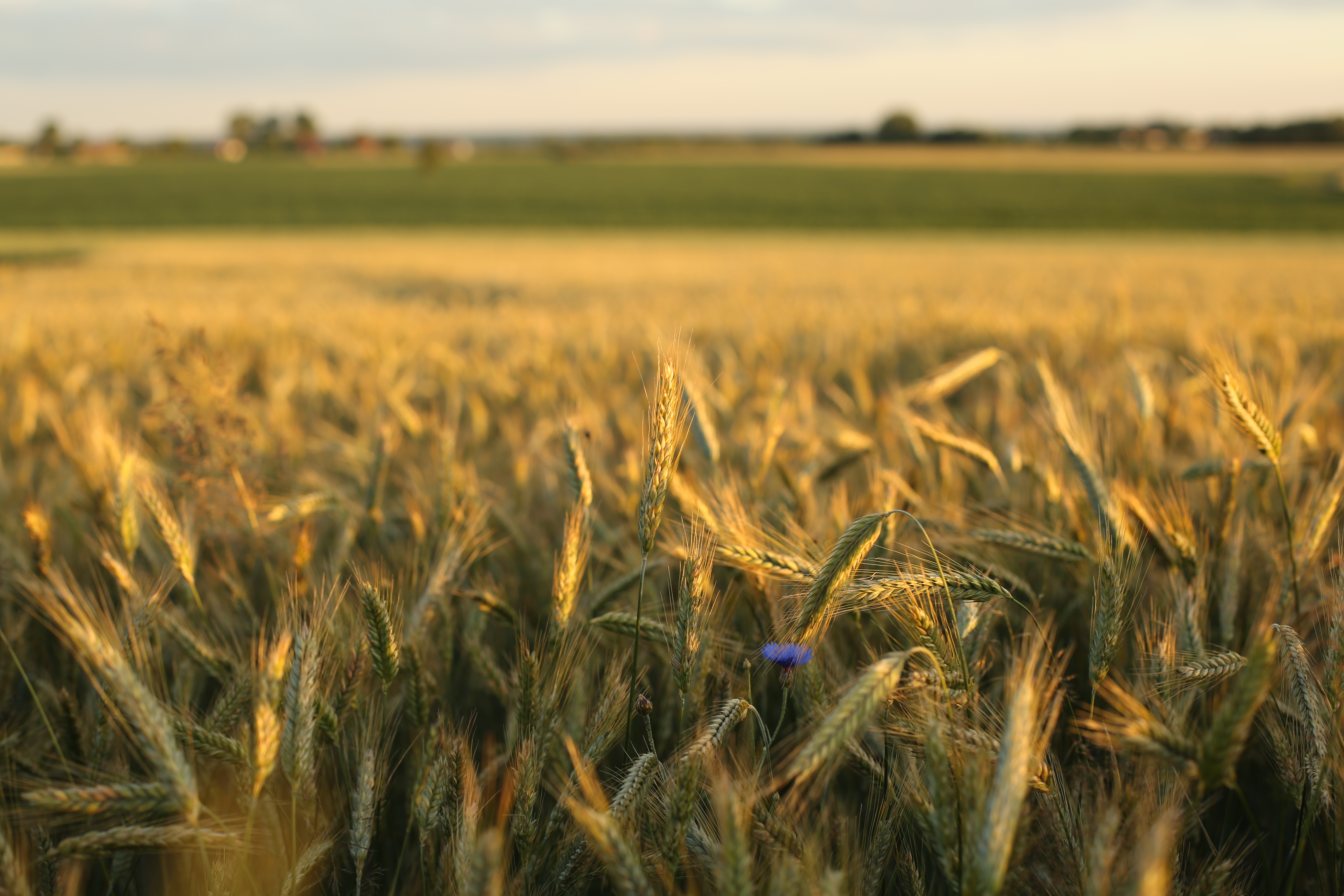
When you feel like this think of the time when you last were dreaming with confidence. Big dreams, small dreams but with ease, no noise in the background. I have realised recently that I was at my dreaming-best when I was 14. I don’t know what I was doing ever since, but it was the time when my map of dreams was the most personal to me, no fears, fads and fashion. In my little childhood village there are cereal fields next to my dad’s cherry orchard. Walking along the fields, I meet the 14-year old. She’s cheerful, hopeful and determined. Where were you when your dreams were unfolding? Maybe you can visit this place? Or create a semblance of it where you are now? To allow yourself to be you, maybe with fears but without disabling judgements.

The lesson

klolik

I was in a shopping centre yesterday. I bought my son a little toy. One of these tiny cars that you wind up and they drive off on their own in whichever direction you set them in. My son played with it, giggled loudly and was really really excited about it. We walked together towards a play area in the centre and my son saw a crying boy. He walked towards him and put the new wind-up car in his hands, took a step back, smiled to the boy and laughed with joy.

When I described this to someone we briefly concluded that it’s good that the children can share. Then I thought about it for a while longer and decided that what I witnessed was not a lesson in sharing but a lesson in compassion. The simplicity and honesty of the situation was astounding. One little boy saw the other one in pain and did what he could to relieve the pain of the other.

Why do we as adults find it so much more difficult to behave in this way? Have we been educated out of compassion? Are we educating ourselves out of it?

How often have we crossed the street to avoid a person in pain? How often do we ignore the pain of our friends or family members? Why is the pain of others so difficult to acknowledge?

Complaints and Gratitude

mint

People who complain are not necessarily unhappy. Often, they just try to strike a relationship with others through complaining. Sharing suffering, even about the little things, can be bond-creating and frequently functions as a conversation starter, an icebreaker.

– The bus is late again…
– Oh yes, it was delayed yesterday too… They even wrote about it in the local newspaper how unreliable the buses are these days….Do you read XYZ?
– XYZ, oh yes , I do. Would you believe it if I tell you that I have its very first issue.

And here… the connection is triggered, the conversation unfolds, the stranger at the bus stop is no longer a stranger but someone who we share suffering with and the discomfort of our day-to-day experiences. In that sense the complaint is an invitation to a longer dialogue. It is not its conclusion. It’s just a start…

I do a fair deal of complaining in my life. Recently perhaps a bit too much. (You see… I even complain about my habit of complaining :) ))))))) But I think that disappointments are part of life and it’s good to notice them and share them too. There is something quite artificial in noticing only the bright side. March is the time when we complain a lot in our northern hemisphere. Because our days are not quite long yet, our flowers our not entirely out, and to be honest our strength and resilience to cope with challenges ahead has probably only just started building up. In March, we only manage to lift our smiles up from our heavy woolly scarves, and it takes another month or two for this smile to establish itself and for more cheery conversations to emerge.

Complaints are not always a sign of unhappiness, but are often a sign of a struggle of sorts. These struggles are part of our human stories and they are bound to happen somewhere in the process of realizing our new ventures. This is usually when most complaining goes on. When we are at the beginning of those journeys. Gratitude comes later…

…and it’s great that it does.

This is my Easter Egg for you Lovely Readers. Thank you for your messages, conversations and kind words. My doctoral research is developing very very slowly (but surely) so I still cannot offer regular postings in this space. I hope you are all well and that you’ll have lovely Easter. Best wishes and feel free to leave a complaint ;) x Alicja

fruit present

This Blog is Taking a Break in 2015

multicultural life_SundayI’ve gone a bit mad on measuring over the last few weeks. Measuring time, to be precise. The findings of my experiment did not surprise me but confirmed my assumption that at this particular moment in time I cannot do everything that ideally I would like to do.

Of course, I have again questioned the existence of this blog and the time that I spent recording and documenting my thoughts and experiences and I have realised that I am not documenting what I want to document and I am not writing the blog that I would like to write. Mainly because I haven’t developed an angle yet and because the things that I want to do just take much more time than I can realistically offer now. So I have decided I will be taking a longer break from writing and photographing this year so that I can invest my time and efforts into other things and develop a stronger understanding of what I want this blog to represent and how I want to run it.

Samuel Johnson declared once: “What is written without effort is in general read without pleasure.”
This is year I am hoping to make a lot of effort offline so that you can find my writing pleasurable next year.

To a good year Friends!

Alicja

Developing Good Communication Habits with Toddlers: Book Recommendation

My toddler talks_book recommendation

If you are a parent and you’re interested in your child’s language development, you might have heard of Kimberly Scanlon. She is a speech therapist who throughout her work developed a strong expertise in building up children’s communication skills.

In the book that I am recommending she offers 25 play routines (with toys and arts and crafts) in which she describes the activity and suggests appropriate strategies that the parents can use to elicit responses and expand vocabulary. She also offers tips on What to Do if the Toddler Is Not Imitating You and The Do Not List. I also found the Introduction and How to Use This Book sections extremely valuable as they were both informative and reassuring.

Our son is being brought up with three languages and I am his primary source of Polish language, my husband is his primary source of Italian, and English is the language of the community. At the moment all three languages develop at the same pace but slower than the language development in his monolingual peers. Thus, by monolingual standards, he experiences a language delay. I’ve been looking for a book that would improve my ability to stimulate my child’s language development, but also for a text that I could recommend to my child’s nursery. Although this book is not about how to talk to multilingual children, I like its focus on simplicity, language-wise and play-wise. I like its very practical and realistic tone too. It definitely sets the expectations right and makes you question less and communicate better.
Scanlon, K. (2012) My Toddler Talks: Strategies and Activities to Promote Your Child’s Language Development. Createspace, North Charleston, SC.

train_playtime

This is not a sponsored post. Just a recommendation.