Our car of 15 years showed three flashing lights on the dashboard while we travelled to Whitby last Sunday. It displayed them during Summer too when we were driving to Poland from the UK. We got it repaired but the same problem showed. ‘We’ll give it a rest when we get to Whitby. It will cool down and we’ll be able to drive back.’ my husband said. His prediction was right. We returned home safely. One thing to be rather grateful for today.
We travelled to Whitby for air. To feel the sand between our fingers and water on our feet. And to eat fish, of course, an irreplaceable custom of every food lover. We headed towards the beach when we saw a crowd of people returning towards the car park. We seemed to be the only family that walked in the opposite direction. ‘Was everything fine?’ I wondered examining the opened restaurants, stalls, coffee shops and calmly floating boats and yachts. The surrounding was reassuring and the lobsters and crabs painted on restaurant walls seemed to nudge us towards the beach. Who wouldn’t like to see where the crabs live after all?
We rushed to get at least an hour of the golden light at the beach. We passed the crab-fishing family, a man inviting us for a sea trip, new marine centre and just before we reached the beach we had to pause to urgently drop 50p coins into a designated place for overstretched bladders. A relief worth paying for. :)
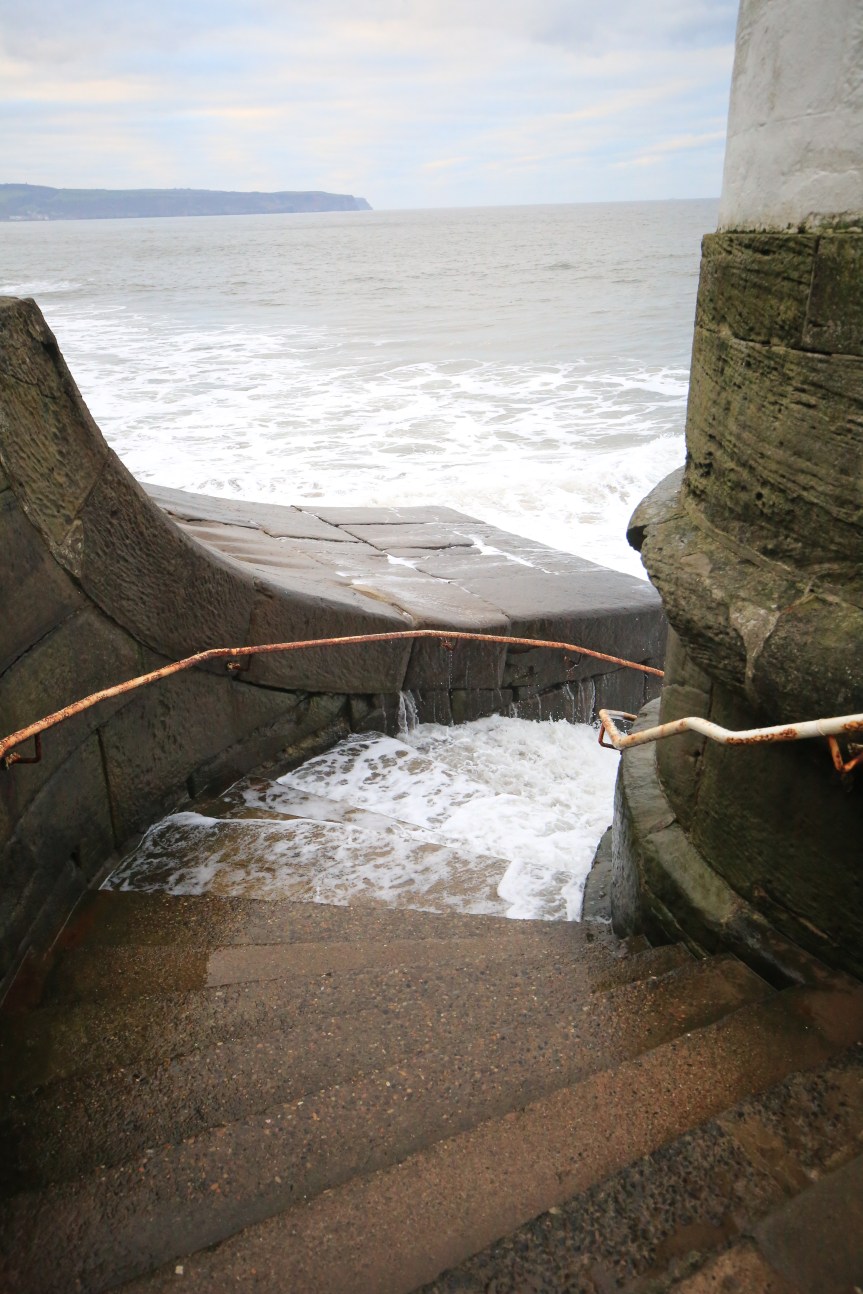
We collected ourselves and all the 6 bags that we had with us for all the eventualities of the beach life. Just before the stairs we stopped at the viewing platform to see the sea and the beach but the beach was not there to be seen. The frothy waves were licking the sea walls and all the way to the cliff. A spring high tide took over the whole beach. Disappointment was hard to swallow and yet there we were exposed to the sea air, energised by the colours of the sky, caressed by the breeze. Enough to be grateful for. Not to mention the ice-cream and the dinner and a chat with a fisherman… but more on this at a different time.
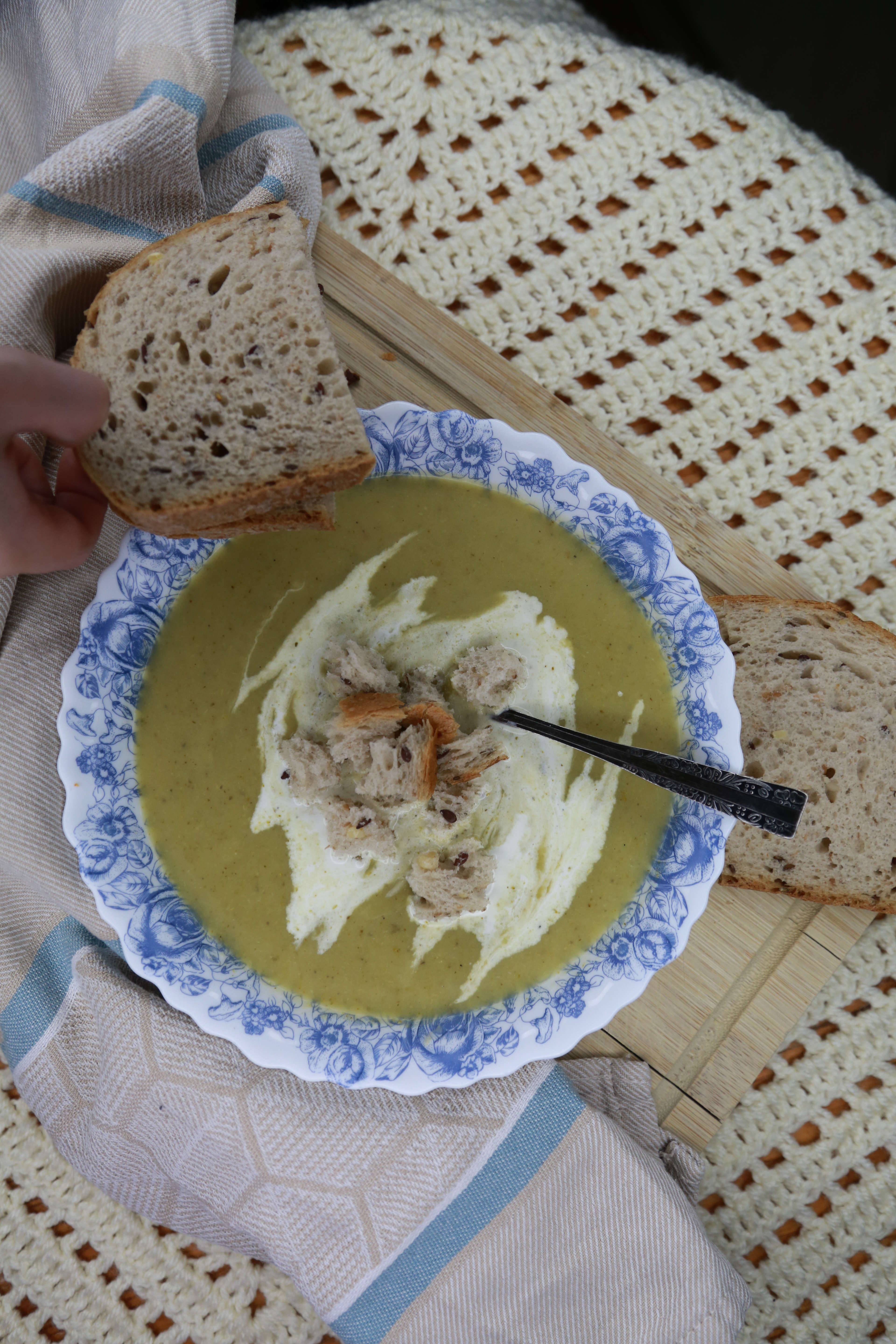
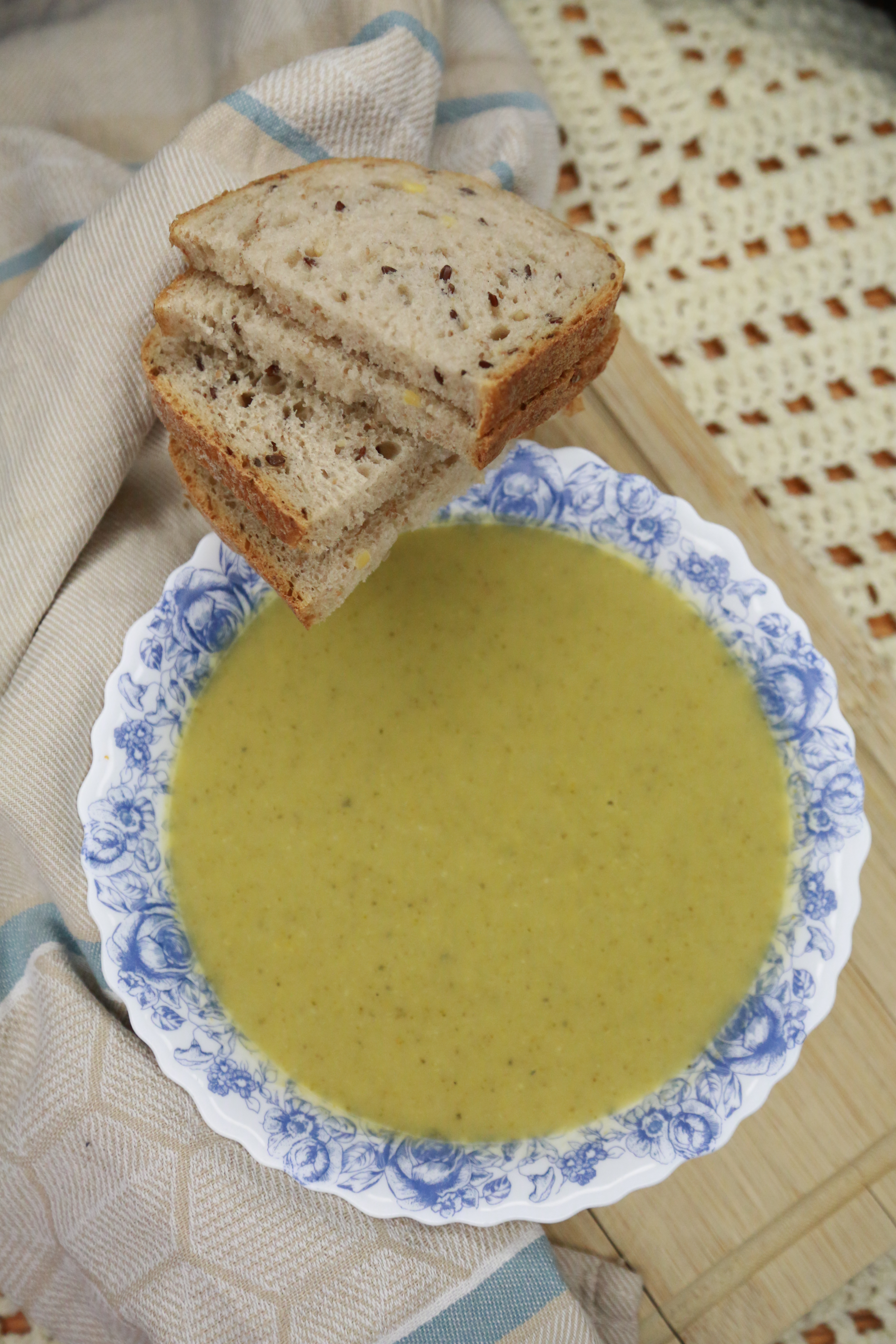
I’ve got an impression that last winter my mother was making this soup every three days for our children. Her grandson was competing with himself to see how many bowls he could comfortably consume. We all looked at him in disbelief, wondering where that quantity was disappearing. Surely, he was not spoon-feeding the dogs under the table. He loved it. Everyone else did too. They gladly returned from the cold and sat in front of a steaming bowl and each bowl came with a piece of popular Polish bread showered with flax seeds. Yummy.
Do you cook? What do you like making?
The knitted cloth that the soup is placed on is actually a scarf made by my aunt. It is so warm, you won’t believe. Shoulders wear it gracefully indebted to my aunt for many hours of her work. I was comforted by the softness of the scarf. The warmth of the soup also brought reassurance. I am grateful that my mum and aunt keep their skills fresh and that they continuously make an effort. It is mesmerizing to see how things emerge in other people’s hands. As if from nowhere…
Creativity blossomed in our house over the weekend. Icy weather gave us many opportunities to refresh and revive our spirit and gave us hope for a good and creative year. I hope you are feeling equally energized.
The photos of the soup were taken last year in Poland. The photo of my children was taken in Melbourne (UK) at Woodhouse Farm. Many thanks to Brian Woodhouse for allowing me to take photos on his farm and fields.
Below is a photo from my parents’ place in Poland.
On the 31st of October, we celebrated in Derby the festival of light, Diwali alongside other festivities and the hype of Halloween. It can seem a bit strange that I am writing about this on Thanksgiving Day but on the other hand I feel it is most appropriate because in fact we rarely give thanks to each other for permissions to see and participate in the lives of our diverse communities. When we start to socialise into the routines of communities other than our own, we spot differences but at the same the common needs and burdens as well as the efforts to make us feel welcomed and included. This is a lot to be thankful for.
When years ago I started a doctorate (and never completed) at MOSAIC at the University of Birmingham in Multilingulism with the use of autoethnography as a research method, I was learning how to write about oneself as placed in a multicultural British landscape and in an eclectic family. The task was confusing and insurmountable at times and for a long time I could not pin down where the difficulties were coming from. Until of course I understood… One was coming from a commonly held belief that talking about oneself is not the done thing, let alone to research oneself in the context of multiple cultures… this seems even more odd. Anyhow, my doctorate collapsed during the Covid-19 pandemic under the pressure of ill health, two small home-educated kids, my husband’s increased workload (no, he was not on furlough) and my need for creative rest that I am still very much a supporter of. That said, although my doctorate collapsed, the need to engage in local communities remains strong.
On the surface looking into the culture of a different community seems like having nothing in common with doing research into oneself, except when the holy scripture of that group teaches you a lot about self-intelligence and its importance for life well lived. The Gita actually uses the term ‘self-intelligence’ in its writing legitimizing self-knowledge, discipline and broader awareness of values that govern us and our choices. Indeed, who would we become without our ability to self-reflect and observe.
In the book Natural Law & Natural Rights, John Finnis lists 7 basic goods of human life necessary for our well-being. Among them, he lists: 1) life (itself with health, safety and self-preservation), 2) knowledge, 3) play, 4) aesthetic experience, 5) sociability (friendship), 6) practical reasonableness and 7) religion which of course concerns itself with love, the importance of truth, goodness, transcendence and the boundaries of human freedom. These common goods order and create what we call ‘quality of life’ and determine our overall satisfaction of life. Thus, part of learning about each other and our cultures is to see how we go about those values and common goods in our cultural groups and settings.
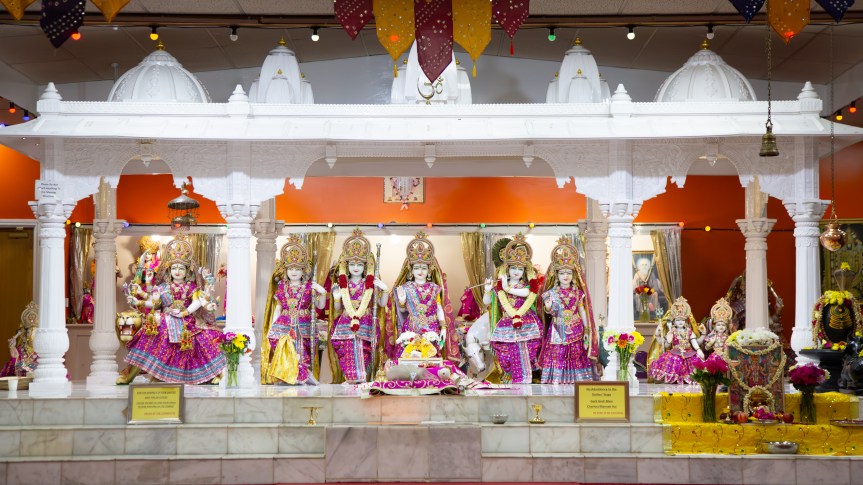
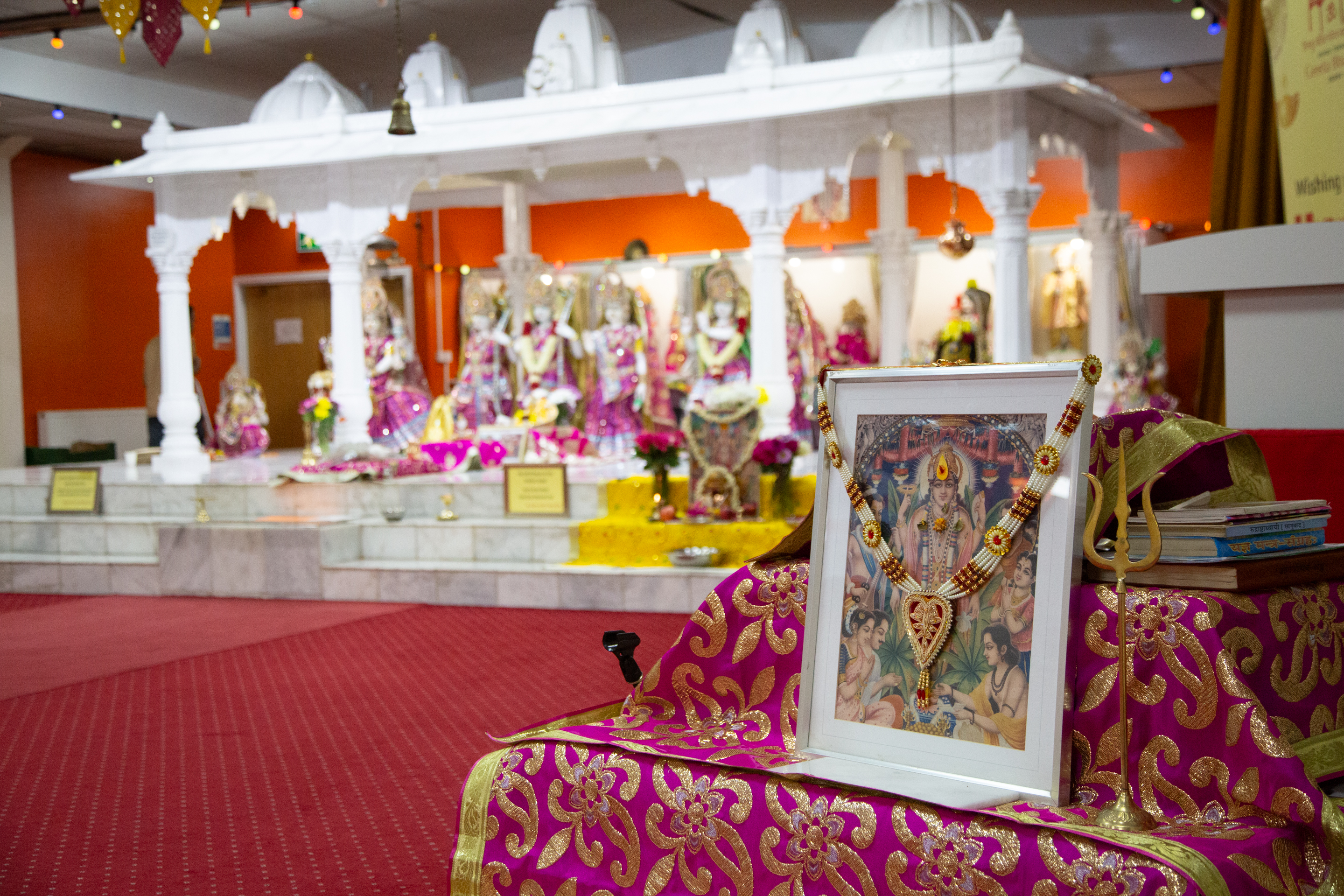
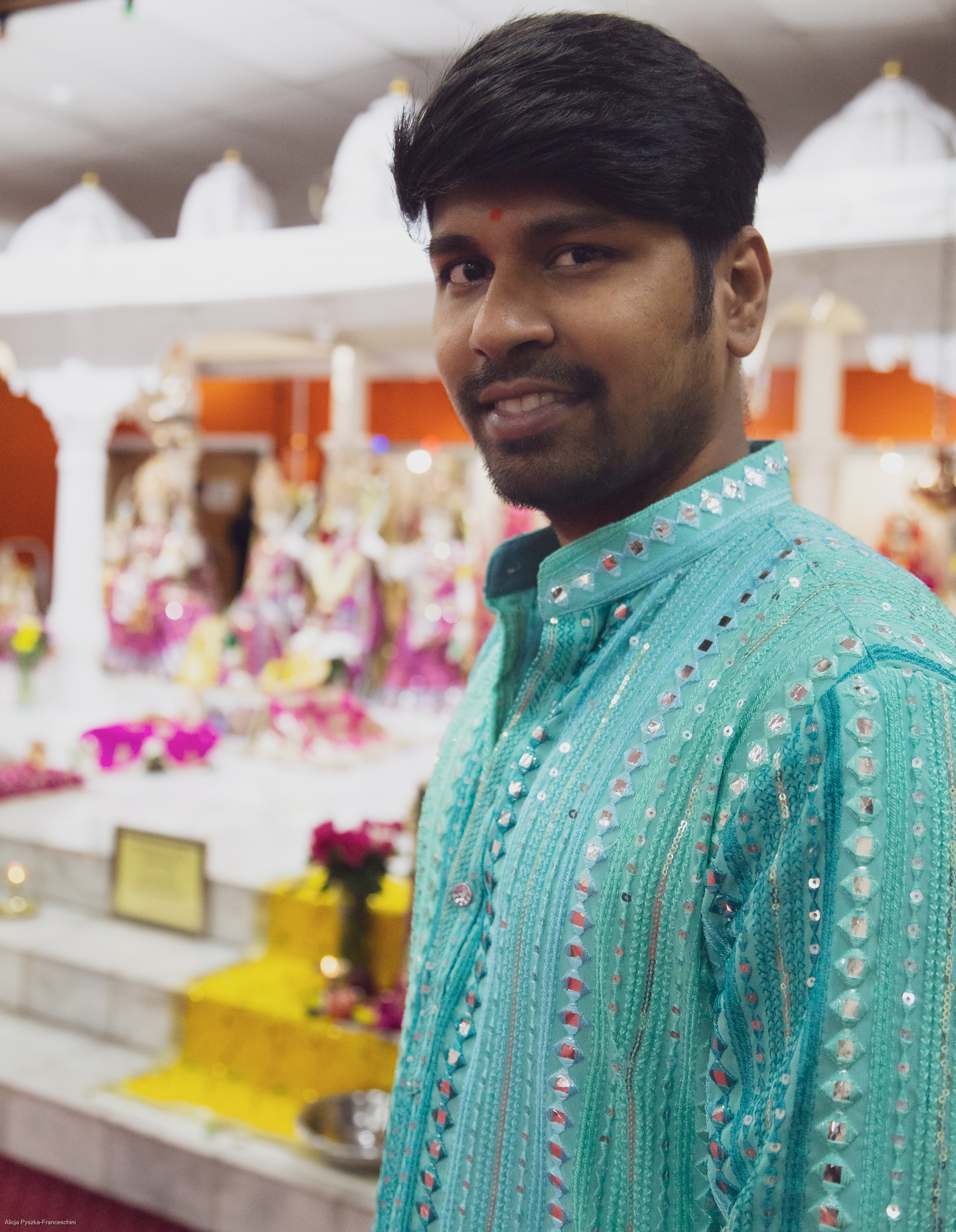
So here are a few postcards from Diwali as observed in Geeta Bhawan in Derby. For this post, I asked two mums to whom I chatted about the Gita, Radhe and Sarbjit, to explain to me who and what I saw at the Temple. They replied on WhatsApp.
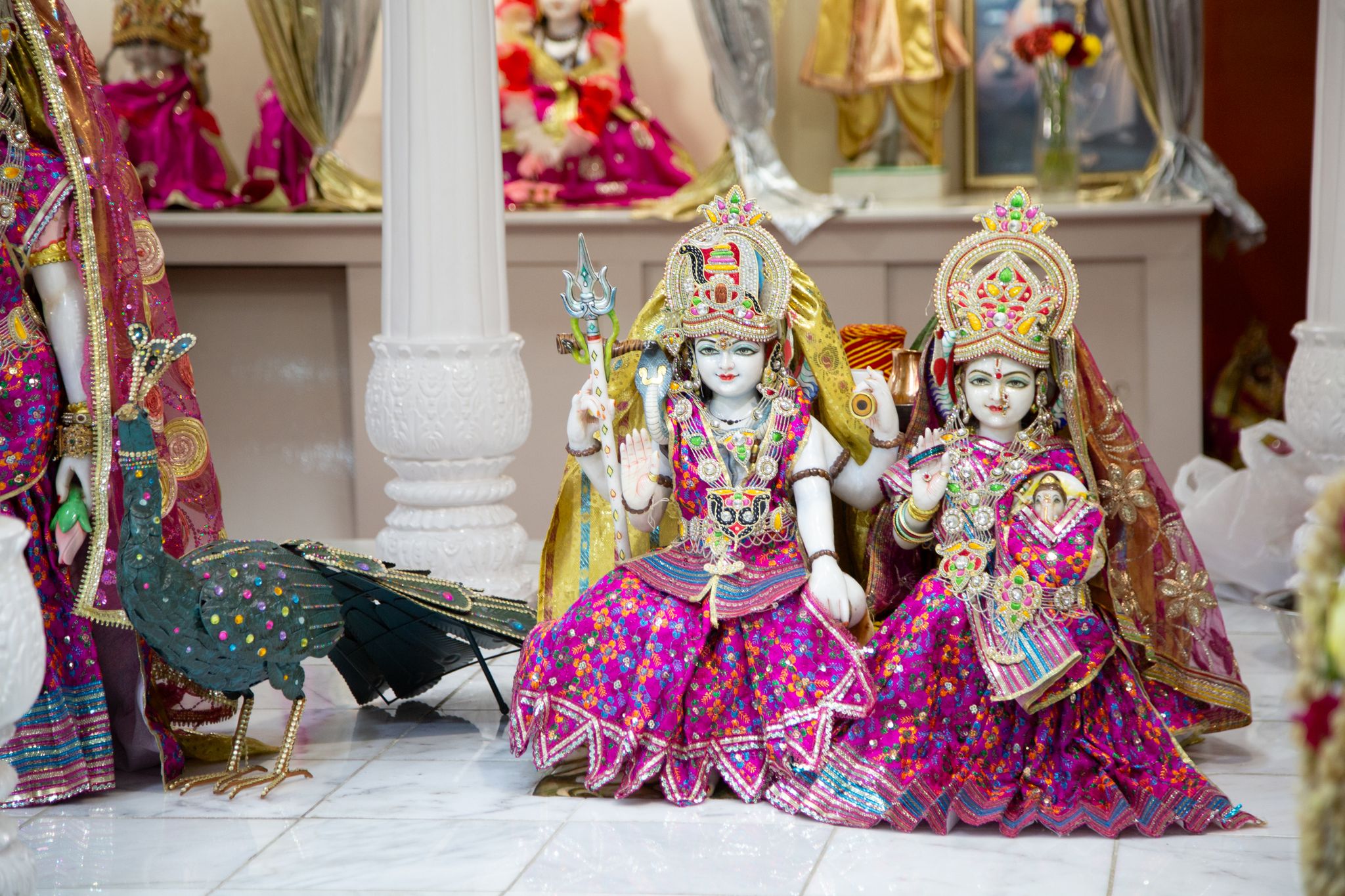
Who are the gods/ deities here?
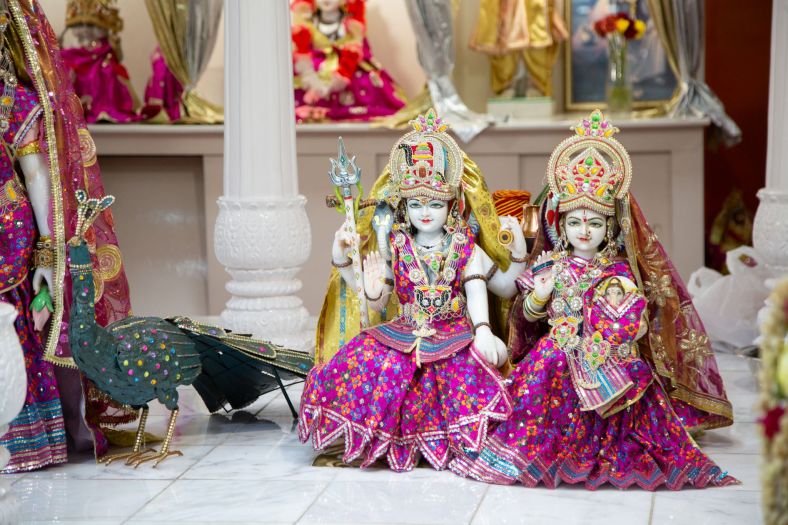
Radhe answered: ‘Shiva (with Trident) Parvati Devi (also known as Durga). In her arms Ganesha.
That peacock is standing besides Radha and Krishna’
“Abode of Krishna is called VrindaVan (Forest of Tulsi plants – one type of basil)
So eternally Krishna lives in a forest..residents of VrindaVan possess pure love for Krishna.
So in eternal vrindavan Krishna z devotees are in the eternally in the form of trees, parrots, peacocks, cows, cowherd boys, cowherd girls. Their forms are based on how they want to love Krishna…that will be a long discussion
Anyways, the story goes once Krishna was playing on his flute and has invited the animals of VrindaVan for a dance. Peacocks were dancing very gracefully. Soon Krishna joined their dance, looking at Krishna dancing peacocks started marveling his dancing.
Then the peacocks offered their best possession to Krishna, peacock feather. Krishna accepted their offering and honored it by always wearing peacock feather on his head.
In the middle, if I see correctly is Gopal – baby form of Krishna. Krishna reciprocates to the desires of his devotees. Many devotees want to love him as their own child so they worship him as Baby Gopal.
We worship deities by offering them clothes, food, jewellery.
So the deities are dressed in different colours the day you visited the dress happened to be of purple colour. Their is no particular significance of purple colour.
Next time if you ever choose to go you may see them in a different colour.
Traditionally on full moon day deities are offered a white dress.
On ekadashi (one day from the lunar calendar) offered a red dress.
By offering service to deity form of the Lord one can get purified of sinful desires. Sometimes people offer such service as an expression of gratitude.”
“Food has an significant impact on our consciousness. In Bhagvad Gita you may have studied about Sattvik, Rajasik, Tamasik.
We offer Sattvik food to the Krishna. When he accepts that offering it becomes Prasadam (which means Grace/mercy)
Prasadam will purify our consciousness.
That fruit was Prasadam. (…)
You visited the Temple on Diwali day, on Diwali people worship Lakshmi Devi and ask for prosperity.
[In the framed photo] is Lakshmi Devi, goddess of wealth.”
I also asked Sarbjit who visits the temple to tell me about a senior person who was distributing fruit towards the end of the prayer as I did not know who he was. Sarbjit replied, “If that man was wearing different clothes, then it was a Pandit. Otherwise, he could be a sevadar (volunteer).” During the worship people walk around the alter and worship each god separately after that they receive a piece of fruit, just before they leave the temple. The man very humbly told me that he is not a scholar in the study of religion and that there was someone else there who could have done it if I was there a lot earlier. But what he said, was that the most important thing is to remember that the gods/ the deities are indestructible and that what we as human beings cannot correct, they will do it for us. They will correct all the wrongs. This message I found to be most comforting. I hope you do too.
Happy Thanksgiving. May the light of Diwali keep on shining on us.
Thank you to Nikhila and Karthik for agreeing to be featured in the photographs for this blog post. Additional gratitude goes to Radhe and Sarbjit who supported me with their understanding of the customs here. Thank you very much.
Any comments and corrections more than welcome. :) Thank you all.
The text I referred to in the article is:
Finnis, J. (2011) Natural Law and Natural Rights. Oxford University Press: Oxford.
Irrespective if you are someone flamboyant about your gratitudes or modest in expressing them, Tuesdays seem to be the right day to create a list of blessings and positive experiences. To ward off the anxieties that might be resurfacing midweek and to keep our mind calm and to make our heart palpitate gladly.
The Life with The Crew started The Thankful Tuesdays. I want to cultivate this blogging custom. I believe it serves us all well. Do you want to join in?
Here I go with mine. Today I am grateful for:
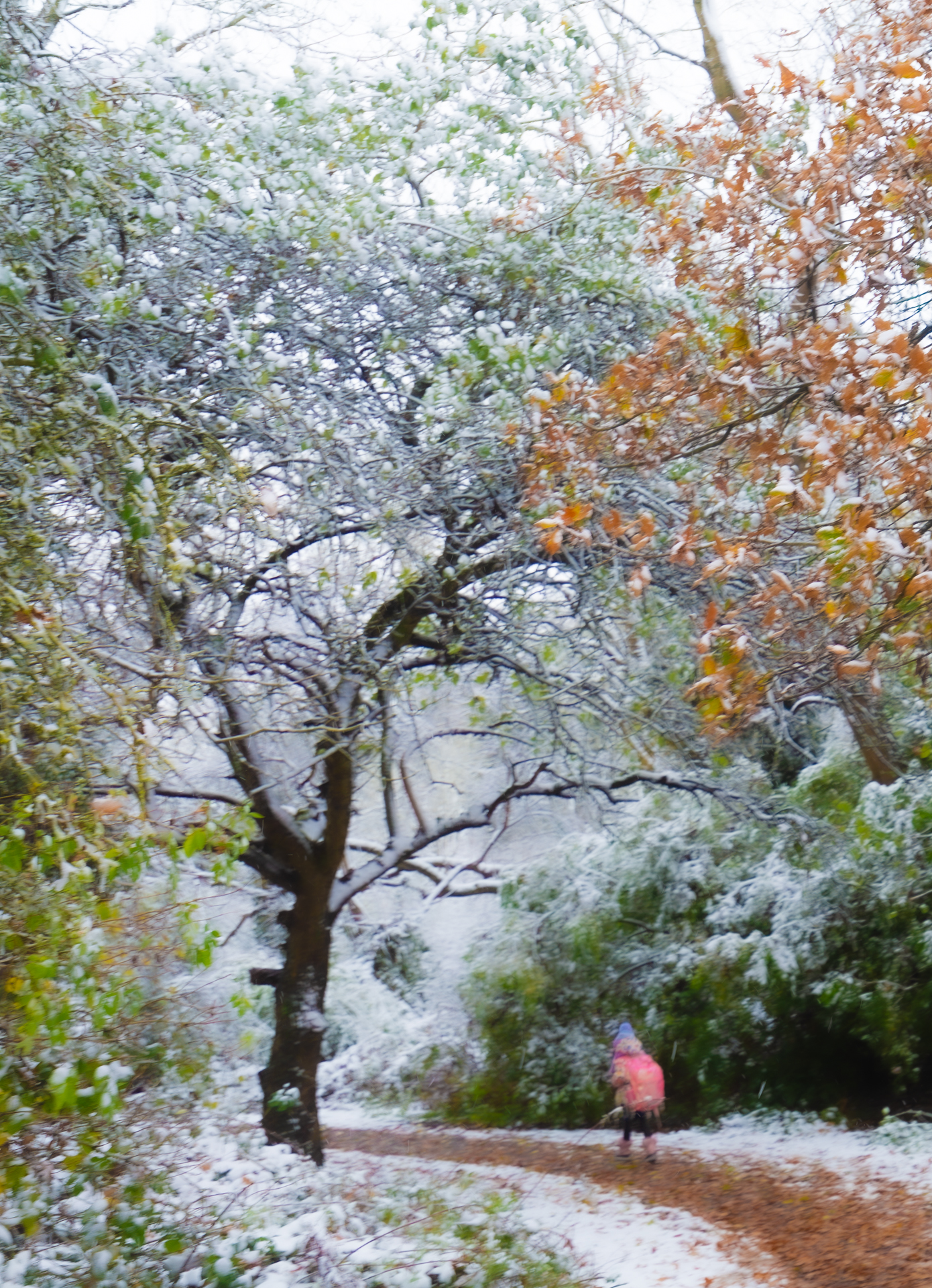
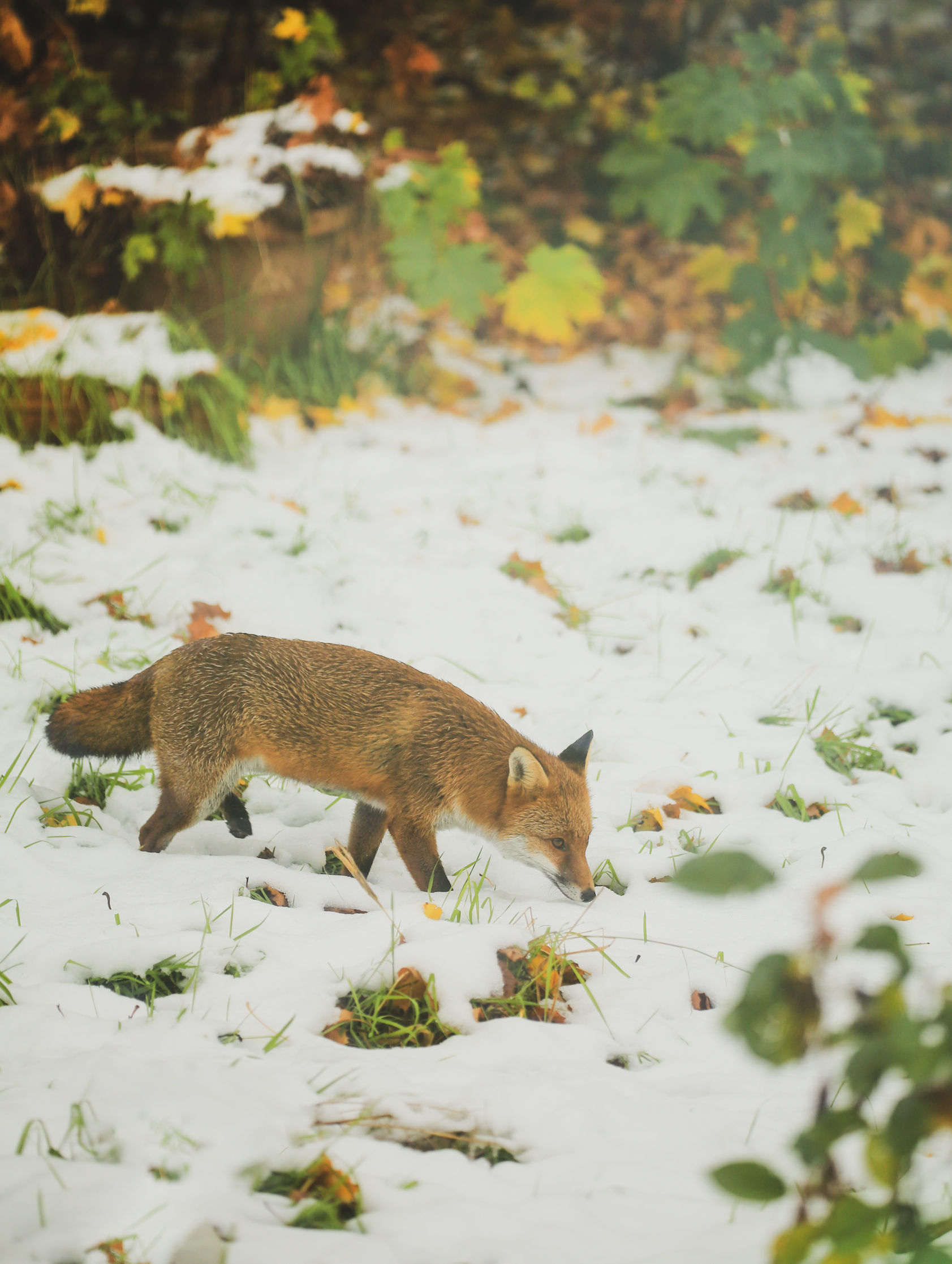
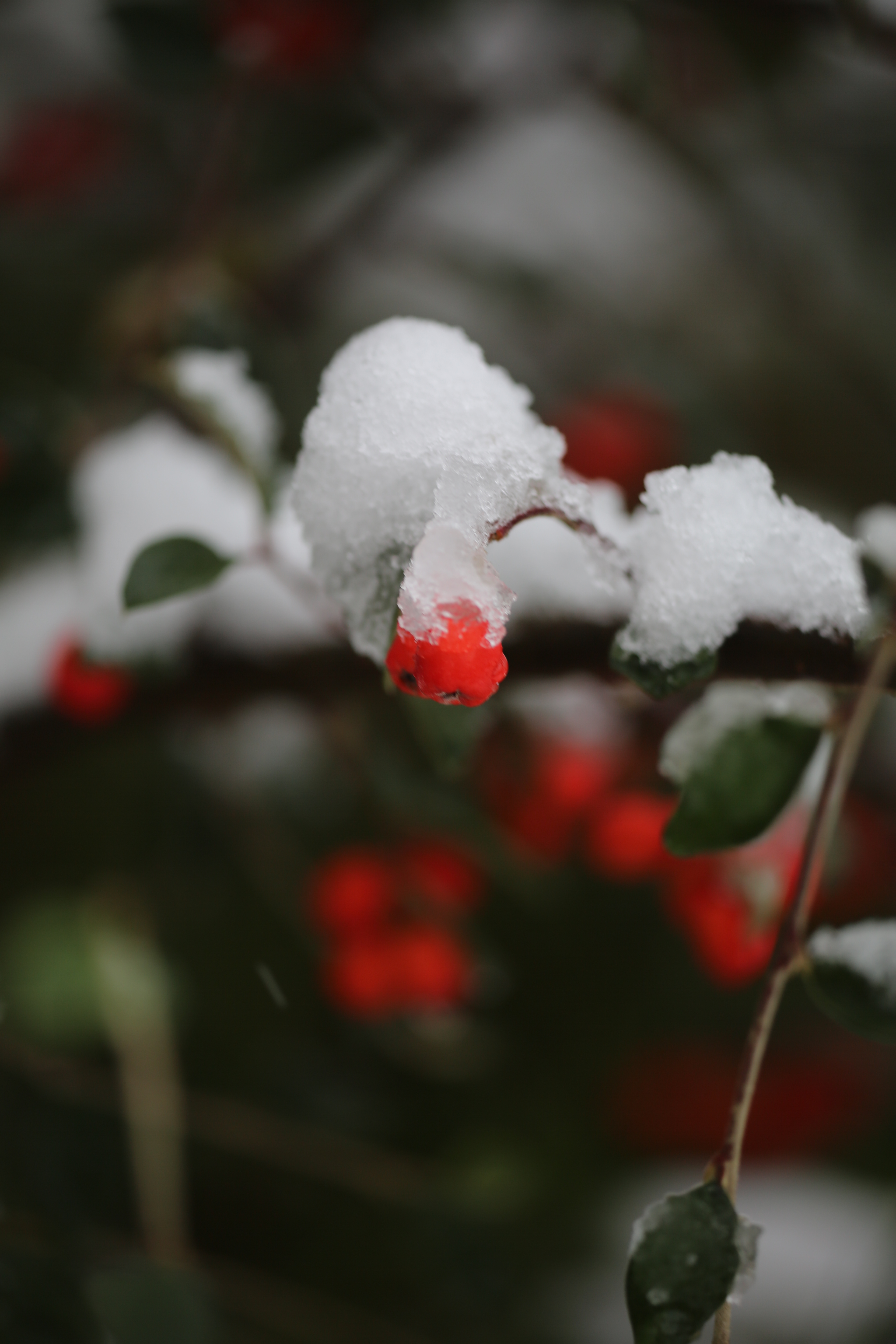
– the snow, the snow, the snow… that did not melt too quickly and the fox that appeared in our garden just after midday
– my friend’s successful knee operation and his quick recovery and our chat over a cup of coffee and his sharing of insights and wisdom from life
– for a very considerate friend who dropped Castor oil at my doorstep to improve blood circulation in the shoulders
– a husband who made a lovely Mediterranean style lentil dish with leek and green pumpkin and parsley (on the blog soon)
– translators who translate children’s stories and allow us to move between languages but within the same storytelling sphere: Room on the Broom by Julia Donaldson, La Strega Rosella – translated by the incredbly skilled Laura Pelaschiar, and the Polish version entitled ‘Miejsce na Miotle’ by translated by the excellent Michał Rusinek
– Jodie Wilson from Practising Simplicity for encouraging Yoga as a gentle exercise for busy lives, very useful for frozen shoulders too and any problems with posture that result from attached monkeys to our hips (be it kids or cameras) and also for her indirect encouragement to contact blog readers
– for Adam Phillips’ book On Getting Betterand his ability to put into words what we tend to hide from ourselves, i.e. that our transferences and regressions intensify with our resistance :)
– for our daughter who said today that she wants to do her homework on her own and allowed me to load the dishwasher in the meantime
– for the recent Outdoor Photography Magazine and the glorious portfolio review by Massimo Leotardi and their reminder that we are soon going into a National Tree Week that is uniting all the tree lovers in the UK (see treecouncil.org.uk). This is one of our favourite magazines at home and we like to have a conversation over the photographs in the morning either by exiling tensions over the landscape photographs or by giggling and wowing over aquatic creatures or mice hiding in a hollow apple
– our morning routine that has just greatly improved due to a managerial trick, i.e. a checklist with all that needs to be taken to schools. Seriously, we need it. Our working memory is only capable of remembering six items at once. Everything else is an excess. We also use a simple linguistic change of words. Instead of saying ‘Speed up’, we say ‘Focus on buttoning up your shirt’, etc. So we focus on the actual activity that we want the children to complete and use the verb ‘focus on’. In that way, the morning routine is smoother for all of us and we have nicer starts to the day.
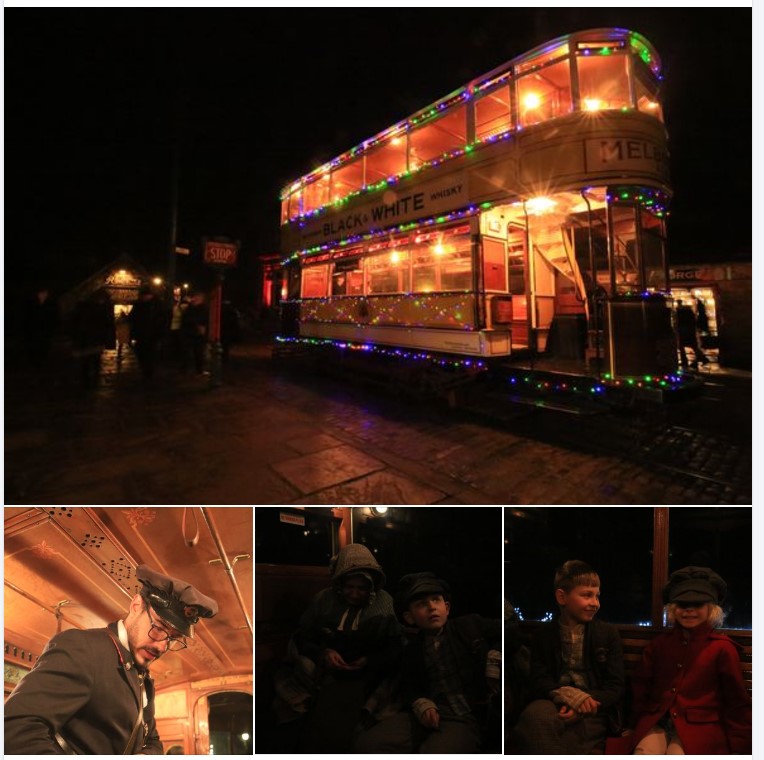
– for a glorious Journey Through Time and Light event at Crich Tramway Village that has put us in a festive mood and brought a huge anticipation of joy for the coming Christmas season
– for finding ways of preparing our son for his weekly Polish dictation tests at his Saturday School.. gosh this was a hard nut to crack..
What would you put on your list?
At Crich Tramway Village, A Journey Through Time and Light, Derbyshire, 2024
The sea was unassumingly grey and boring as much as I would prefer to say otherwise. The tiny waves, however, were falling so abruptly. There must have been a sudden drop in depth close to the beach line. ‘This doesn’t look like a safe paddling pool for children’, I thought to myself but who was I to tell? And who was I to test the truth of my own assumptions or my swimming skills? Not with a frozen shoulder.
Camera felt quite cumbersome with my disability. I felt awkward lifting it up above my chest and photographing birds seemed inappropriate with a shoulder that was grieving its loss of capability but I was bored and actually I have been feeling bored for a while now, regularly experiencing a fed-up mama syndrome that simply manifests itself by wanting to reach for something and feeling that I shouldn’t be wanting to reach for anything besides my child’s hand, perhaps.
The wind was unpleasant, slicing through my jacket as if I was a window of opportunity rather than a human being made of fat and tissue. ‘No amount of fat can make up for a protective layer’ I reproach myself. Better to invest in a new jacket than an extra portion of food. I thought but I honestly did not see myself following on this wisdom too promptly.
I’ve been feeling quite removed from my children lately; partially because of my preoccupations and largely because of their speed. That I find so hard to match.
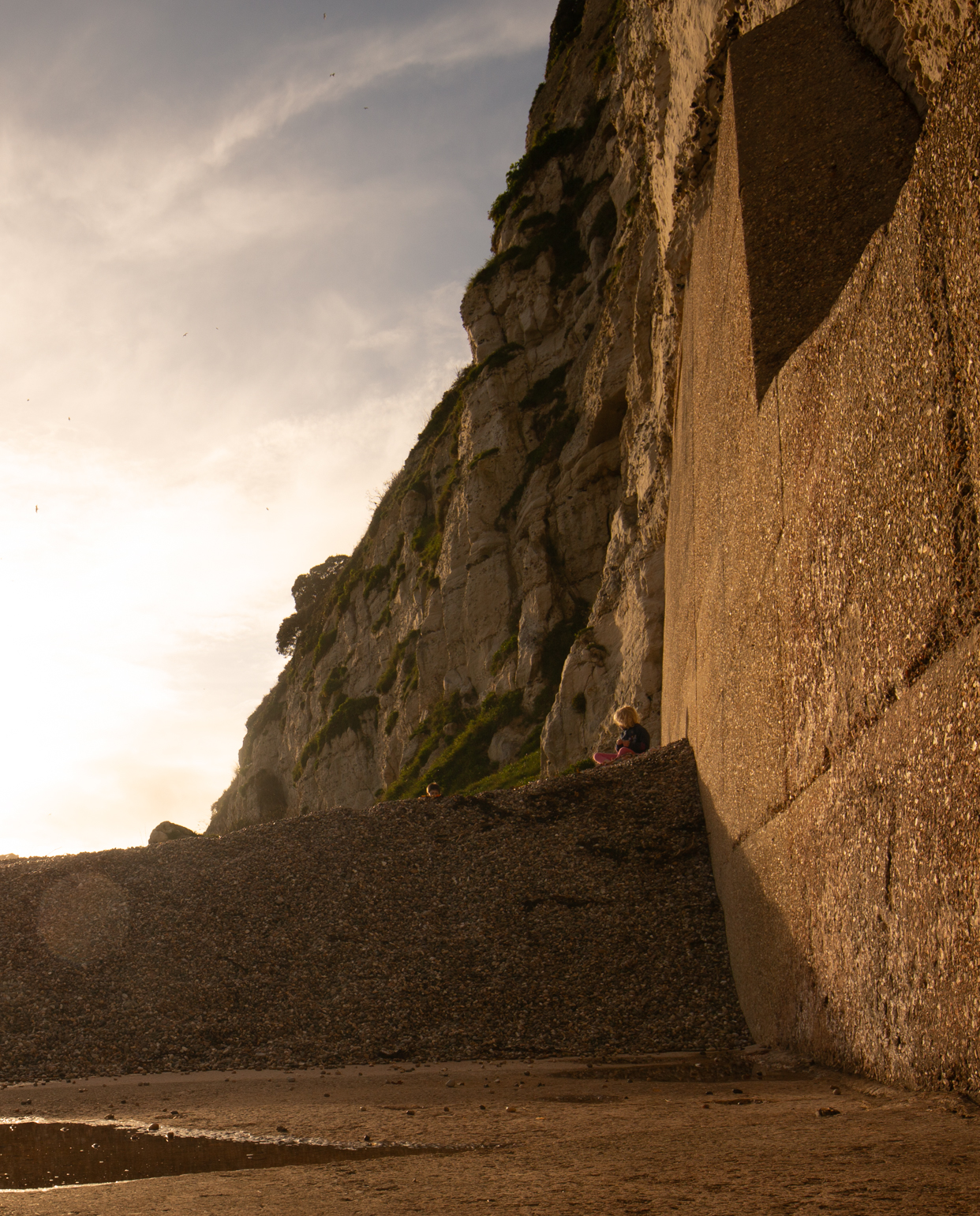
I’ve been dreaming of going somewhere where I cannot be reached, where I am not disturbed but where I can safely observe everything from afar – a spot difficult enough for the kids to reach – where they cannot disturb me and I do not need to interfere in their play. The place of non-interference.
I saw a lady sitting on the beach supported by the cliff’s wall, writing. And I felt such peace when I saw her as if she was where she was supposed to be. I exhaled. I was so happy for her. So glad. The feeling of peace overwhelmed me like a warm blanket and the sun arrived at the same time and I could do no more but to accept its non-scorching fire.
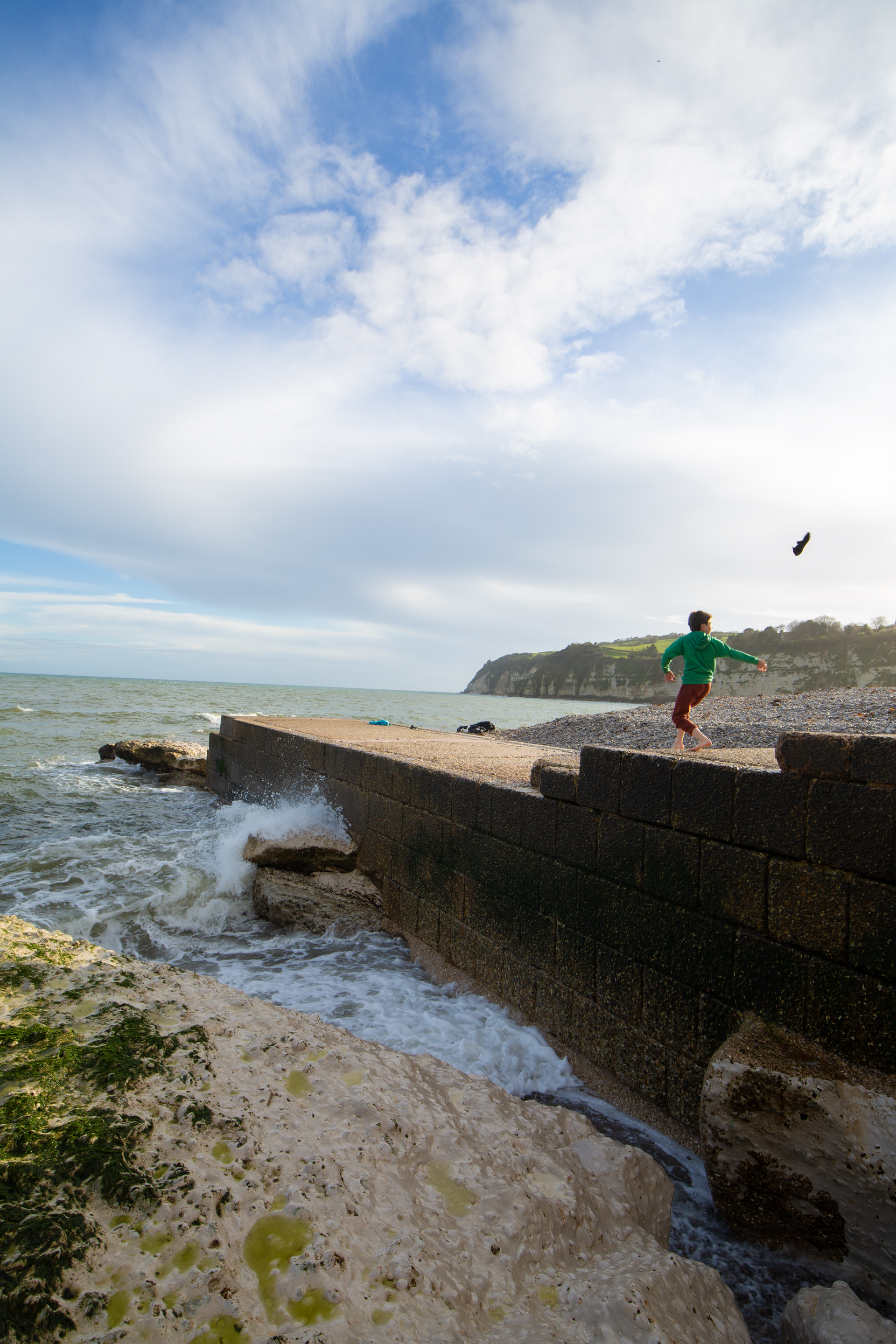
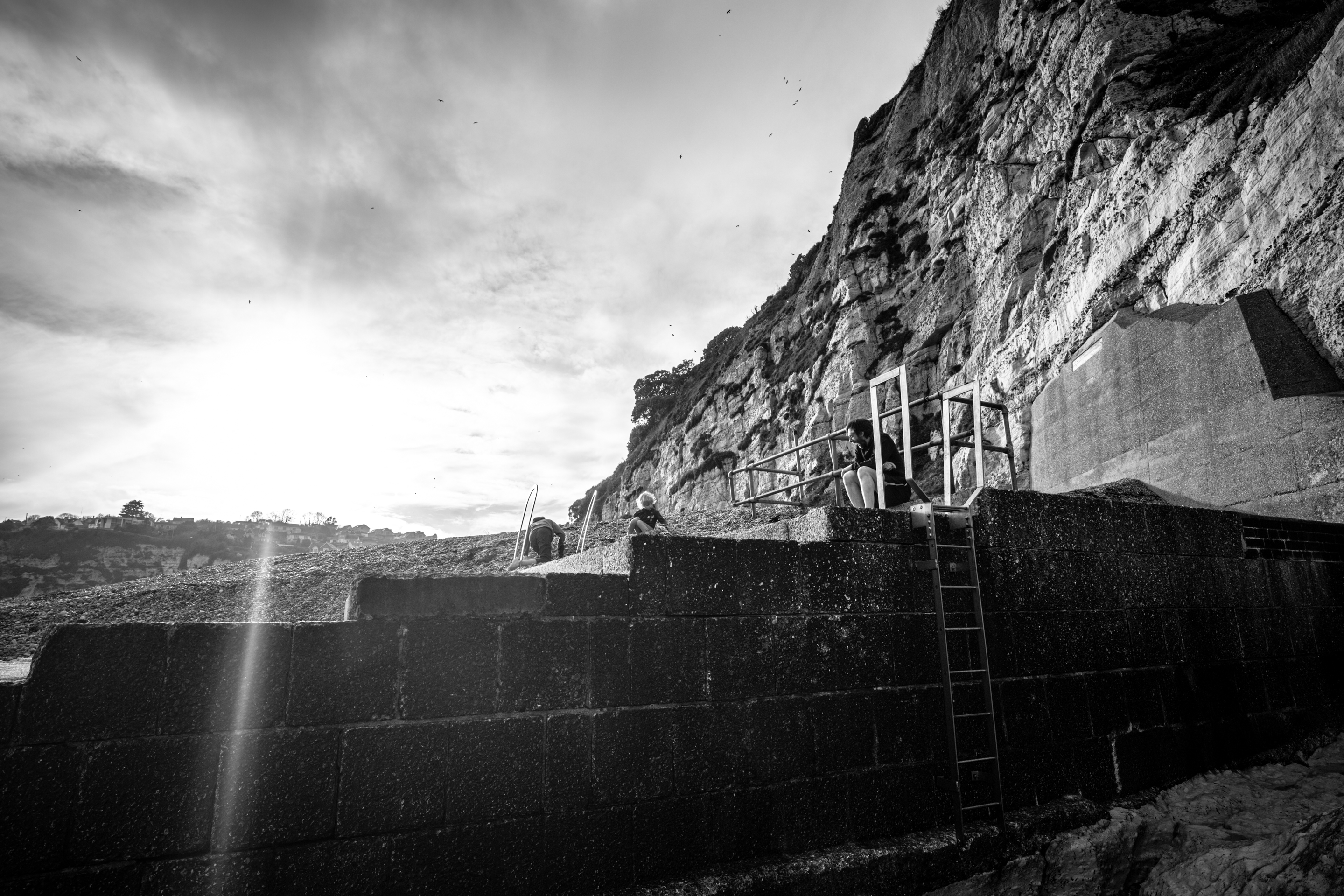
The children were the first ones to discover the pier. It was hiding below the horizon as if it was their prize for daring feet unphased by the discomfort of beach pebbles. And here it was – a spacious playground and a new viewpoint.
Two photographers came over. They were changing their lenses as if to remind me to change mine. So I did. The wide angle lens transformed the birds into small moving objects against which the cliffs majestically stood their ground.
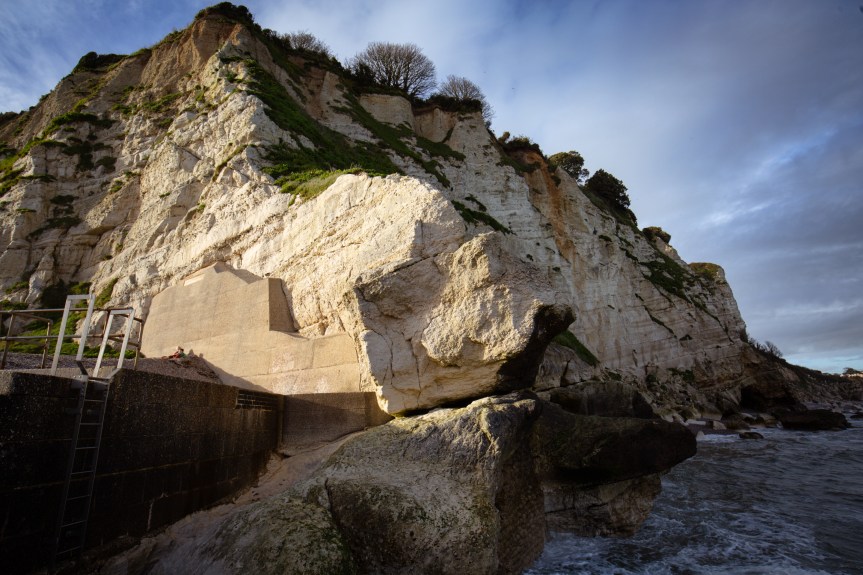
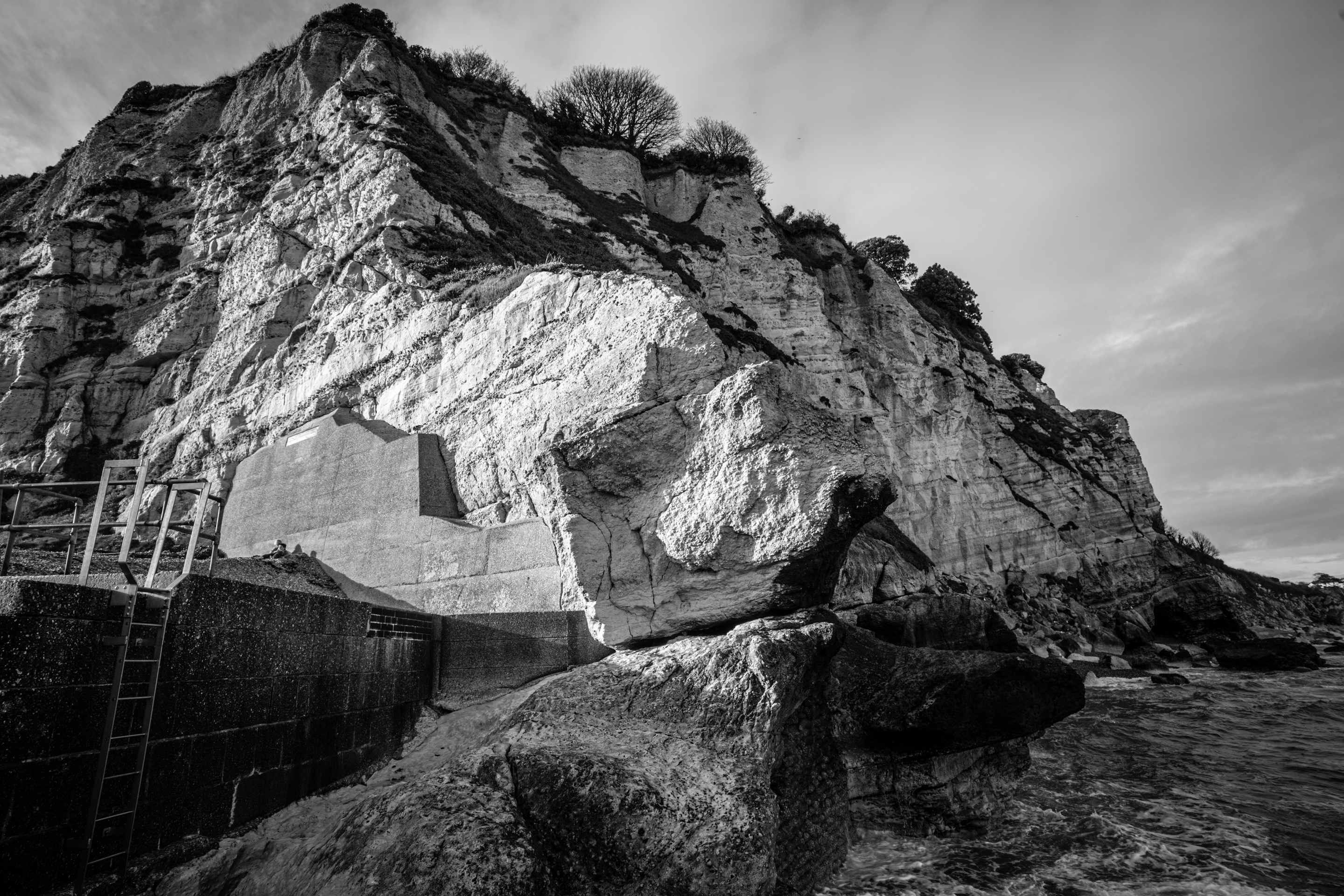
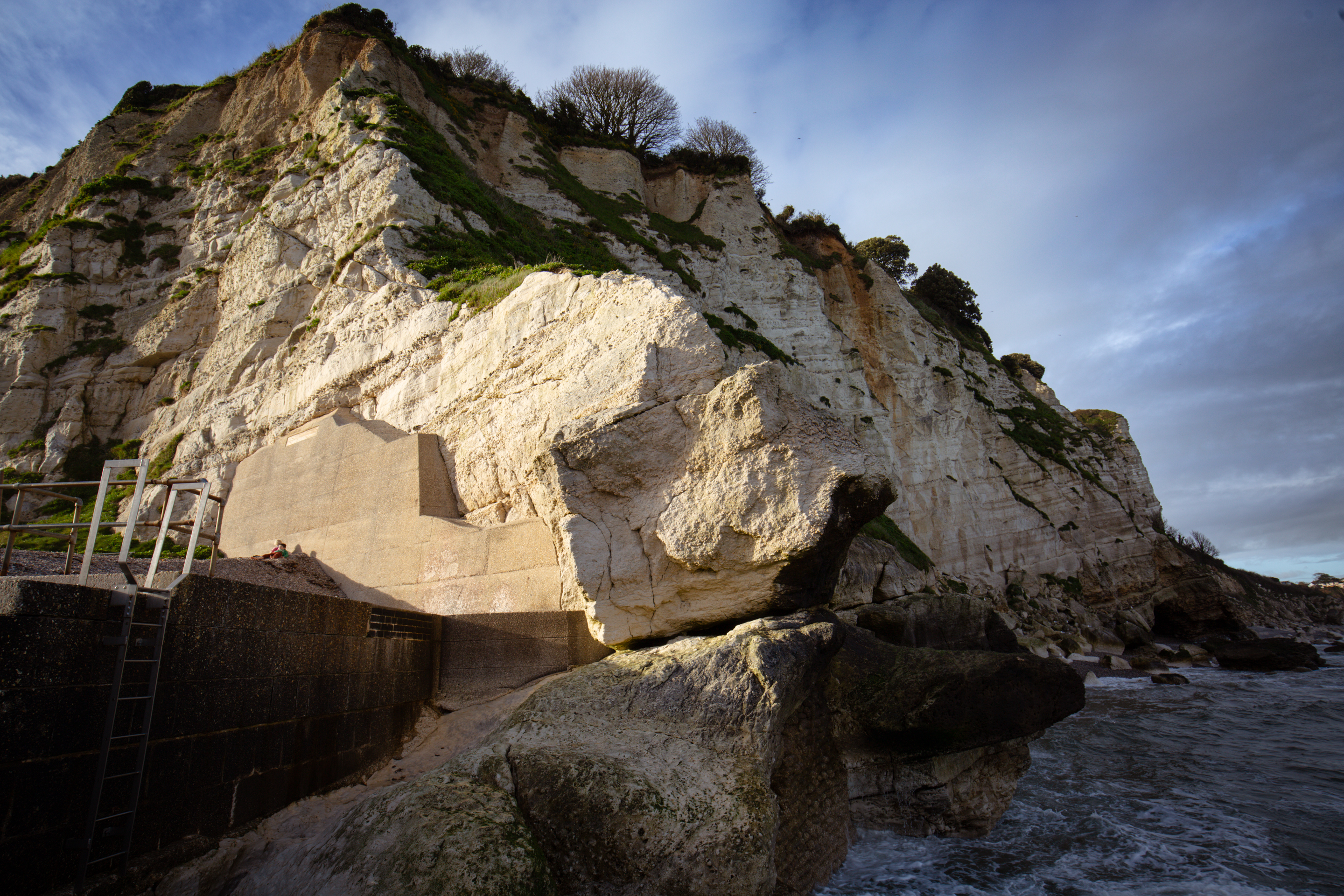
The sea licked the cliffs like a small puppy its owner – unapologetically loving its face. Jealous of their interaction, I climbed down the ladder fastened to the pier and landed in water next to a chalky rock caressed by foamy waves. I climbed the rock covered with seaweed and positioned myself in a place that would somehow absorb it all. I had only felt half of my body on the descent. I was holding the steel staircase ladder with both hands but I do not have much grip in my left hand. It’s the unreliable hand. I got anxious. What would happen if I lose grip in my right hand – there would be nothing to support me then. ‘You still have it.’ I eased my brain and climbed down while my husband passed me the camera.
I was chuffed with the photos.
‘The ground made it to heaven’ I thought to myself. For He is risen.











 Postcards Without Stamps