Our car of 15 years showed three flashing lights on the dashboard while we travelled to Whitby last Sunday. It displayed them during Summer too when we were driving to Poland from the UK. We got it repaired but the same problem showed. ‘We’ll give it a rest when we get to Whitby. It will cool down and we’ll be able to drive back.’ my husband said. His prediction was right. We returned home safely. One thing to be rather grateful for today.
We travelled to Whitby for air. To feel the sand between our fingers and water on our feet. And to eat fish, of course, an irreplaceable custom of every food lover. We headed towards the beach when we saw a crowd of people returning towards the car park. We seemed to be the only family that walked in the opposite direction. ‘Was everything fine?’ I wondered examining the opened restaurants, stalls, coffee shops and calmly floating boats and yachts. The surrounding was reassuring and the lobsters and crabs painted on restaurant walls seemed to nudge us towards the beach. Who wouldn’t like to see where the crabs live after all?
We rushed to get at least an hour of the golden light at the beach. We passed the crab-fishing family, a man inviting us for a sea trip, new marine centre and just before we reached the beach we had to pause to urgently drop 50p coins into a designated place for overstretched bladders. A relief worth paying for. :)
We collected ourselves and all the 6 bags that we had with us for all the eventualities of the beach life. Just before the stairs we stopped at the viewing platform to see the sea and the beach but the beach was not there to be seen. The frothy waves were licking the sea walls and all the way to the cliff. A spring high tide took over the whole beach. Disappointment was hard to swallow and yet there we were exposed to the sea air, energised by the colours of the sky, caressed by the breeze. Enough to be grateful for. Not to mention the ice-cream and the dinner and a chat with a fisherman… but more on this at a different time.
Take me beyond forgiveness Where love ends all quarrels And gratitude replenishes hands Tired of work For nothing So it seems…
Take me beyond forgiveness Where I understand the concept of a nutrient without doubting its worth or value and I clean and I eat wisdom for breakfast and love for dinner. With you.
QUESTION TO PONDER
If you were to take yourself beyond forgiveness, where would you take yourself?
Who is ‘you’ for you?
What would be on your wisdom plate?
Acknowledgment: I first saw poetry combined with questions in the book 21 Spotkań. These questions lead to individual insight. Click here to see. It was written by Maciej Bennewicz and Katarzyna Zaremba. Both psychologists create poetic dialogues and work with metaphors that aid individual growth and self-understanding. The more humble I become, the more I grow in the appreciation of this approach.
May is a mental health awareness month and I would like to strengthen us all using my talents today in a similar manner. I learnt yesterday that a friend of mine died being only 48. She loved travelling and this blog too. I wish I had still a chance to eat a dinner with her. Travel. Keep on living. x
By engaging in this exercise you are practising these mental skills:
self-compassion
self-awareness
inner peace.
So if you were to take yourself beyond forgiveness, where would you take yourself?
Enjoy it.
POLISH TRANSLATION
WIERSZ
Zabierz mnie poza przebaczenie Gdzie miłość kończy wszelkie kłótnie A wdzięczność wypełnia dłonie Zmęczone pracą Za darmo Na to wygląda…
Zabierz mnie poza przebaczenie Gdzie rozumiem pojęcie składnika odżywczego nie wątpiąc w jego znaczenie i wartość I już teraz sprzątam i jem Mądrość na śniadanie i miłość do obiadu. Z Tobą.
PYTANIE DO ROZWAŻENIA
Gdybyś miał/miała zabrać siebie poza przebaczenie, dokąd zabrałabyś siebie?
Co by było dla Ciebie mądrością na śniadanie?
Z kim jadłabyś obiad?
Podziękowanie: Po raz pierwszy zetknęłam się z poezją połączoną z pytaniami w książce “21 spotkań”. Te pytania prowadzą do wglądu we właną sprawczość. Kliknij tutaj, aby zopoznać się z książką. Autorami tekstu są Maciej Bennewicz i Katarzyna Zaremba. Obaj psychologowie tworzą poetyckie dialogi i pracują z metaforami, które pomagają w indywidualnym rozwoju i zrozumieniu siebie. Bardzo doceniam to podejście.
Maj jest miesiącem zwiększania świadomości na temat zdrowia psychicznego i chciałbym nas wszystkich wzmocnić, używając moich talentów w podobny sposób. Wczoraj dowiedziałem się, że moja przyjaciółka zmarła mając zaledwie 48 lat. Uwielbiała podróże i ten blog. Chciałbym mieć jeszcze szansę zjeść z nią obiad lub kolację. ”Podróżujcie. Żyjcie dalej.” powiedziałaby dziś. x
Angażując się w to ćwiczenie, ćwiczysz poniższe umiejętności:
współczucie dla siebie
samoświadomość
wewnętrzny spokój.
Warto?
Więc: Gdybyś miał/miała zabrać siebie poza przebaczenie, dokąd zabrałabyś siebie?
On the 31st of October, we celebrated in Derby the festival of light, Diwali alongside other festivities and the hype of Halloween. It can seem a bit strange that I am writing about this on Thanksgiving Day but on the other hand I feel it is most appropriate because in fact we rarely give thanks to each other for permissions to see and participate in the lives of our diverse communities. When we start to socialise into the routines of communities other than our own, we spot differences but at the same the common needs and burdens as well as the efforts to make us feel welcomed and included. This is a lot to be thankful for.
When years ago I started a doctorate (and never completed) at MOSAIC at the University of Birmingham in Multilingulism with the use of autoethnography as a research method, I was learning how to write about oneself as placed in a multicultural British landscape and in an eclectic family. The task was confusing and insurmountable at times and for a long time I could not pin down where the difficulties were coming from. Until of course I understood… One was coming from a commonly held belief that talking about oneself is not the done thing, let alone to research oneself in the context of multiple cultures… this seems even more odd. Anyhow, my doctorate collapsed during the Covid-19 pandemic under the pressure of ill health, two small home-educated kids, my husband’s increased workload (no, he was not on furlough) and my need for creative rest that I am still very much a supporter of. That said, although my doctorate collapsed, the need to engage in local communities remains strong.
On the surface looking into the culture of a different community seems like having nothing in common with doing research into oneself, except when the holy scripture of that group teaches you a lot about self-intelligence and its importance for life well lived. The Gita actually uses the term ‘self-intelligence’ in its writing legitimizing self-knowledge, discipline and broader awareness of values that govern us and our choices. Indeed, who would we become without our ability to self-reflect and observe.
In the book Natural Law & Natural Rights, John Finnis lists 7 basic goods of human life necessary for our well-being. Among them, he lists: 1) life (itself with health, safety and self-preservation), 2) knowledge, 3) play, 4) aesthetic experience, 5) sociability (friendship), 6) practical reasonableness and 7) religion which of course concerns itself with love, the importance of truth, goodness, transcendence and the boundaries of human freedom. These common goods order and create what we call ‘quality of life’ and determine our overall satisfaction of life. Thus, part of learning about each other and our cultures is to see how we go about those values and common goods in our cultural groups and settings.
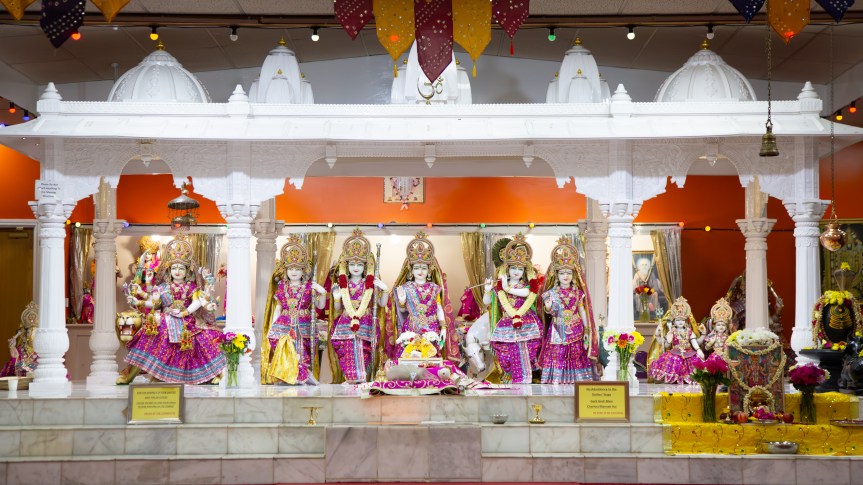
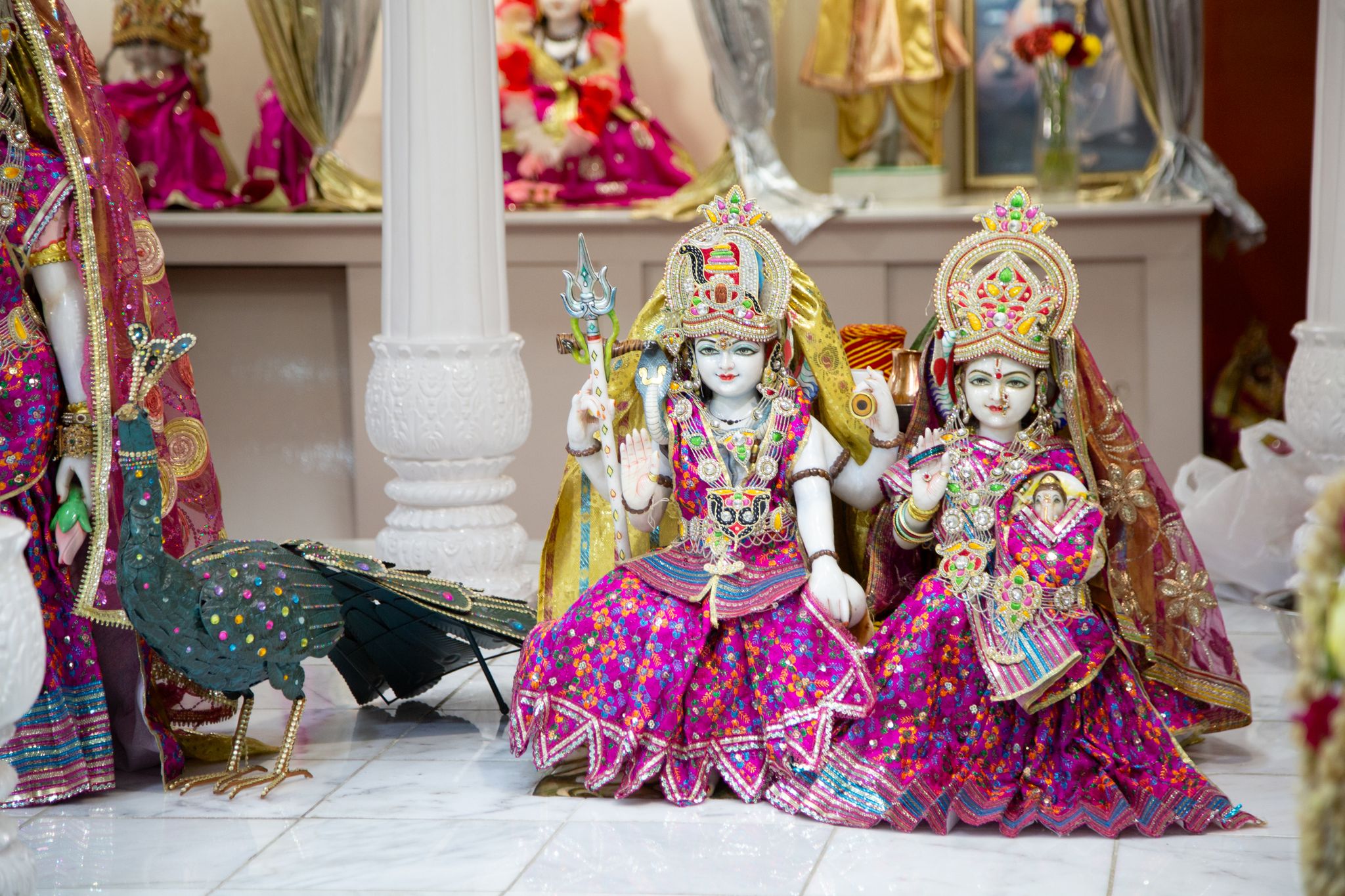
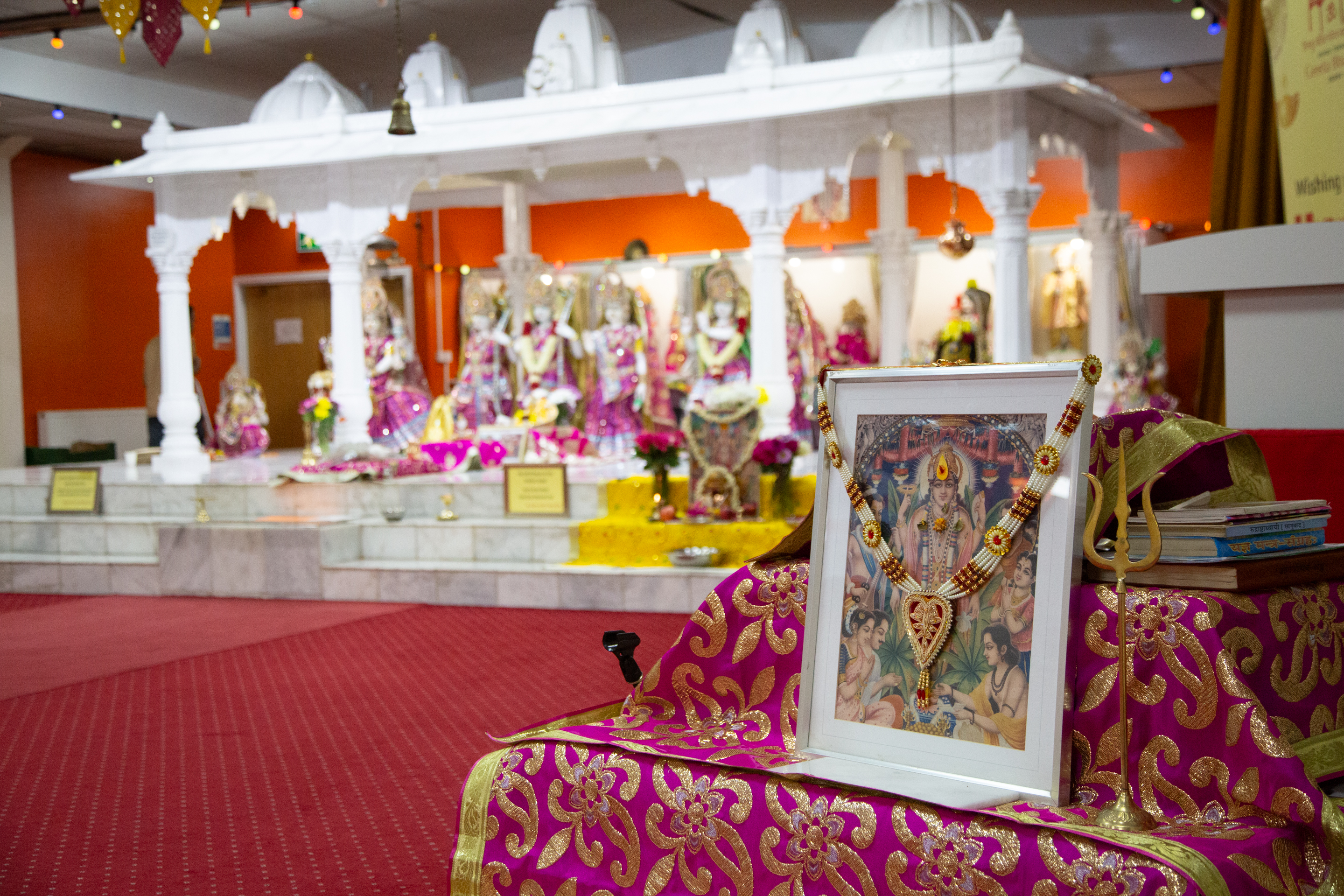
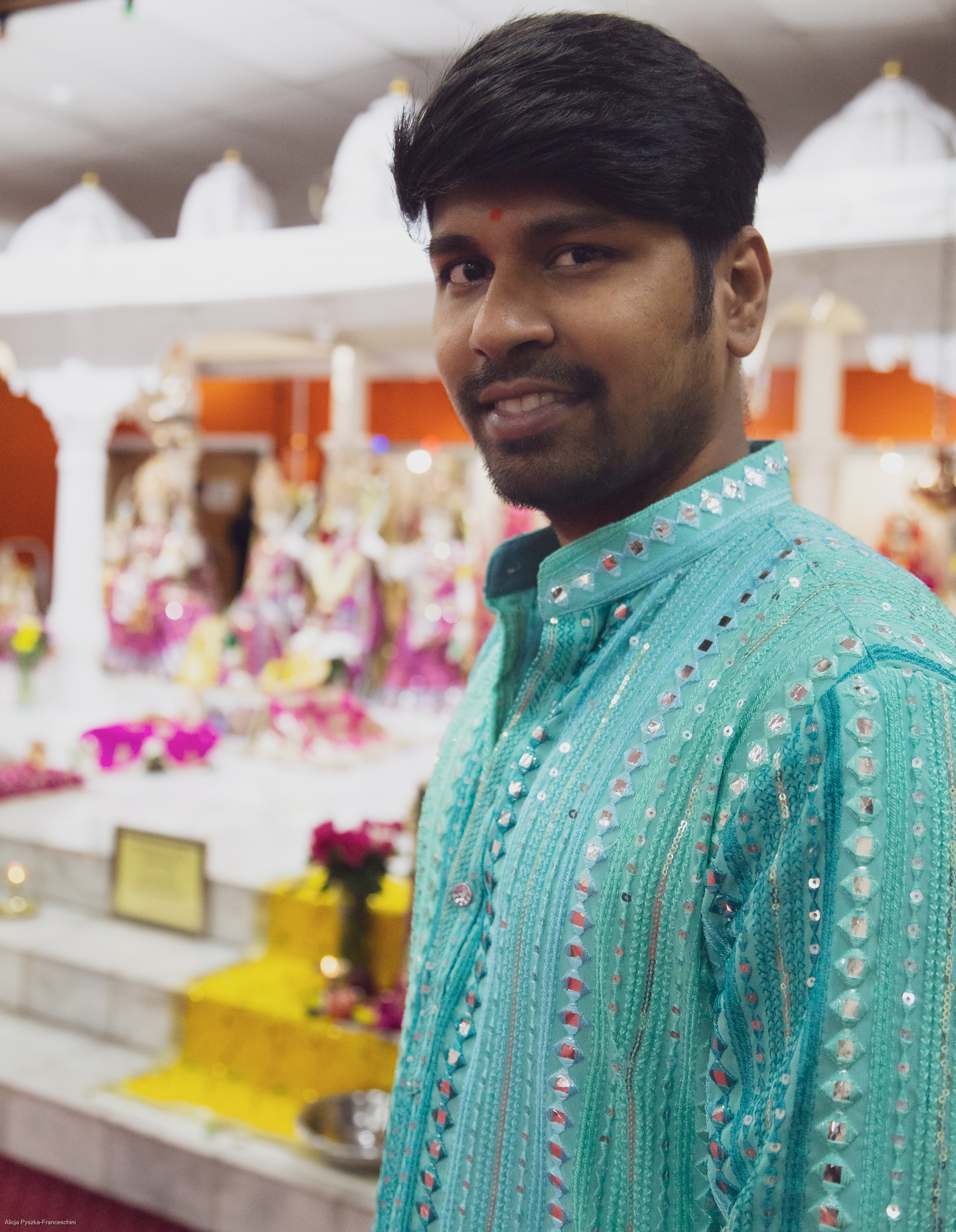
So here are a few postcards from Diwali as observed in Geeta Bhawan in Derby. For this post, I asked two mums to whom I chatted about the Gita, Radhe and Sarbjit, to explain to me who and what I saw at the Temple. They replied on WhatsApp.
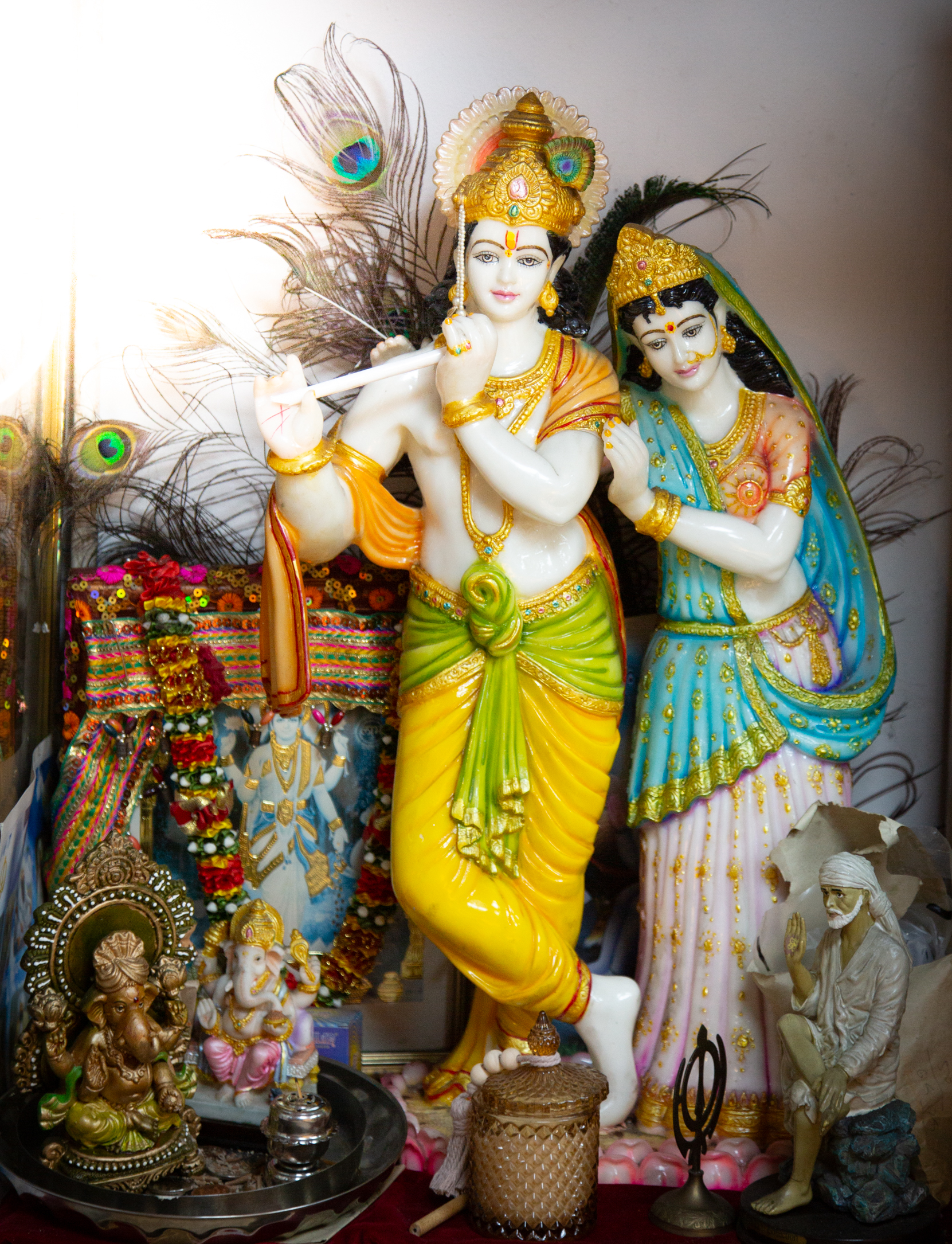
Who are the gods/ deities here?
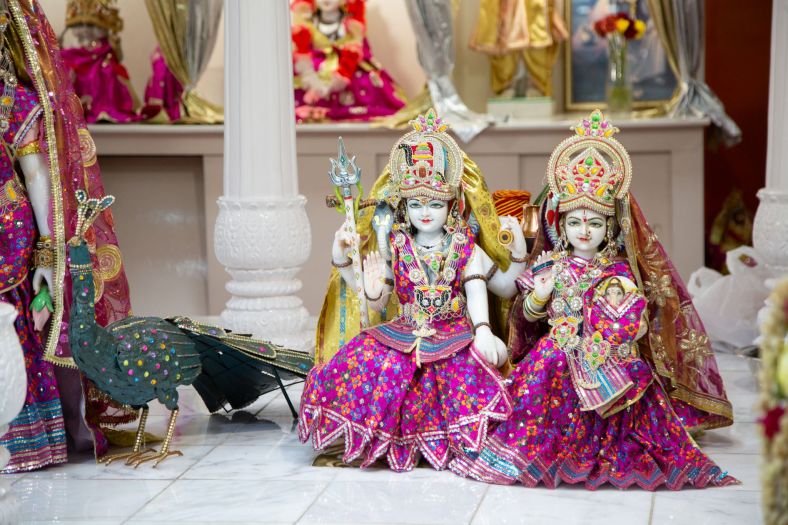
Radhe answered: ‘Shiva (with Trident) Parvati Devi (also known as Durga). In her arms Ganesha.
That peacock is standing besides Radha and Krishna’
“Abode of Krishna is called VrindaVan (Forest of Tulsi plants – one type of basil)
So eternally Krishna lives in a forest..residents of VrindaVan possess pure love for Krishna.
So in eternal vrindavan Krishna z devotees are in the eternally in the form of trees, parrots, peacocks, cows, cowherd boys, cowherd girls. Their forms are based on how they want to love Krishna…that will be a long discussion
Anyways, the story goes once Krishna was playing on his flute and has invited the animals of VrindaVan for a dance. Peacocks were dancing very gracefully. Soon Krishna joined their dance, looking at Krishna dancing peacocks started marveling his dancing.
Then the peacocks offered their best possession to Krishna, peacock feather. Krishna accepted their offering and honored it by always wearing peacock feather on his head.
In the middle, if I see correctly is Gopal – baby form of Krishna. Krishna reciprocates to the desires of his devotees. Many devotees want to love him as their own child so they worship him as Baby Gopal.
We worship deities by offering them clothes, food, jewellery.
So the deities are dressed in different colours the day you visited the dress happened to be of purple colour. Their is no particular significance of purple colour.
Next time if you ever choose to go you may see them in a different colour.
Traditionally on full moon day deities are offered a white dress.
On ekadashi (one day from the lunar calendar) offered a red dress.
By offering service to deity form of the Lord one can get purified of sinful desires. Sometimes people offer such service as an expression of gratitude.”
“Food has an significant impact on our consciousness. In Bhagvad Gita you may have studied about Sattvik, Rajasik, Tamasik.
We offer Sattvik food to the Krishna. When he accepts that offering it becomes Prasadam (which means Grace/mercy)
Prasadam will purify our consciousness.
That fruit was Prasadam. (…)
You visited the Temple on Diwali day, on Diwali people worship Lakshmi Devi and ask for prosperity.
[In the framed photo] is Lakshmi Devi, goddess of wealth.”
I also asked Sarbjit who visits the temple to tell me about a senior person who was distributing fruit towards the end of the prayer as I did not know who he was. Sarbjit replied, “If that man was wearing different clothes, then it was a Pandit. Otherwise, he could be a sevadar (volunteer).” During the worship people walk around the alter and worship each god separately after that they receive a piece of fruit, just before they leave the temple. The man very humbly told me that he is not a scholar in the study of religion and that there was someone else there who could have done it if I was there a lot earlier. But what he said, was that the most important thing is to remember that the gods/ the deities are indestructible and that what we as human beings cannot correct, they will do it for us. They will correct all the wrongs. This message I found to be most comforting. I hope you do too.
Happy Thanksgiving. May the light of Diwali keep on shining on us.
Thank you to Nikhila and Karthik for agreeing to be featured in the photographs for this blog post. Additional gratitude goes to Radhe and Sarbjit who supported me with their understanding of the customs here. Thank you very much.
Any comments and corrections more than welcome. :) Thank you all.
The text I referred to in the article is:
Finnis, J. (2011) Natural Law and Natural Rights. Oxford University Press: Oxford.
We are very lucky in Derby to be surrounded with cultures. I often feel that we timidly coexist while in fact inside we are almost bursting with curiosity and a wish to get to know each other and to join in with each other’s customs at least in some manner.
The Gita for Children by Roopa Pai has planted a strong seed in me. On that Halloween day, I felt a desire. I wanted to see Diwali celebrated for at least a few minutes. After all, it does not happen often enough when the two coincide.
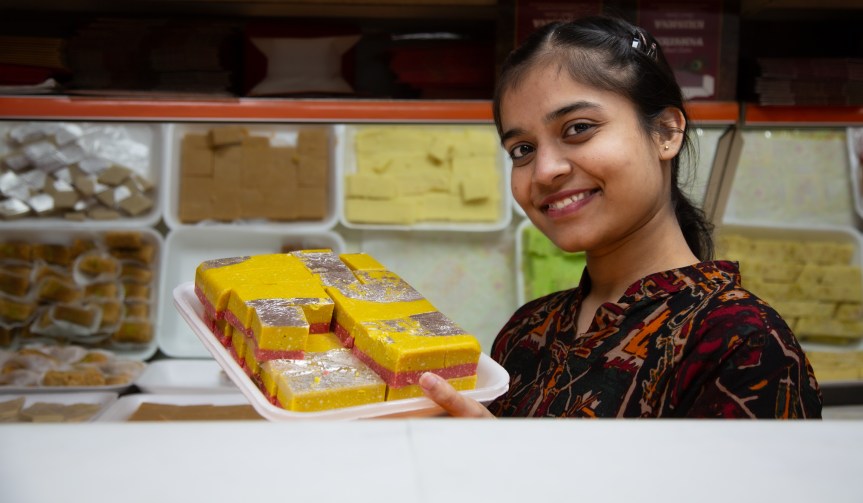
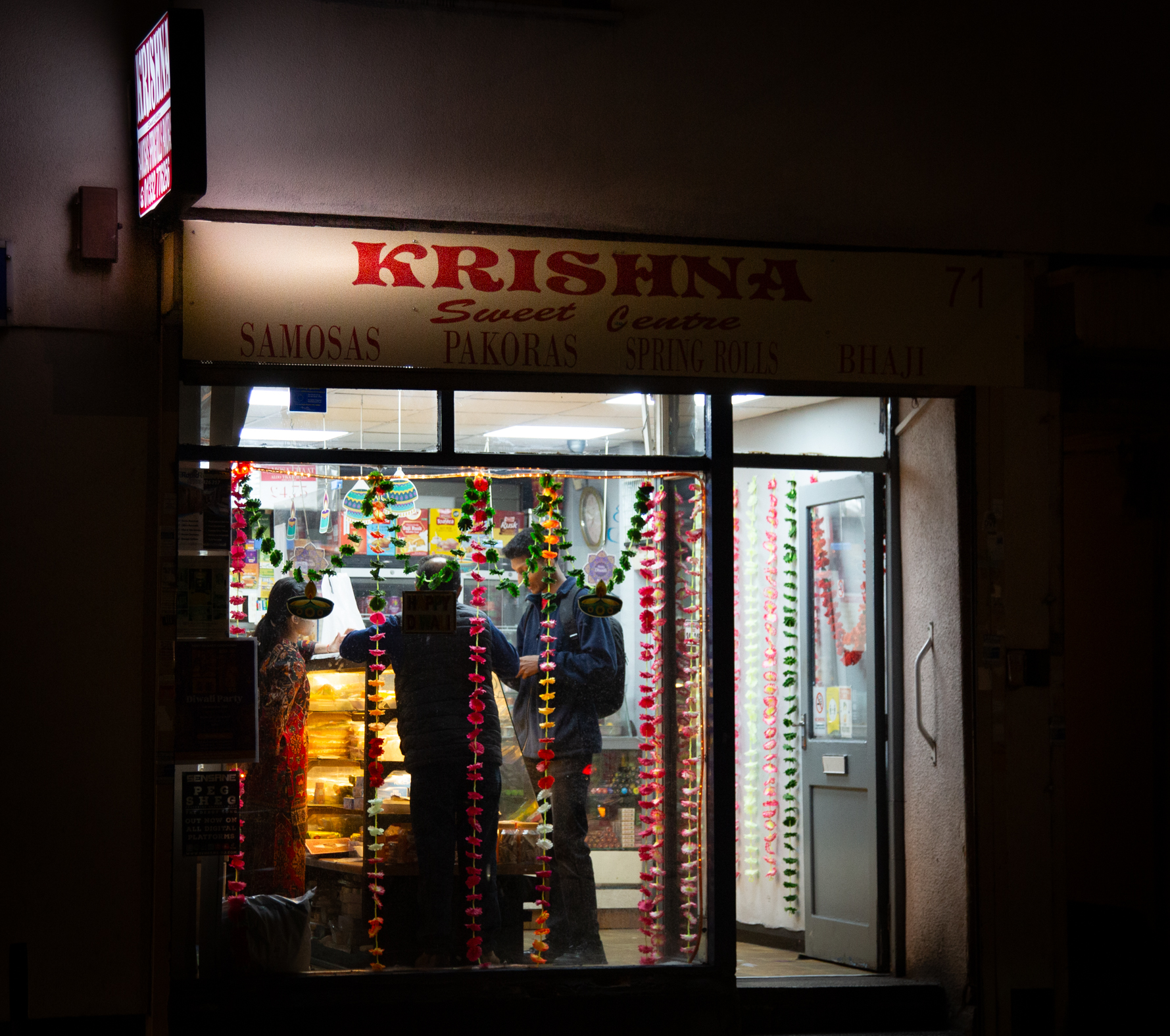
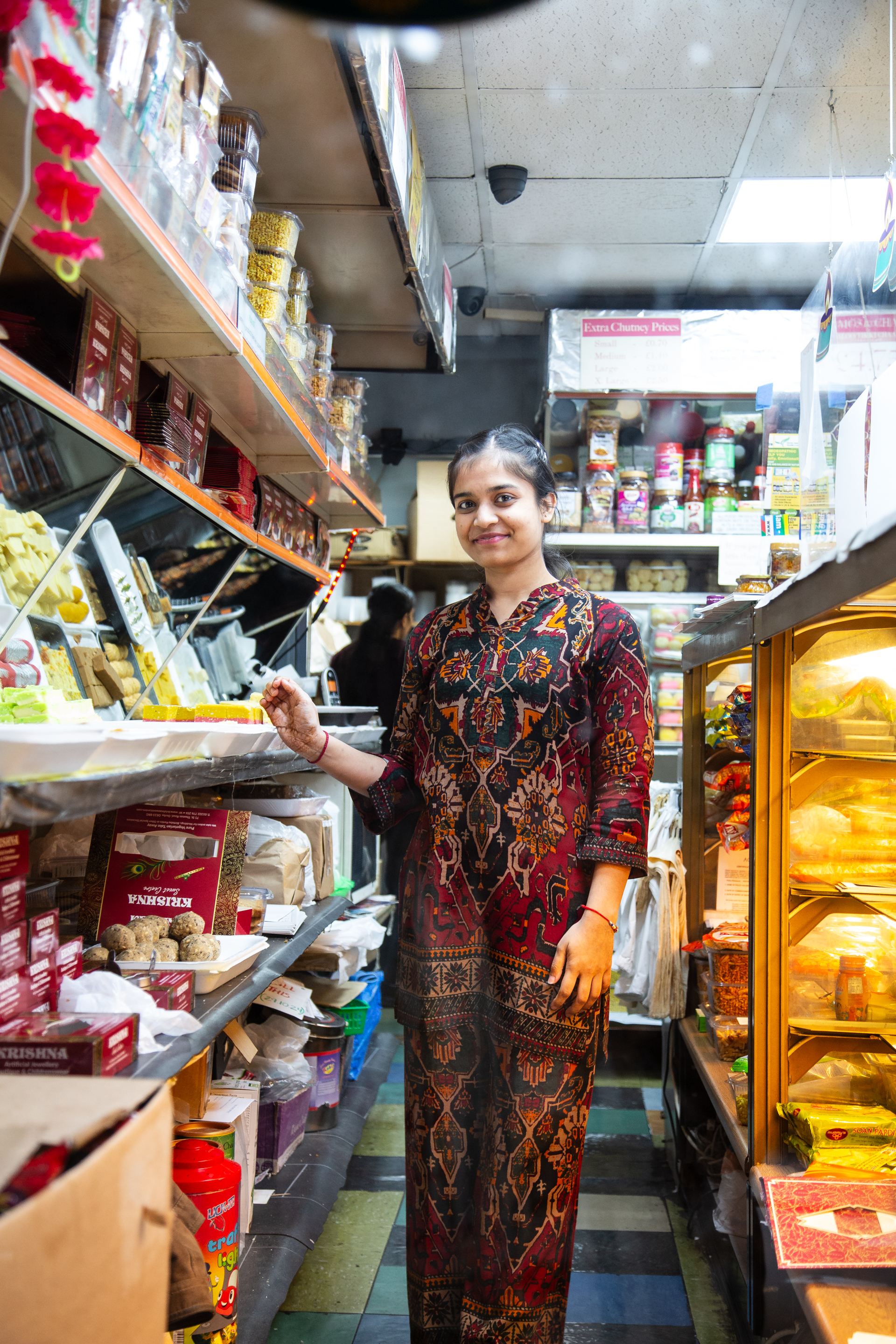
This was a very short and spontaneous visit to a nearby shop. I got stuck in traffic on my way to our local Polish shop to buy a few things for our trip to the Lake District. While waiting in the car, I looked at the shop on the right. I felt instantaneously comforted. In the darkness that enveloped us, their lights were lit. People were joyfully chatting and pointing to the colourful sweets. They were about to take them home and share with their families. The atmosphere was festive and very inviting. I just finished trick-or-treating around our neighbourhood with my little ones. One was dressed as a black cat, the other as a ghost. I was pleased to see how many people celebrated both or all. There was an All Saints Day happening in our Catholic religion a day after.
This is the world we live in. I often sing this to myself while I’m trying to give myself the right to experience and celebrate our city’s diversity and the inherent beauty in what we can produce: in food, language, customs, lifestyles and endeavours. Living in Derby can be in so many ways like travelling the world…
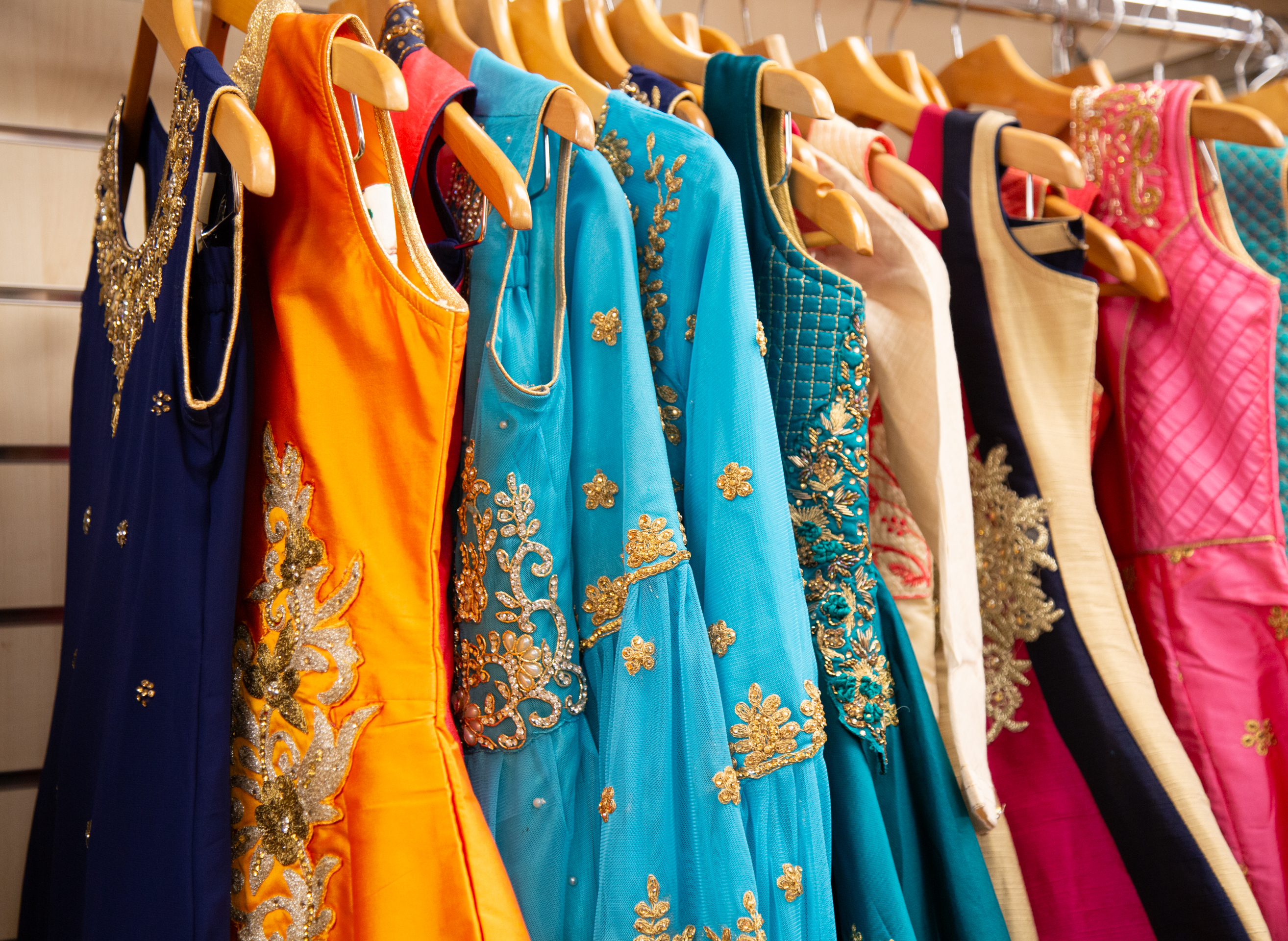
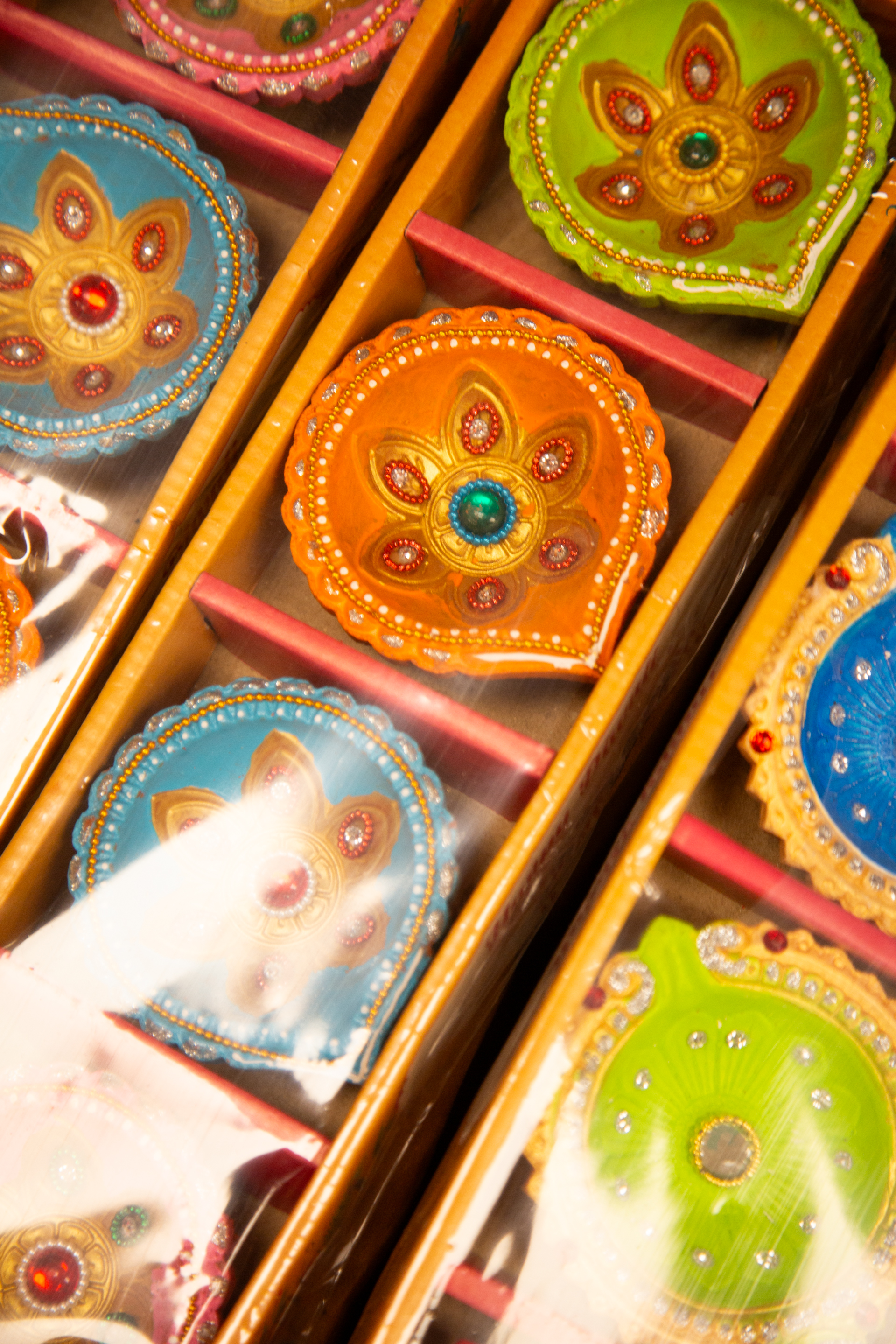
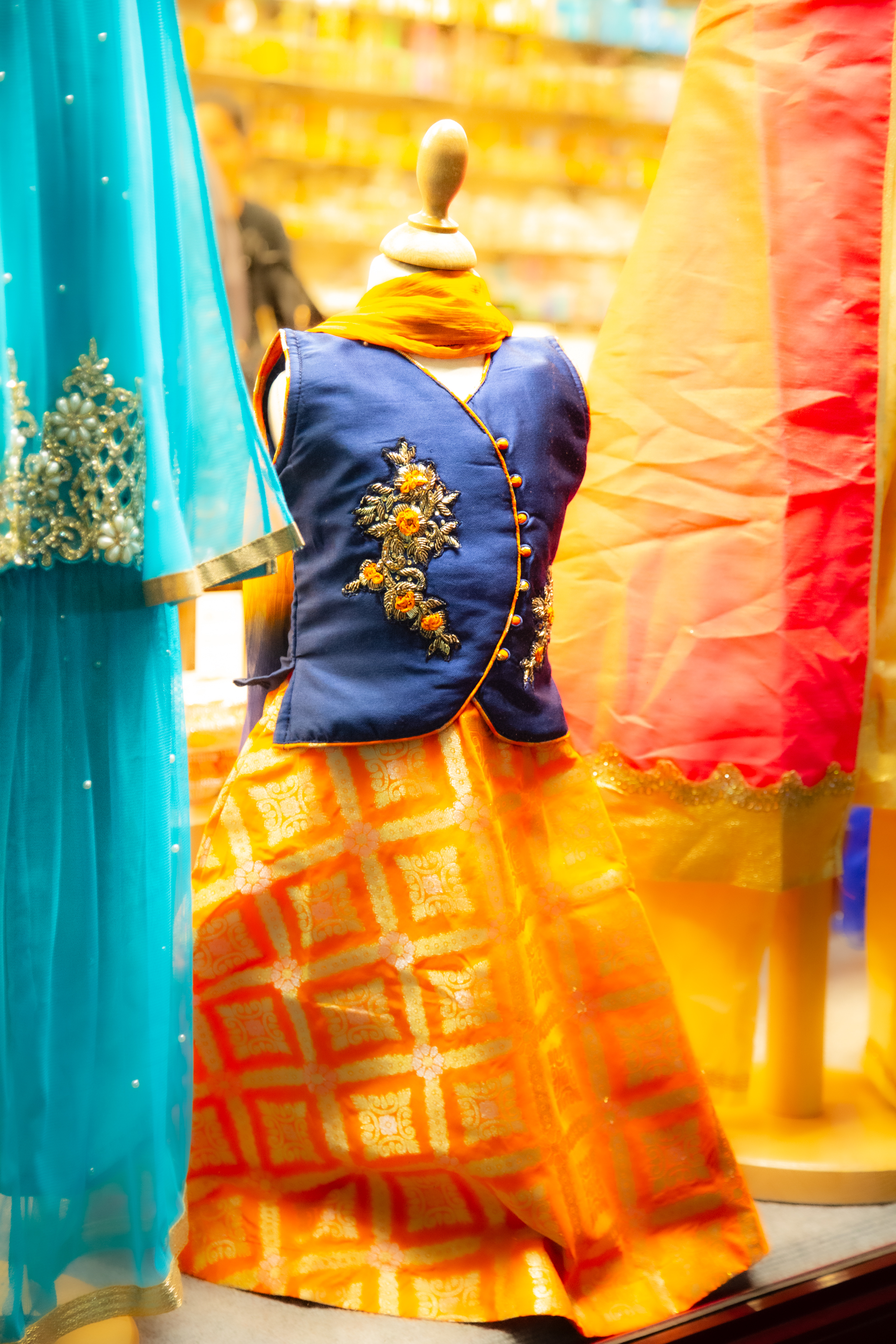
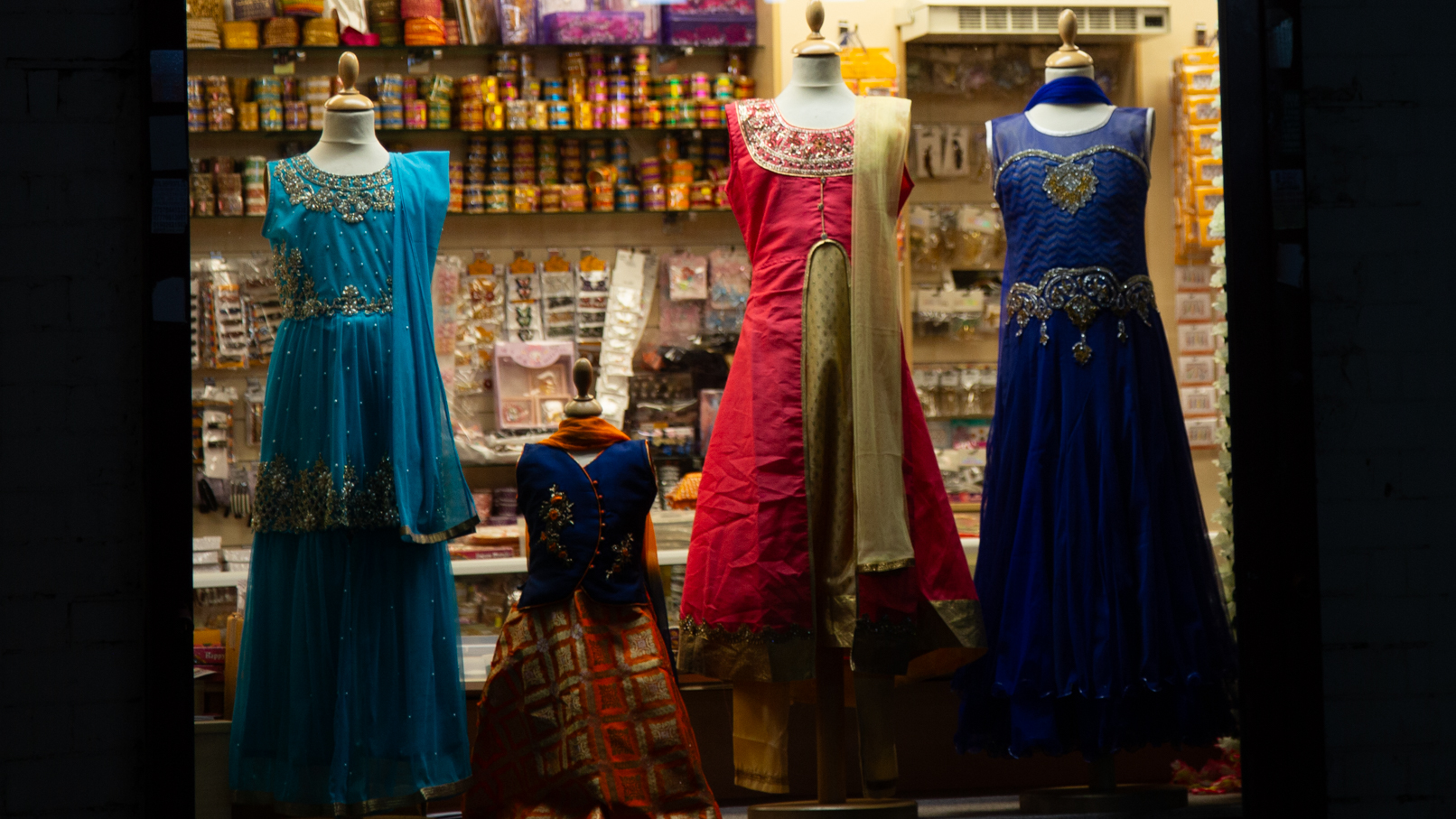
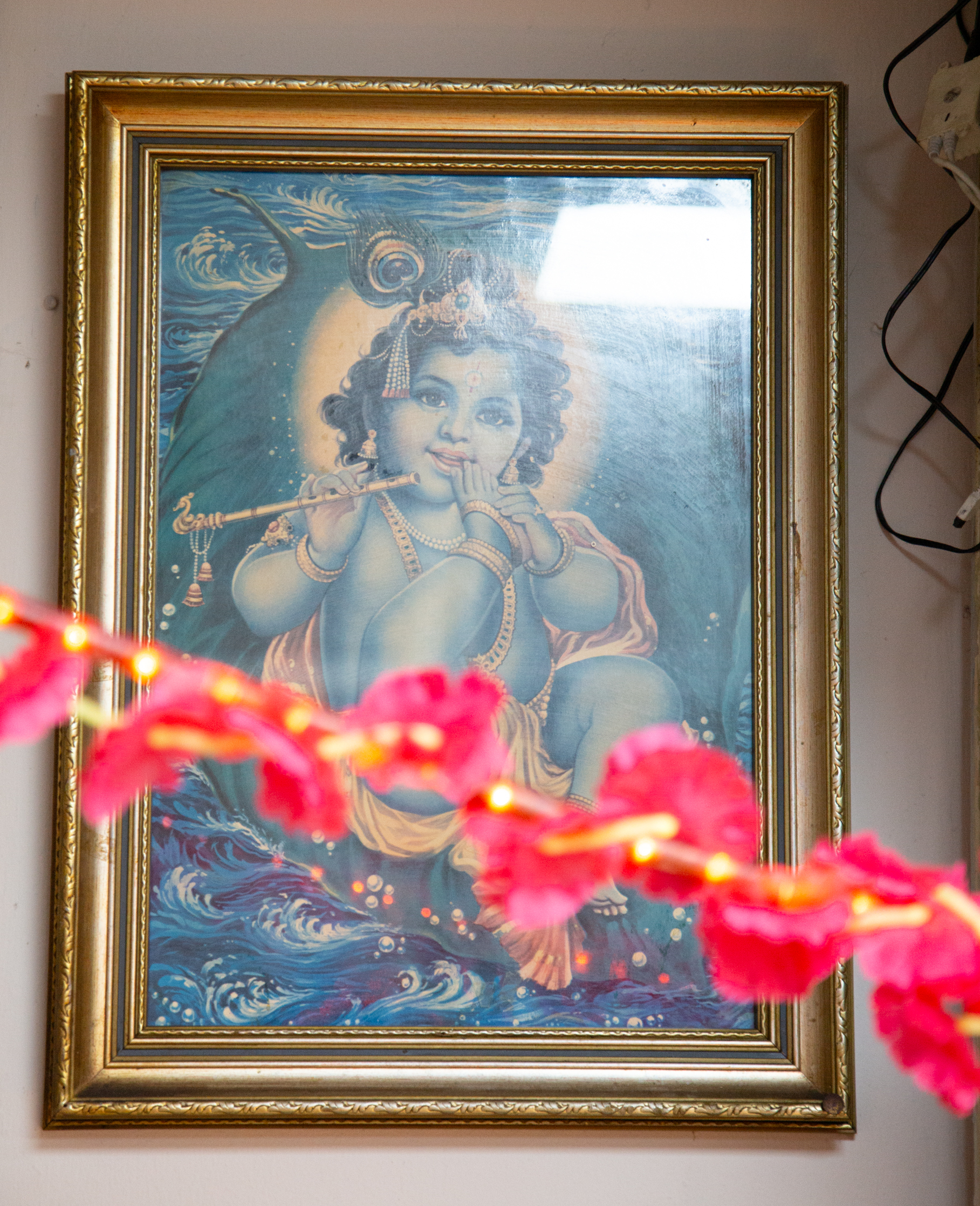
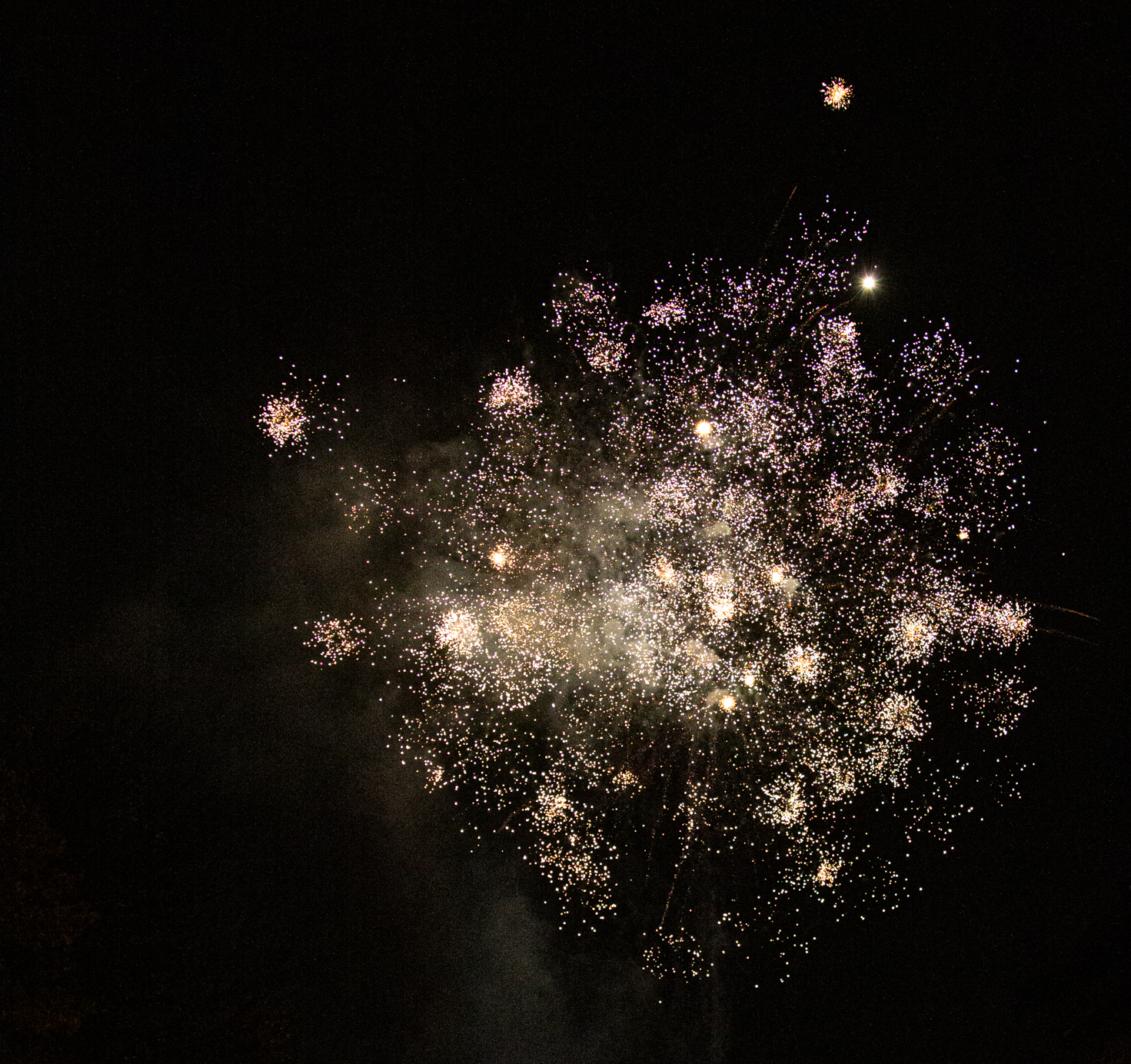
So above is a short photos essay from our local vegetarian Indian take-away and a sweet centre – Krishna Sweet Centre in Derby. The owner has kindly agreed for me to photograph his shop. It features clothing and traditional diyas – the candle and oil holders. They are adorned with traditional patterns. The shop also displays dresses and hair ornaments. He directed me to the Hindu temple Geeta Bhawan. There, I saw the fireworks while the stars were shining. I was reminded that Krishna is the god that plays the flute. I saw the offerings and rang a bell in the temple. I asked very politely to be guided around the praying custom. Everyone was so kind.






















 Postcards Without Stamps