
“My mission in life is not merely to survive, but to thrive; and to do so with some passion, some compassion, some humor, and some style.” Dr Maya Angelou
Have you found your way to thrive?
“My mission in life is not merely to survive, but to thrive; and to do so with some passion, some compassion, some humor, and some style.” Dr Maya Angelou
Have you found your way to thrive?
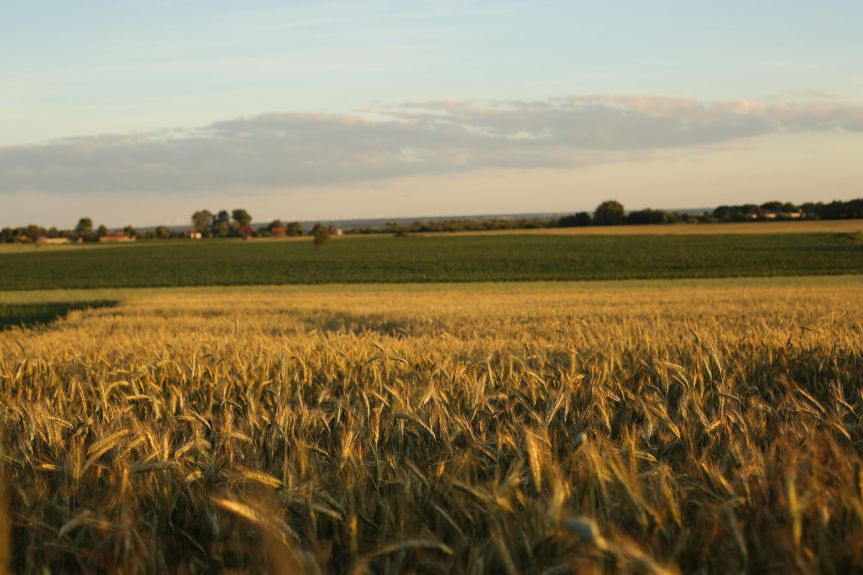
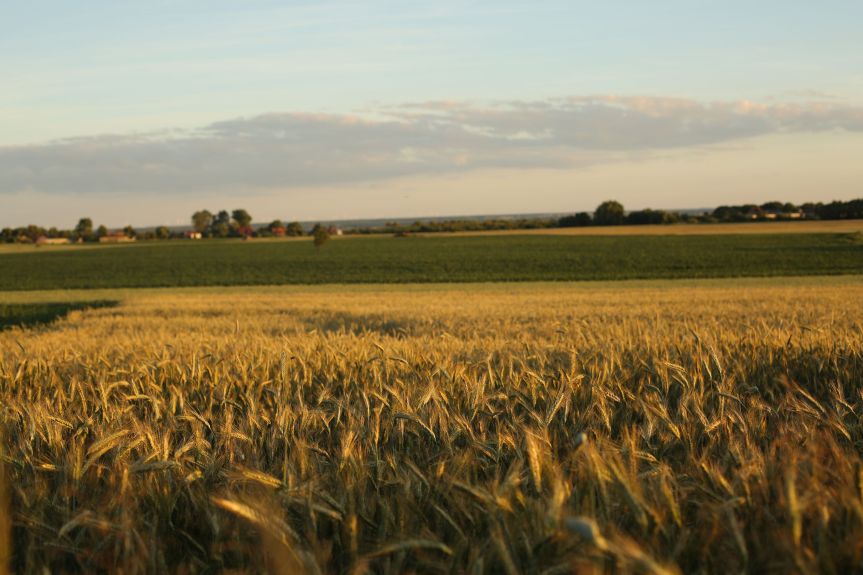 I grew up in a village partially surrounded by wide stretches of open land. In a building that comfortably housed my grandparents, my parents, me and my sister. There was a large garden behind our house, with other farm buildings and a field where different things were grown depending on the year. My cousins’ house was on the same yard as ours and not a day passed by without us playing together and visiting each other. I grew up in a warm-hearted community surrounded by beautiful natural spaces.
It wasn’t until I started living in the UK that I realised how strongly my well-being is related to the open countryside and to kind-hearted interactions that come with communal living. I think that these two aspects of life are so strongly ingrained in our systems that without them we stop thriving. Of course, we thrive in some communities and in some spaces more than in others, but it is a task of an adult to figure out exactly where we thrive.
A while ago I listened to a wonderful conversation between Kirsta Tippet and Maria Popova. They discussed a different type of space to the physical and the communal that I mentioned above. They were talking about the moments in our day when our minds are least burdened, the moments when great ideas pop up in our heads, when we shower, for example. The moments of unburdened cognitive space.
I often think about questions related to good leadership. Partially because I think that a role of a mother has to do a lot with good leadership, but also because I would like to be a good leader for myself. (Who wouldn’t like to lead their life beautifully, eh?) I really feel now that in order to be a good leader in our overloaded times we need to be able to create for ourselves and others as much unburdened cognitive space as possible – sometimes that space comes with a reduction of tasks, sometimes with a reduction of judgment that we throw at ourselves and others, and other times just with holidays or a daily meditation. But the most space we get is when we practise all of those… with great quantities of love. The more we love ourselves and the people who we are with, the more we strive for balance (rather than praise or control). Only then can we become for others what we always hoped for: a delicate and energizing light.
I like stalking authors online. I love listening to their stories of effort and creation, and about the moments that they’ve discovered that writing is what they want to pursue in life. Cheryl Strayed, the author of the memoirs called ‘Wild’, is one of the author’s whose voice is often heard on different media these days and it is the voice that so many people look forward to hear. It’s not difficult to identify with Cheryl Strayed. Her story is a story of loss, grief and self-destruction, but also a story of self-redemption, a story of coming back to one’s own ideals and life-path. The book is her true story of the lonely hike down eleven hundred miles of the Pacific Crest Trail that she took in order to deal with the sudden death of her mother and in order to pull herself out of a period of self-destruction that followed her mother’s death. Her walk is a rite of passage. It’s a source of reconciliation and strength. In her book she writes that the wilderness, the landscape of the hike, was
“A world I thought would both make me into the woman I knew I could become and turn back into the girl I’d once been.”
Cheryl Strayed’s book wonderfully shows how we deal with the most complex and emotionally-unbearable situations in life. Loss and rebelliousness (to the point of self-destruction) often go hand in hand in life. We can easily see for ourselves how our refusal to accept and awake to the life that is triggers our self-destructive or other-destructive tendencies. I’m not talking here about big things, but about small ones too, like over-working or not-eating, or even refusing to be kind to people. This is what I call self- or other-destructive tendencies. Realising that we have them is probably one of the things that we learn about ourselves when we truly decide to grow up.
What Cheryl Strayed’s book taught me was that after every major transition in life we need a rite of passage that would help us to somehow zip-up all the loss and rebelliousness associated with it and leave it behind us. I’ve been looking for my own rite of passage, for my own way of dealing with personal junctures. From Cheryl Strayed I’ve learnt that you need two things: nature and being on your own, on your own in doing something. I needed to feel discomfort and I needed wide open spaces. My family and friends joined me in my exploration of open spaces, but I gained my solitude through a very simple exercise. I’ve asked my husband not to help me with looking after our house for one hundred days, and as a result the house is dirtier than ever, and only on occasions is it delightful with colourful flowers in its various corners. You see, I’m a reader. I choose a book all the time. In my solitude I choose to study (or to chat to a friend on Facebook). There. That’s it. For a long time I’ve been trying to make myself into a mother and a wife that I thought I meant to be, but as my neighbour says, You cannot be what other people expect you to be. You are who you are. The solitude tells us a lot about our desires. Tells us a lot about who we really are.
I’ve been challenged in many areas of my life in the last few years, health-wise including. I think I went through a period of slight despair. Despair of not being able to conform to whatever I thought is right to do for a wife, a mum, a young researcher, a good patient, a good friend and a good daughter.
Wendell Berry wrote once that despair and pride are two sides of the same coin and the biggest enemies of creative work, I think that they are probably the biggest enemies of an honest life in general.
When we admit to our needs and desires, when we own them, we start creating space for them and the wide open space that we visit during weekends becomes all that we need to create spaces of fertile solitude during the rest of our week. And ironically, the better we use this space, the better companions we become.
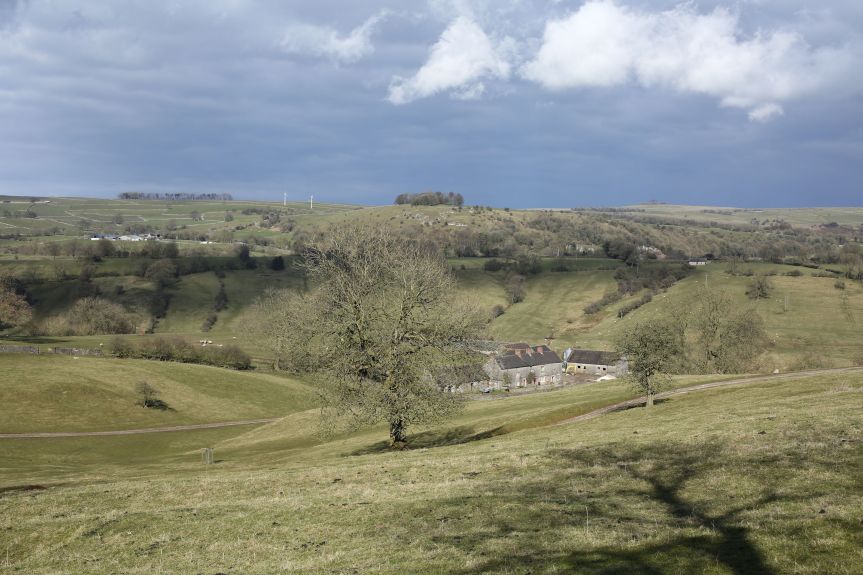
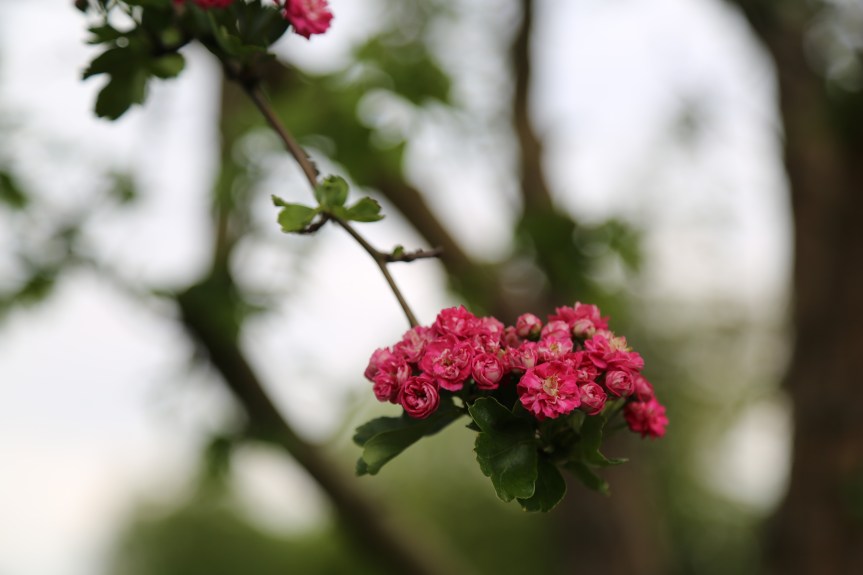
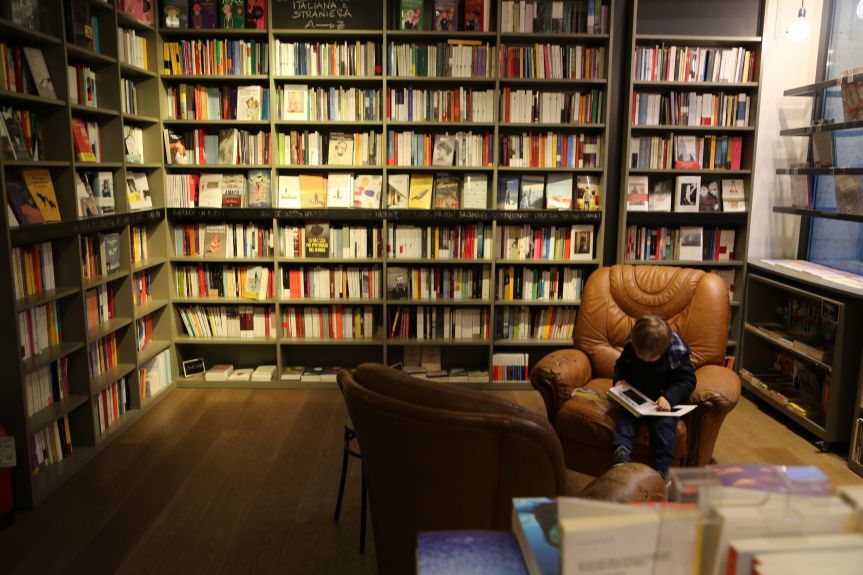
*Photo 1 taken at Gogol & Company, The most wonderful a bookshop in Milan, Italy.
*Photo 2, The Tissington Trail, The Peak District, UK.
“If you don’t make the time to work on creating the life you want, you’re eventually going to be forced to spend a LOT of time dealing with the life that you don’t want.” Kevin Ngo
I do not usually like quotes that are somewhat threatening in tone, but I do like this one as it reminds me to be responsible for looking after my life. My life is in my hands and I need to give it meaning and purpose if I want us to flourish.
But looking after my daily life is just part of my personal responsibility. Another part is to make meaning out of my past.
”My mother was the love of my life.” – is a quote from Cheryl Strayed that I embrace warmly.
I adore this sentence so much for so many reasons but mainly for how well it counters our blame-oriented culture of today, the culture that seeks to blame our parents for who we have or have not become. The culture that renders us deficient in will and efficacy because of who our parents were or weren’t. The culture that teaches us to point fingers at the people whose youth, intentions and histories we cannot possibly experience. I think it’s good to work through childhood traumas, it’s good to examine our responses to them, but I do not think that we should succumb to the culture of blame. Because by doing that, we see our childhood as poorer than it actually was. I saw people being poisoned by the blame-oriented mindset more than by their actual childhood experiences. I saw people being stuck for years because of it. ”My mother was the love of my life.” – this sentence does the opposite. It gives meaning and sense to our childhoods. It shows that adults are fragile but also wonderfully capable of loving each other. Capable of loving deeply and dearly, and isn’t it what we all want? To be capable of such love for many people in our lives.
Sometimes I wonder what’s the purpose of the blame-oriented culture. To break, to divide, to render someone insecure. To cause grief? I know that many people would not be able to be so candid about their own mothers as Cheryl Strayed was. I know that for many their childhood experiences are too painful to even hear such words being spoken. But this quote is not only about the mother, right? But about the loves of our life. Beyond the question of our relationship with our parents, it nudges us to ask: What are the loves of our life? What can we do to be truly open to them?


When my son was born, I was overwhelmed by the enormity of tender-hearted love that I felt but I also felt shocked, I mean TOTALLY UNPREPARED for the amount of anxiety and uncertainty that characterizes these very early moments and then the subsequent years of parenthood. This uncertainty is caused by different circumstances for each one of us, sometimes it’s lonely mothering, a child’s illness, a changing work situation or a move to a different country, and sometimes the well-known sleepless nights or feeding problems, and sometimes by all these things at once. The fear and anxiety is present and experienced by all – it’s the given and the universal to our parenting experiences.
We deal with this uncertainty in many different ways, we cling to books, we cling to people, we cling to ideas, we cling to our identities or we withdraw, we withdraw from books, withdraw from people, withdraw from each other, withdraw from ourselves. All of this is supposed to help us handle the physical exhaustion and the cocktail of emotions that appear in the early phases of parenting. Pema Chödrön once quoted a Times article which said that we are more afraid of uncertainty than we are of physical pain.
I think she was right here.
She also wisely advised that in order to deal with uncertainties we must learn to smile at fear. To accept all the complex thoughts and feelings that engulf us in periods of uncertainty. Because it is only then that we will be able to understand what it means to be a human. Because it is only then that we will be able to understand and empathise with other people, but also with oneself. Yes, with oneself.
When we stay open to what’s ahead of us, the road widens and our curiosity grows and that’s what gives us courage to be together with our children and with our loved-one on each section of that road, walking together, with calm curiosity little by little, one intriguing section at a time.
On Valentine’s Day my husband, son and I went for a walk to an area of hills and valleys close to where we live. We just wanted a short walk down the valley and I was wearing a dress and everyday shoes (and my heavy camera without any charged batteries, grrr). Certainly not a type of gear to do any climbing in. I did not know that we would climb, with our son on my husband’s shoulders, in many ways unprepared. We were stepping higher and higher… curious what the world would look like if we went up just another ten more metres. We enjoyed the walk up, checking we had good footholds and letting each other and others know to avoid the wet and slippery bare rock that sometimes presented itself in the path. We enjoyed being given helpful suggestions by passing walkers and most of all we enjoyed the freedom and exhilaration of the climb up into the fresh and gentle cold breeze, periodically heated by a bright but distant winter sun. And then little by little we smilingly reached the top, sat for a moment on the highest point, and stared at the other rocky peaks that we one day might want to climb.
When I return to the time when I gave birth, I see myself as ‘unprepared in so many ways’. I still see myself now as ‘unprepared in so many ways’, but I am convinced that even unprepared we can still climb.
es
, an


 Postcards Without Stamps