Where would your bundle go?

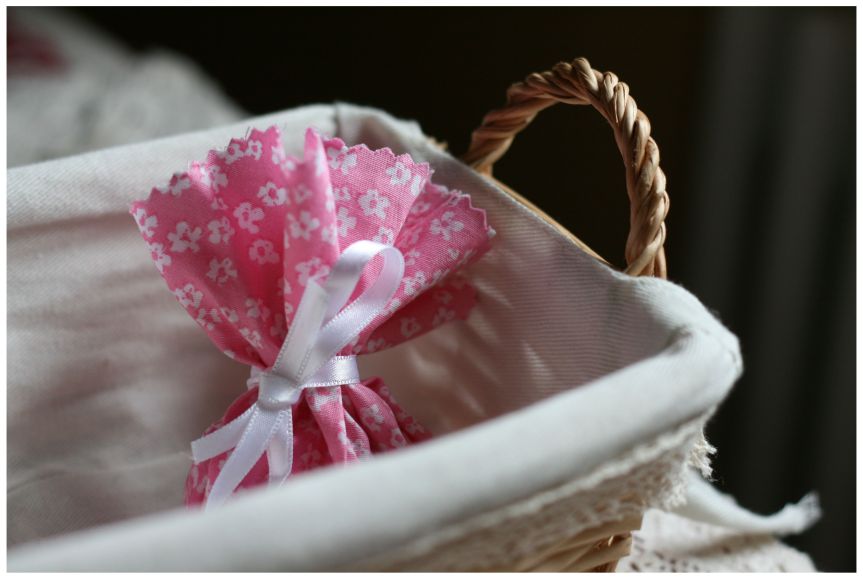
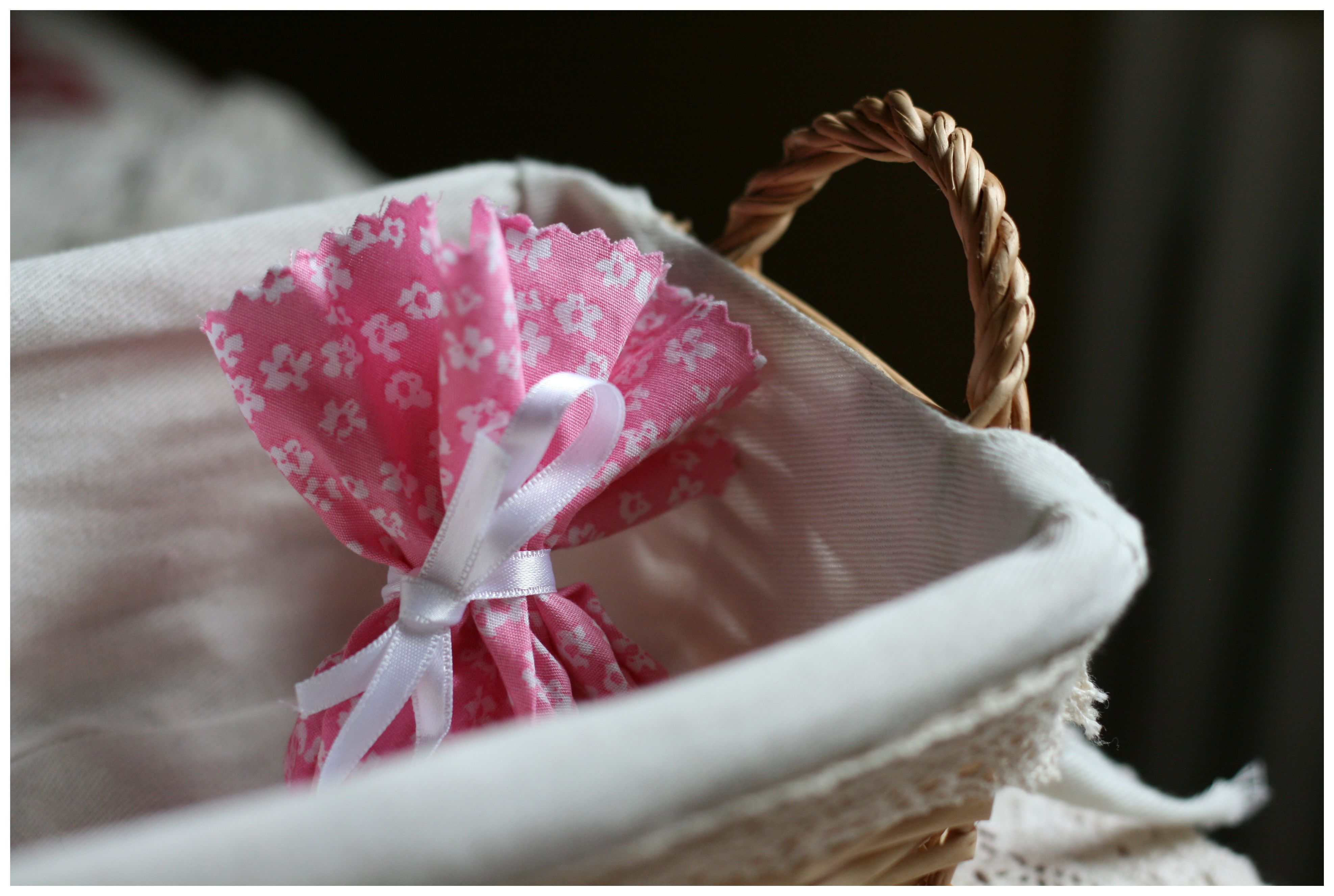
leaving something for others to take

After most christening or wedding parties there is a custom of preparing something for the guests to take home with them. Usually it’s a small bundle of sweets or cakes, sometimes accompanied by a quote or a thankful message, to let the guests know that their presence was welcomed and appreciated. It’s a symbolic way of sharing with them the goods of the feast.

Throughout the last year I have been trying to cultivate a giving heart. I have supported various charities and community events. I was trying to resist buying new items for myself and my son in order to support humanitarian, rather than consumerist, objectives. While I was doing this project I was observing myself and others around me and one observation struck me very hard: being able to give, in many cases, does not really depend on the state of people’s bank account but on their perceived lack of capacity to share. I observed people who refused to support causes because they say they don’t earn enough to be charitable, and then I saw the very same people discarding goods that they had bought the previous week. How is it that we don’t earn enough to give but we earn enough to throw?

There are people in the world for whom what we spend and consume every day would constitute a lavish feast. In every form. The electricity we use. The food we eat. The many pairs of shoes we wear. The books we read. The clothes we have. It is likely that we are feasting in one area or another, or in all those areas.

The Nothing New Project made me realise that I feast in quite a few areas of my life, but for one of them I am particularly grateful: healthcare. Last year I was diagnosed with a life-long illness but because I live in the UK my medicine is for free. Through the Nothing New Project I was able to support many charities, but Doctors Without Borders (MSF), the charity that heals those who would otherwise be left without treatment, was my priority. The charity deals with challenging situations and extraordinary tasks, the Ebola crisis among them. Could you imagine yourself being in Liberia right now? Being a patient or trying to help? Doctors Without Borders are uncommon people whose courage is not of this earth. They deserve our respect, our support and certainly my feast bundle.

Where would your bundle go?
Receiving Presents: Does It Matter What’s Inside?


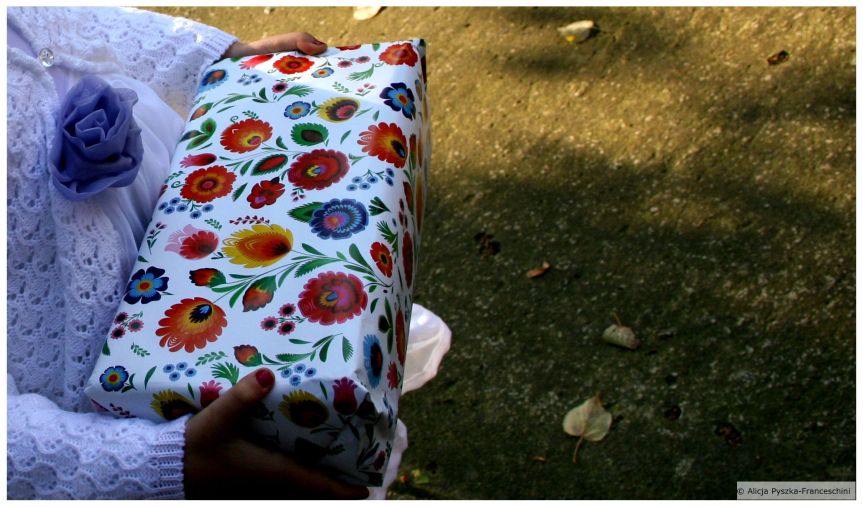
A wrapped present

Reminder

A father once gave his child a beautifully wrapped box. It was red and gold with a large ribbon. The father said to the child, ‘Before you can open it, let’s imagine what might be inside’.

To start with the box contained only simple objects, but as they stared and wondered, the child’s imagination grew and the box started filling up with various fantastical ideas: a troupe of dancing fairies, a musical box containing a full orchestra of mice, a pair of magic shoes that makes you walk on clouds, a toy train full of chattering teddy bears, a miniature garden full of tiny roses, trees and monkeys…The ideas kept flowing. Towards the end of the evening, the father suggested, ‘Now you can open your present’. The child responded ‘No Daddy, I don’t want to open it. I’m happy with the box’.

Would you open the box?

What would be in your box that you would find most satisfying?

Is it possible that someone’s gratitude for the gift of imagination is stronger than their curiosity and appetite for the real life? How does it feel?

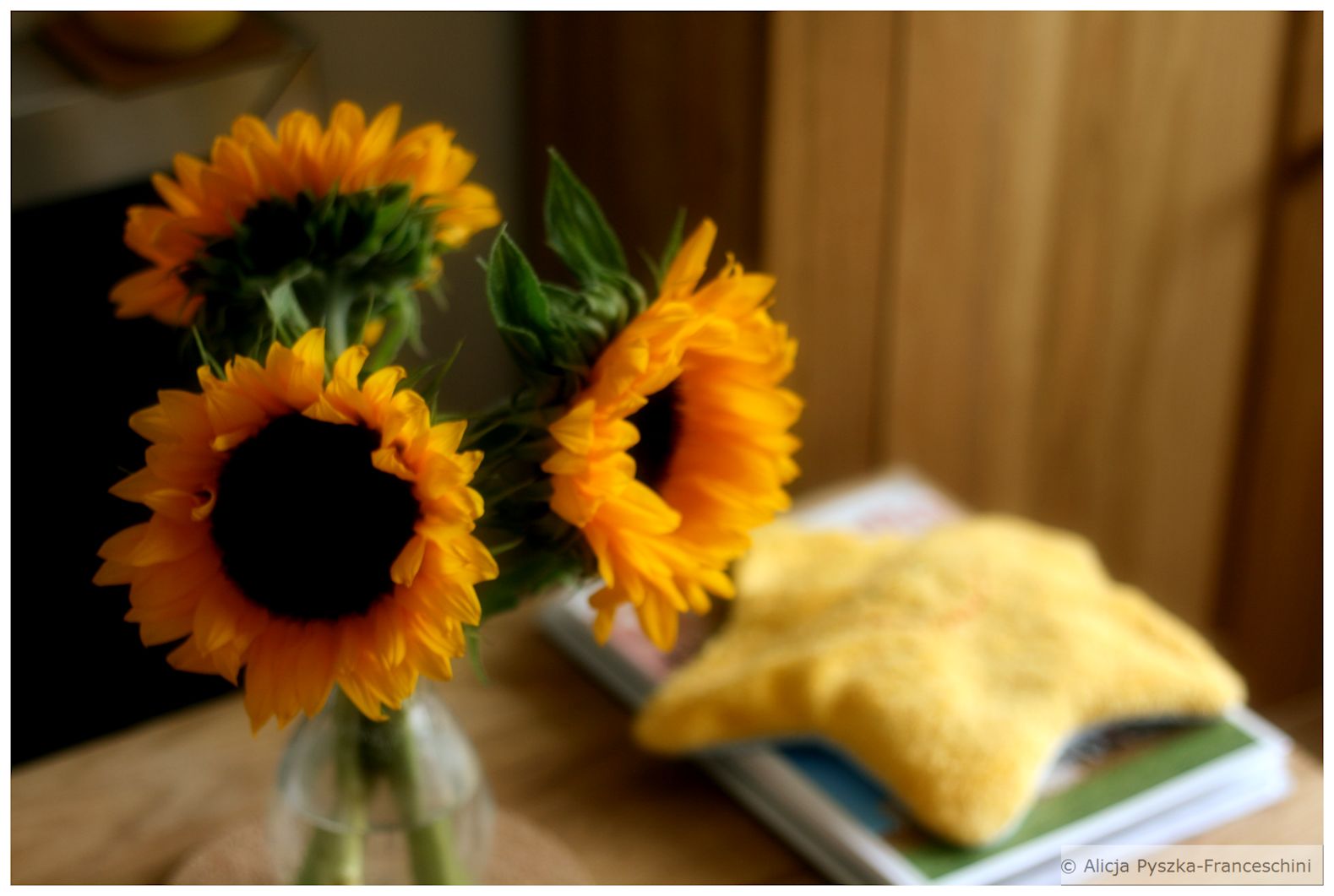
Sunflowers in a vaseFirst published: December 2013

The shop with a difference

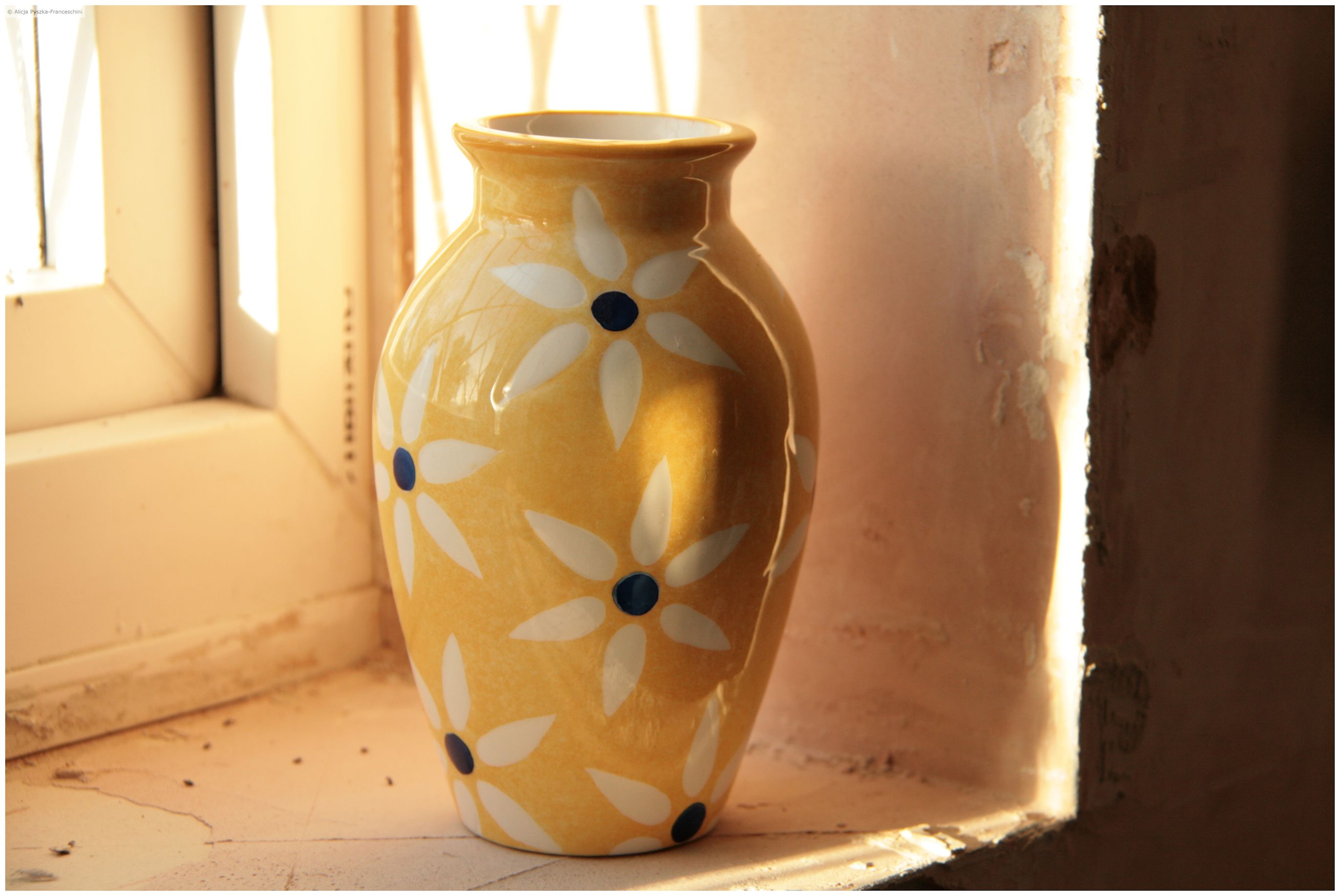
Vase from a charity shop

There are over ten thousand charity shops in the UK. They sell mainly second-hand goods donated to them from any and every generous soul. You just turn up with your bag or box filled with small treasures and hand it over to the person that’s behind the counter. By selling your products, the shop raises funds for its parent charity. Or you can just simply shop there.

There’s a surprisingly large circle of people that are made happy through your give-aways to the charity shop. A) You are happy because you have done a good deed B) Your family is happy because you have eventually removed that unused-and-dumped-in-the-corner irritating cast away of an item C) The charity workers feel less lonely in their quest for good-doing – you provide them with evidence that there is quite a handful of open-hearted characters in their proximity (and how encouraging and uplifting it is to know that your town is full of generous beings!) D) The beneficiaries of the parent charity (no explanation needed here) E) The charity-shop customer who has just found what he has been looking for for ages and just a day before gave up hope of finding it F) The customer’s partner, friend and family that are going to be experiencing relief after the lucky find.

I do have a few nice things that caught my eye while I was visiting the shops. The vase above is one of them. It looks quite nice in our still-not-ready and rough-looking kitchen.

Do you shop or give to charity shops? Is there anything precious that you found there? Or maybe you are planning to visit a charity shop this weekend? What cause do you support?

I will not steal from the giving pot

Postcard 3

Every January while budgeting for the year I remind myself of what my mother taught me: Don’t save on giving. The giving pot should stay full. The truth is one: there would be no justice in the world if we didn’t give.

We are lucky in the west… we are wealthy… although with all the temptations available it’s so easy to see ourselves as struggling, to wish for more, and to fear of not having, of being worse-off, of living in smaller houses, the fears of x, y, z. The list is long. This fear has been injected in us with a thick syringe and has been fed and fueled… so that we look up and dream of what others have and what others do.

They don’t make you feel rich, these dreams. They don’t make you feel lucky but I am telling you here: You are rolling in it.

If a few days, weeks, months of saving mean that you can afford a luxury (a new phone, branded items, a computer, travel etc.), you are rich. If you feed your family, pay your bills, and maintain your car or travel round with minimal budgeting effort, you are rich. If that’s your situation, there is no need to cut on the giving budget, there is no need to cut on sharing the wealth.

The reality is that despite the inflation, in spite of rises in regular expenses, regardless of our dreams to live bigger and better, we can still give and if this year is a bit harder than the last one we can save to give!

This is not a new concept. It has been happening in the past. It has been exercised. There are families in the world who save the best of their foods over months for their visitors. There are children in the world who are saving every coin they get so that they can give their mothers’ presents for their birthdays. There are single parents and pensioners who limit their purchases so that they can support a cause that they believe in. There are people who just watch their daily expenses so that they can donate, so that they can contribute, so that they can do their part. Some of these people have to be strict about how much electricity they use, how much milk they buy, how many showers they take, how many pairs of shoes they buy. They go to great lengths so that they can take part in this great giving scheme while for so many of us saving to give is just a purchasing delay. If giving means as much as waiting for longer, it’s not a sacrifice. It’s justice.

Let’s stay generous in 2014. It’s a good rule to live by.

giving pot