Gratitude for rest against all odds

Our car of 15 years showed three flashing lights on the dashboard while we travelled to Whitby last Sunday. It displayed them during Summer too when we were driving to Poland from the UK. We got it repaired but the same problem showed. ‘We’ll give it a rest when we get to Whitby. It will cool down and we’ll be able to drive back.’ my husband said. His prediction was right. We returned home safely. One thing to be rather grateful for today.

We travelled to Whitby for air. To feel the sand between our fingers and water on our feet. And to eat fish, of course, an irreplaceable custom of every food lover. We headed towards the beach when we saw a crowd of people returning towards the car park. We seemed to be the only family that walked in the opposite direction. ‘Was everything fine?’ I wondered examining the opened restaurants, stalls, coffee shops and calmly floating boats and yachts. The surrounding was reassuring and the lobsters and crabs painted on restaurant walls seemed to nudge us towards the beach. Who wouldn’t like to see where the crabs live after all?

We rushed to get at least an hour of the golden light at the beach. We passed the crab-fishing family, a man inviting us for a sea trip, new marine centre and just before we reached the beach we had to pause to urgently drop 50p coins into a designated place for overstretched bladders. A relief worth paying for. :)

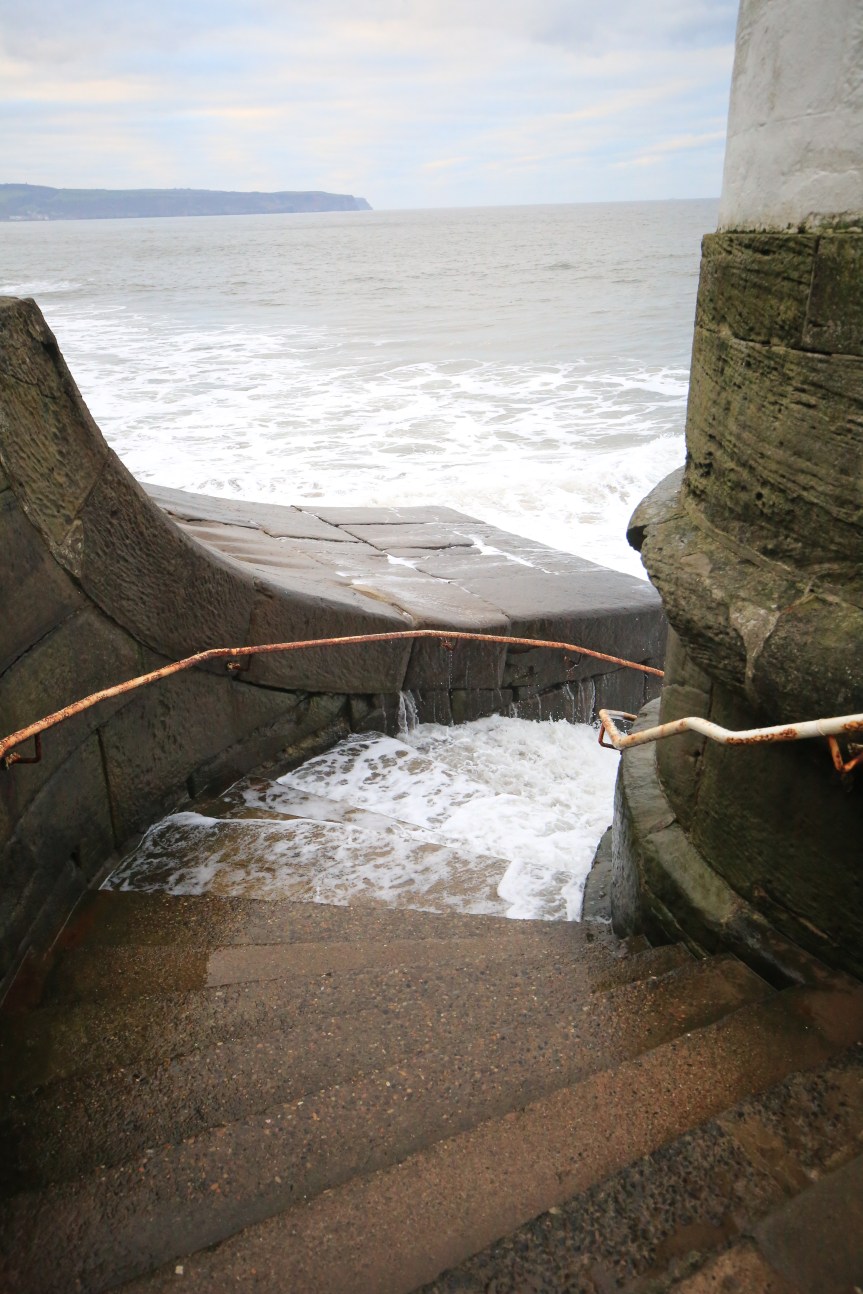
We collected ourselves and all the 6 bags that we had with us for all the eventualities of the beach life. Just before the stairs we stopped at the viewing platform to see the sea and the beach but the beach was not there to be seen. The frothy waves were licking the sea walls and all the way to the cliff. A spring high tide took over the whole beach. Disappointment was hard to swallow and yet there we were exposed to the sea air, energised by the colours of the sky, caressed by the breeze. Enough to be grateful for. Not to mention the ice-cream and the dinner and a chat with a fisherman… but more on this at a different time.

Take cake. x

Alicja
The purpose of the past/ Cel przeszłości

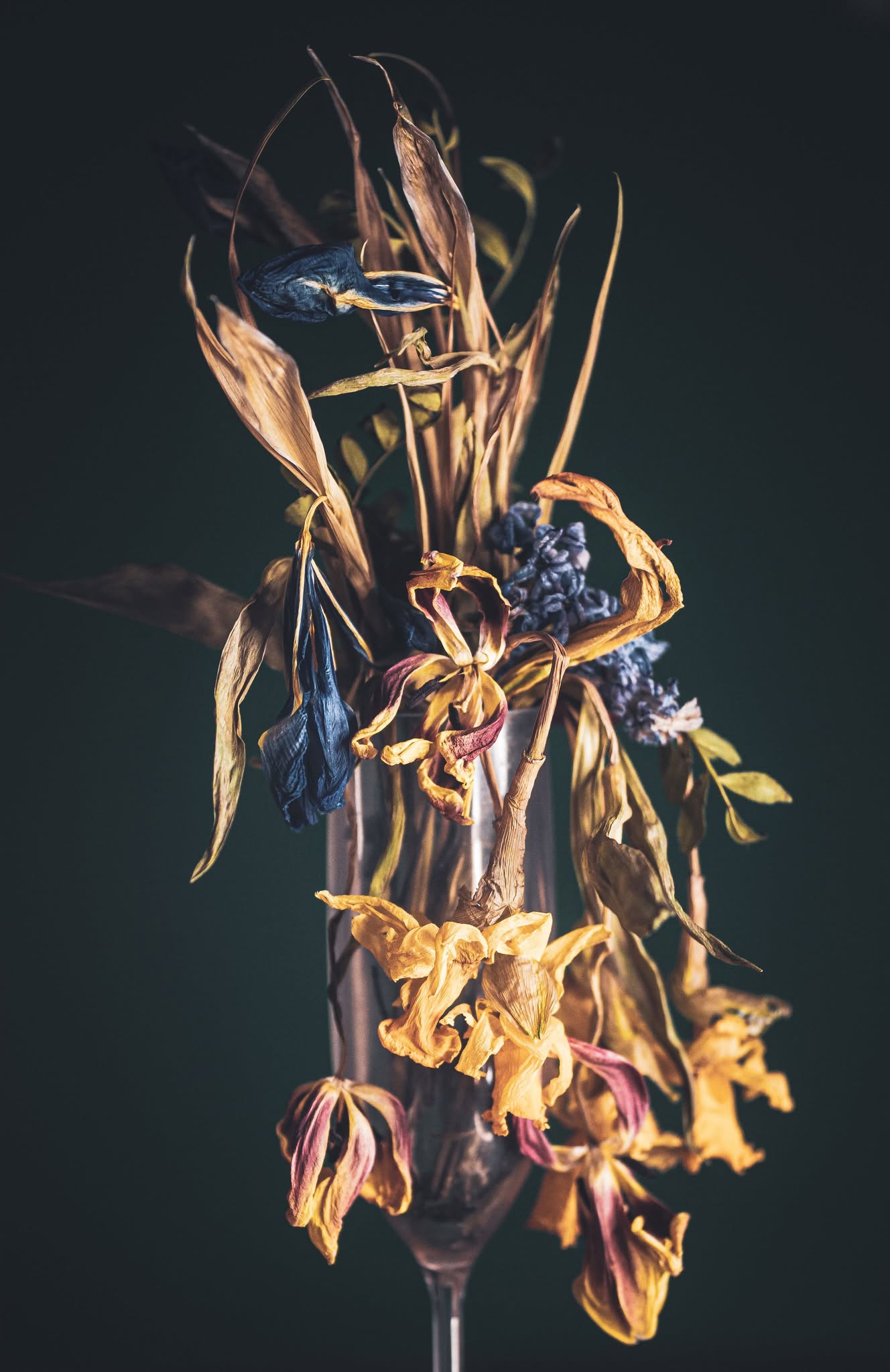
Photograph: Alicja Pyszka-Franceschini, 2025

Is it possible to improve in life without being grateful for the past and what it taught us? Could we make progress in life without seeing the positives in our personal journeys? Could we be artistic, creative, productive if we do not appreciate what we have or what has passed? If we are angry that the flowers have died, could we appreciate their textures, their patterns, their beauty highlighted by time? They were. They existed. They contributed. If we decide to engage with the past or the passing of time in a creative manner, the effect is usually gratifying. Could it be otherwise?

Czy można poprawić sobie życie bez odczuwania wdzięczności za przeszłość i za to czego nas nauczyła? Czy możemy robić postępy w życiu, nie dostrzegając pozytywów w naszych osobistych podróżach? Czy możemy być artystyczni, kreatywni, produktywni, jeśli nie doceniamy tego, co mamy lub tego, co minęło? Jeśli jesteśmy źli, że kwiaty umarły, czy możemy docenić ich faktury, ich wzory, ich piękno podkreślone przez czas? Były. Istniły. Przyczyniły się do piękna. Jeśli zdecydujemy się na twórcze zajęcie się przeszłością lub wpływem przemijania, efekt będzie zazwyczaj satysfakcjonujący. Czy by mogło być inaczej?

Thankful Time/ Wdzięczny Czas (English/Polish Post)

In smart work there is less joy than in a game of tag
and time is running out
for children and adults alike
into the hustle and bustle of memories.

Who caught whom?
No one asks about the tag
But everyone writes a report
On the questions they asked
And answers they received
Only relevant to self
It seems

But to receive an answer
Is to make a promise of gratitude.

No one knows
Few understand

Has the person who asked got lost earlier?
Or did they ask in time?
To be grateful?
Or to be done?
Choose.

– Alicja Pyszka-Franceschini

Additional good read for this week:

This article has caught my attention this week. Very interesting read. This is the Key to Achieving ‘Time Affluence’ (click to read).

Poem and photography by Alicja Pyszka-Franceschini, 2025. Copying without an explicit and written permission from the author is not allowed.

Po Polsku

W mądrej pracy jest mniej radości niż w grze w berka,
a dzieciom i dorosłym czas ucieka tak samo
w zgiełk wspomnień.

Kto kogo złapał? Nikt nie pyta,
Ale każdy pisze raport
Z pytań, które zadał
I odpowiedzi, które otrzymał.
Dotyczących tylko siebie
Wydawać by się mogło.
Ale otrzymać odpowiedź
To złożyć obietnicę wdzięczności.

Nikt nie wie.
Niewielu rozumie.

Czy osoba, która zapytała, zgubiła się wcześniej?
Czy zapytała w porę?

Być wdzięcznym?
Czy po prostu mieć wszystko zrobione?
Wybierz.

Wiersz Alicji Pyszki-Franceschini, 2025.

Ten artykuł przykuł moją uwagę w tym tygodniu. Bardzo interesujący!

Artykuł w magazynie Forbes zatytułowany “To jest klucz do osiągnięcia ‘Bogactwa Czasu'” (kliknij w link tutaj)

Do następnego razu. x

Material Copyrighted by Alicja Pyszka-Franceschini, 2025. Copying without an explicit and written permission from the author is not allowed.

But then, on the other hand…

But then, on the other hand…

written over a few days during Christmas

We are all at home today doing jigsaw puzzles, listening to this relaxing music for children and experiencing some magic on the screen. It gives the room a warming atmosphere and it gives a festive touch to the living room bringing the fairy tale land inside the house.

‘Look mum, what I’ve done?’ our 5 year old said feeling a bit better today albeit still quite feverish. She took clear tape and wrapped it around a piece of card. ‘Look mum, I have a wiping board now.’ We practise writing and drawing on it and it was brilliant. Yesterday, she took a hoop and danced with it around the room to piano music, fluey but determined that ‘bed rotting’ is not what she would succumb to. Have you heard about it? In essence, it involves idling around in bed with food around watching videos, flicking through the phone or watching TV series and it is an increasingly common form of rest. Not necessarily the most helpful to our nervous systems long-term but it’s easy to understand the allure of it. (You can read about it here. The article is in Polish but Google can translate it for you.) The term itself, however, seems to me like a good blocker to excessive indolence. I hope our 12 year-old will embrace it in his lingo.

There is a pink silicone pig walking on our floor right now.

‘What do you like most?’ I asked my 5 year old.

‘Mum and pizza’.

‘And if you had to give up Mum or pizza, what would you give up?’

‘Play. I would give up play.’

Children are smart. Their instincts rule. They rely on their parents for survival and they rely on food for survival and when faced with a dilemma, they will most likely give up what brings them joy. And I guess that is why there is a pink silicone pig walking on our floor right now.

It’s funny. It’s loud and it has the biggest and the most loving eyes, I’ve ever seen. It makes us laugh a lot by being a keynote speaker at the dining table designed to revitalize our instinctual goofiness. We become as silly as it is by imitating, of course. You just cannot help it, can you? The pig honks, you honk. And so it goes.

What made you laugh this Christmas?

I wouldn’t have got the pig years ago when I was doing the Nothing New project or years later, but now I give in, perhaps too often, in order to remain sane and find internal balance between different societal requirements, personal values and competing ideologies that surround our thinking. I justify the not-so-environmental purchasing choices by ‘wanting to get to know my daughter’ but perhaps it is not the best justification or rationalization to have. Surely, there are hundreds of other ways to get to know her. But maybe it is also the way?

Have you ever watched The Fiddler on the Roof? The main character, Tevye the Dairyman is often torn between choices and decisions to make, mostly whether to allow each of his daughters to marry who they want or not. His internal dialogues are characterised by the phrase ‘but then on the other hand…’ He keeps on weighing the pros and cons of every choice and decision giving in either to the pressures of the outside world or his own feelings about the situation. He calculates. The rights, the wrongs, the benefits and potential losses. Don’t we feel similar today with all the array of choices that we have to make about our ways forward in life and our children’s wellbeing. We want to make a difference in their lives and for their futures and then we are like Tevye… ‘But then on the other hand…’

But then… the reminders or signposting of what is right for them come from our own children.

‘What should I do with my wedding shoes?’ ‘Should we give them away?’

‘Mum, could you keep it for me and then my daughter can have them after me. This would be nice.’

Children don’t always want to discard what we have. They don’t always want to have new things. They often appreciate things and what they appreciate they want to last.

What does that tell us of the power of gratitude?

Gratitude, frustrating renewals and an obstinate dwarf

Two tiny colourful dwarfs are proudly standing on our front yard at the moment bringing, I hope, happy smiles to delivery men that seem to be stopping on our street more often this week than usually. I wonder why… Children feel happier when they come back from school – the dwarfs make up for a lack of a dog to some small extent. They do not wag any tails, but they have funny hats and welcoming expressions and it is of course always nicer to return to a fairyland rather than to a grey and sad looking front garden full of sticks. That said, even the sticks, when they hold some lights, they change purpose. They seem to be designed for charm rather than hibernation. I think there is even a device that uses this re-purposing function of a stick. I think this device is called a magic wand.

Last week was filled with school performances, studying and end-of-year reflections and cleaning and sorting (I am still at it). We got so frustrated with the state of the house that we decided to stay at home over Christmas to finish our small-renovations and to restore the state of the house to a hospitable condition. It might be not the most glamorous way of spending the Christmas holiday but to be honest I could not bare the thought of going somewhere for rest, just to return to a house that is in a constant state of disarray. It has been like this for a bit too long for us and we must face the dreaded renovation before 2025 pops in for a longer stay. Interestingly, if you look for synonyms to the word renovation, you are likely to get such words as ‘redevelopment’, ‘improvement’, ‘renewal’, ‘restoration’ which are actually quite positive in sound and are fitting well into the theme of the new year. They are not quite close enough to the ‘new me’ type of concept, but perhaps a bit more true to reality since what we refresh or improve has already got its life and a beating heart. All that it needs is some work and attention. What do you feel would make your renewal possible during these coming weeks?

Last week I attended a supervision meeting with Maciej Bennewicz Institute of Cognitive Studies. There is always a sense of relief after discussing serious matters and dilemmas with others so I am very grateful today to the Institute for giving us the opportunity to discuss what we are troubled by and for taking very seriously the cognitive and relational dilemmas that professionals have. The Institute is well-known in Poland for its unique focus on Psychology of Subjective Experience as well as cognitive sciences and social psychology and provides support and guidance to coaches, tutors, mentors and psychologists. Back at home my mum worked as a social worker and she never had this type of support and I think her life would have been much easier if it was a staple at the time. I hope, Dear Reader, that you now have this type of support if you need it, wherever you are. This aside, Maciej Bennewicz practices a daily habit of posting a reflection or story online. He shares it on Facebook or in his publications. These posts are koans. Their structure and purpose derive from a Chinese tradition. They aim to open the door to a different way of seeing a situation. The story might seem illogical or paradoxical in some way. You can read his stories here. I always like this type of thought-provoking writing and I thought I would modestly attempt my own short-story here but on the theme of gratitude (somewhat inspired by the dwarfs on my lawn too) that might perhaps be more helpful to you than my own personal list of gratitudes. It would be lovely to write quite a few of those and to turn them into a book too. It seems like a worthy aim. :)

Forest Loops

Once upon a time there was a little boy who went to the forest to collect berries. He walked for over 3 miles, reached the woodland and searched everywhere for the berries but he could not find them. He left the forest upset and angry with the forest that it bore no berries. He only walked for a mile when a woodland dwarf stopped him and asked him why he was so upset. He explained that he went to the forest but found no berries and was upset that the whole journey was wasted. The woodland dwarf told him to go back to the forest and take the same walk again. The boy hesitantly did as he was told, walked through the forest and as he predicted he found no berries. He left the forest even more upset. When he met the dwarf on his way back, he complained loudly and angrily to him. The dwarf again instructed him to go back to the forest and take the same route. The boy although upset did as he was told and walked the same route for the third time. He found no berries and with anger headed home. The dwarf waited for him in the same spot and did not allow him to walk away. The boy exploded with anger and shouted at the dwarf to which the dwarf simply pointed to the forest and told him to walk there again. The boy being thoroughly upset entered the forest again. ‘There are no berries here!’ ‘There are no berries here!’ ‘There are no berries here!’ he kept on shouting and the echo was reiterating what he had already known. The boy sat down on a stone disappointed and angry and looked around. He saw some mushrooms glistening under a birch tree. He picked them and put them in his basket. Then he walked further and found more mushrooms, and then some more and kept on picking them until his basket was full. Then he noticed golden coloured leaves that would make a good crown for his sister’s school performance and filled his pockets with them and when he was walking further he saw a fallen tree and thought that the he will take a few branches for firewood. Equipped with woodland graces, he ventured home worried that he would meet the dwarf again. The dwarf was there waiting for the boy, looked at him and smiled broadly seeing the boy with the basket full of mushrooms, pockets filled with leaves and wooden branches on his back. ‘Now, you are ready to go back home’ the dwarf told him. The boy looked at the dwarf surprised and went back home.

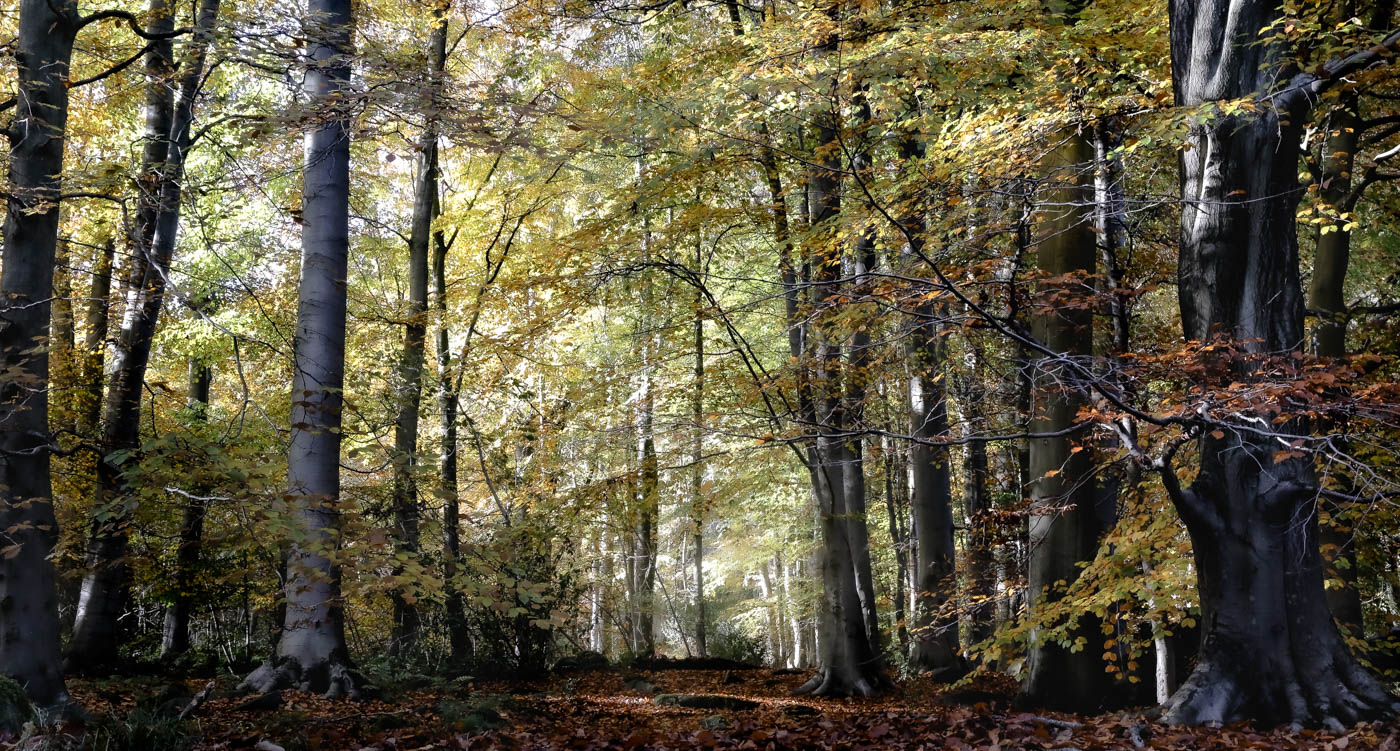
Both photographs taken at The Birches, Ambergate, Derbyshire, UK.

Images and photographs copyrighted by Alicja Pyszka-Franceschini, 2024.