Postcards from Diwali (Part 2) Giving thanks for our multicultural Midlands

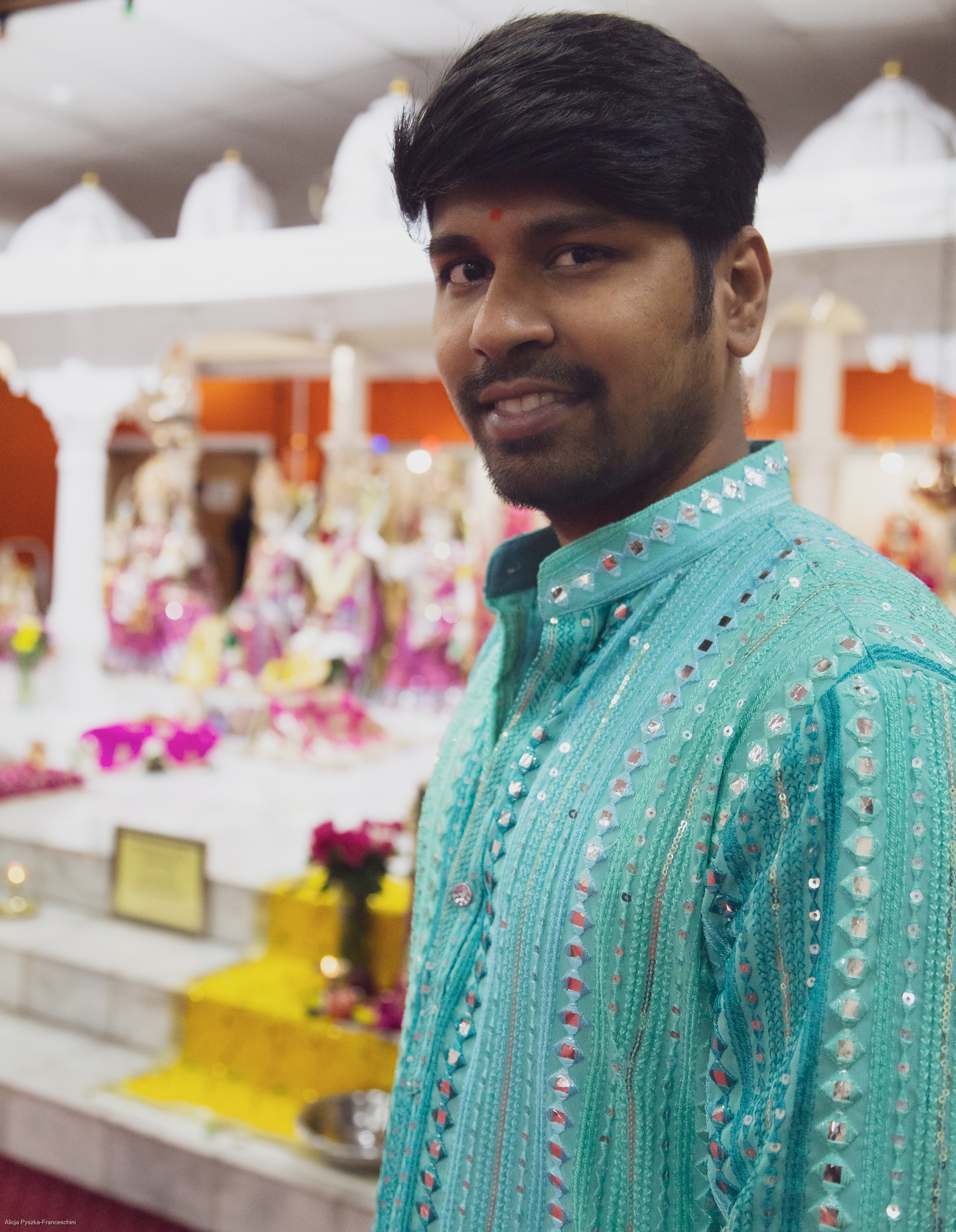
At the Hindu Temple Geeta Bhawan n Derby
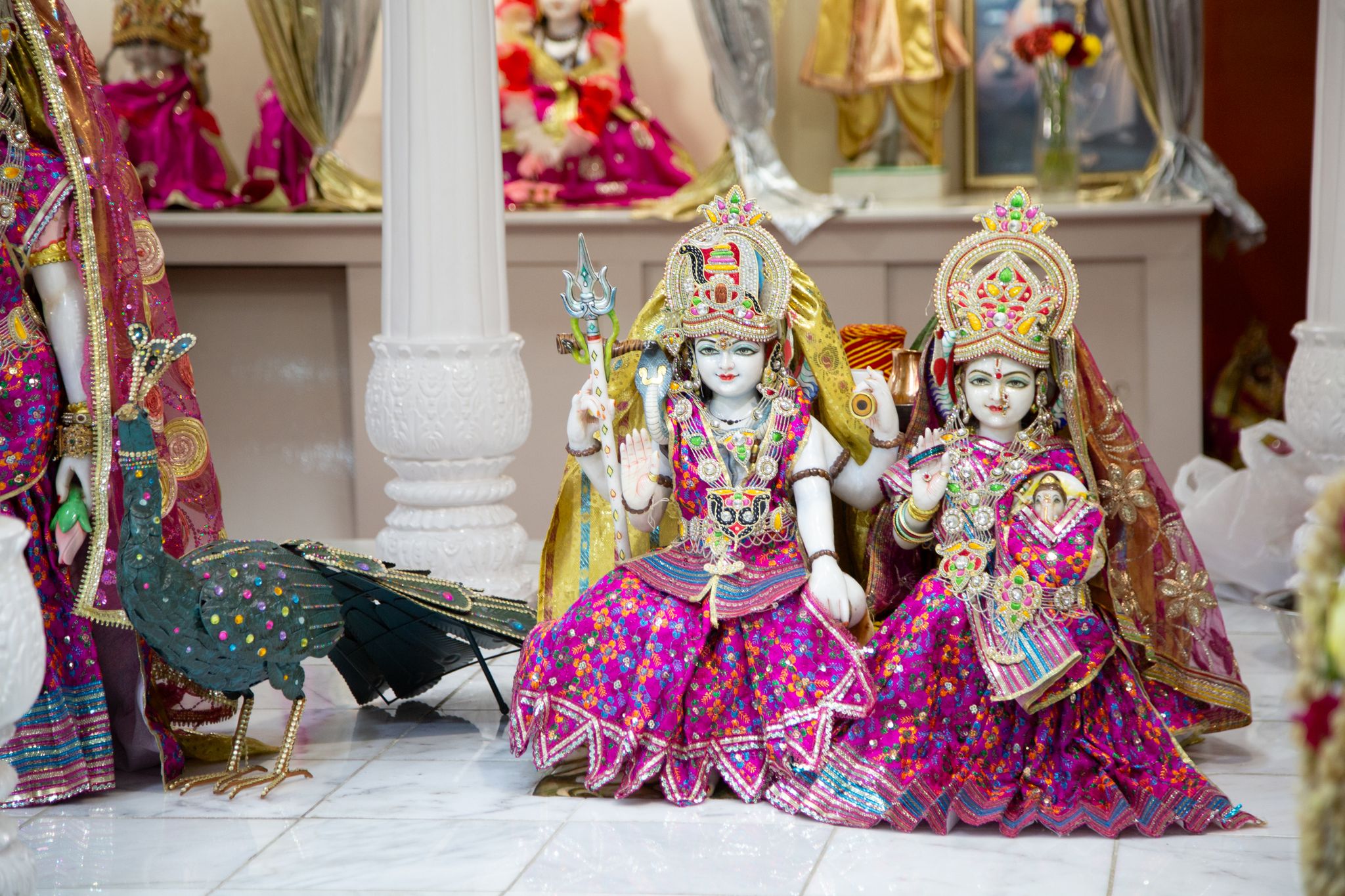
On the 31st of October, we celebrated in Derby the festival of light, Diwali alongside other festivities and the hype of Halloween. It can seem a bit strange that I am writing about this on Thanksgiving Day but on the other hand I feel it is most appropriate because in fact we rarely give thanks to each other for permissions to see and participate in the lives of our diverse communities. When we start to socialise into the routines of communities other than our own, we spot differences but at the same the common needs and burdens as well as the efforts to make us feel welcomed and included. This is a lot to be thankful for.

When years ago I started a doctorate (and never completed) at MOSAIC at the University of Birmingham in Multilingulism with the use of autoethnography as a research method, I was learning how to write about oneself as placed in a multicultural British landscape and in an eclectic family. The task was confusing and insurmountable at times and for a long time I could not pin down where the difficulties were coming from. Until of course I understood… One was coming from a commonly held belief that talking about oneself is not the done thing, let alone to research oneself in the context of multiple cultures… this seems even more odd. Anyhow, my doctorate collapsed during the Covid-19 pandemic under the pressure of ill health, two small home-educated kids, my husband’s increased workload (no, he was not on furlough) and my need for creative rest that I am still very much a supporter of. That said, although my doctorate collapsed, the need to engage in local communities remains strong.

On the surface looking into the culture of a different community seems like having nothing in common with doing research into oneself, except when the holy scripture of that group teaches you a lot about self-intelligence and its importance for life well lived. The Gita actually uses the term ‘self-intelligence’ in its writing legitimizing self-knowledge, discipline and broader awareness of values that govern us and our choices. Indeed, who would we become without our ability to self-reflect and observe.

In the book Natural Law & Natural Rights, John Finnis lists 7 basic goods of human life necessary for our well-being. Among them, he lists: 1) life (itself with health, safety and self-preservation), 2) knowledge, 3) play, 4) aesthetic experience, 5) sociability (friendship), 6) practical reasonableness and 7) religion which of course concerns itself with love, the importance of truth, goodness, transcendence and the boundaries of human freedom. These common goods order and create what we call ‘quality of life’ and determine our overall satisfaction of life. Thus, part of learning about each other and our cultures is to see how we go about those values and common goods in our cultural groups and settings.

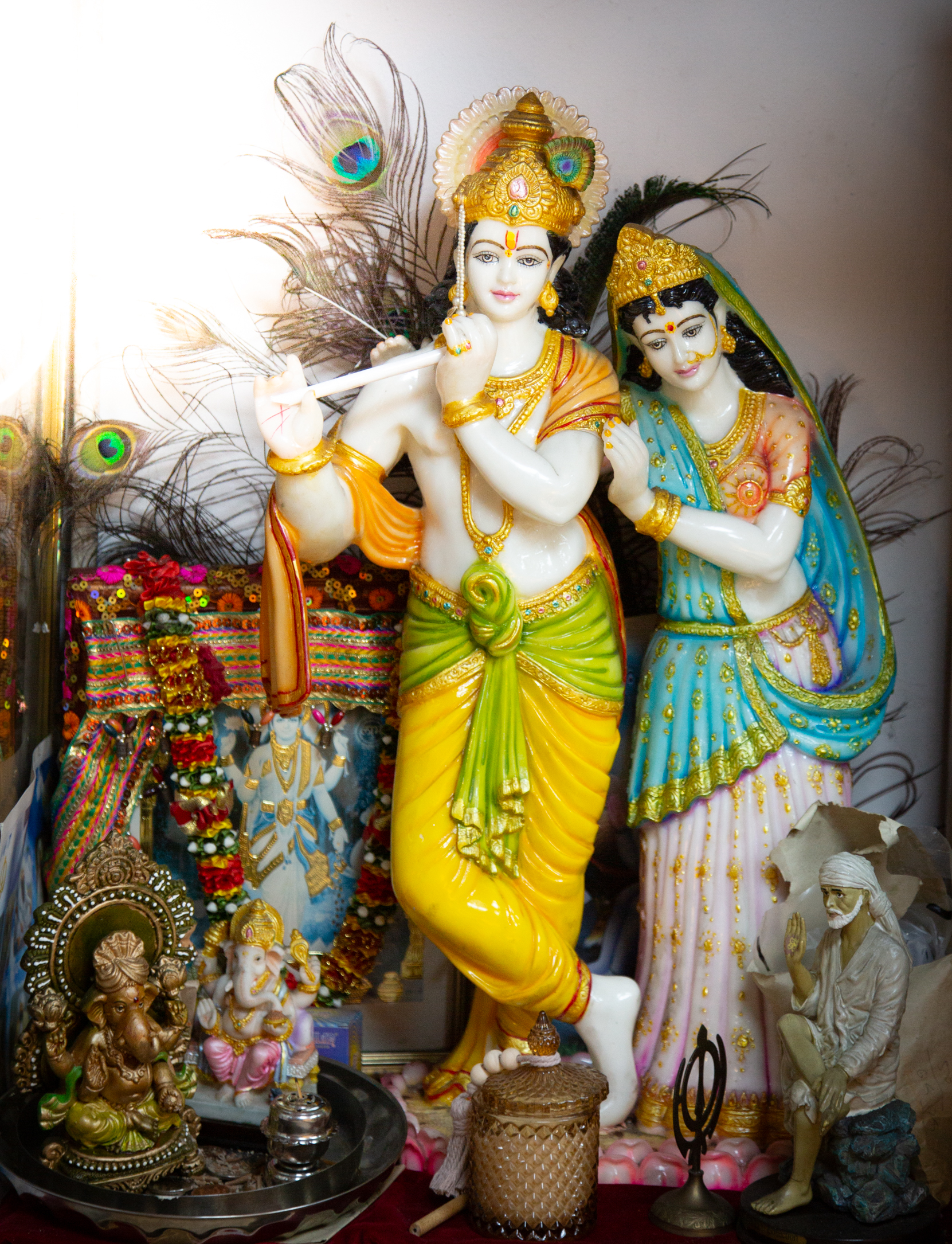
So here are a few postcards from Diwali as observed in Geeta Bhawan in Derby. For this post, I asked two mums to whom I chatted about the Gita, Radhe and Sarbjit, to explain to me who and what I saw at the Temple. They replied on WhatsApp.
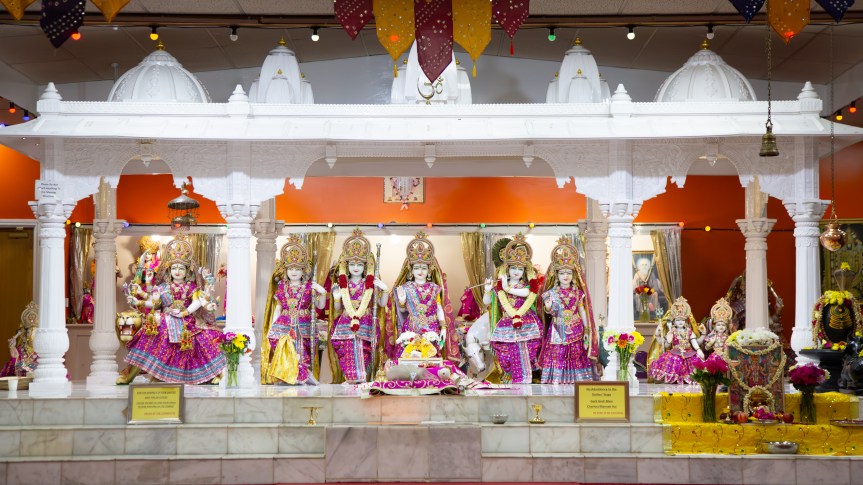
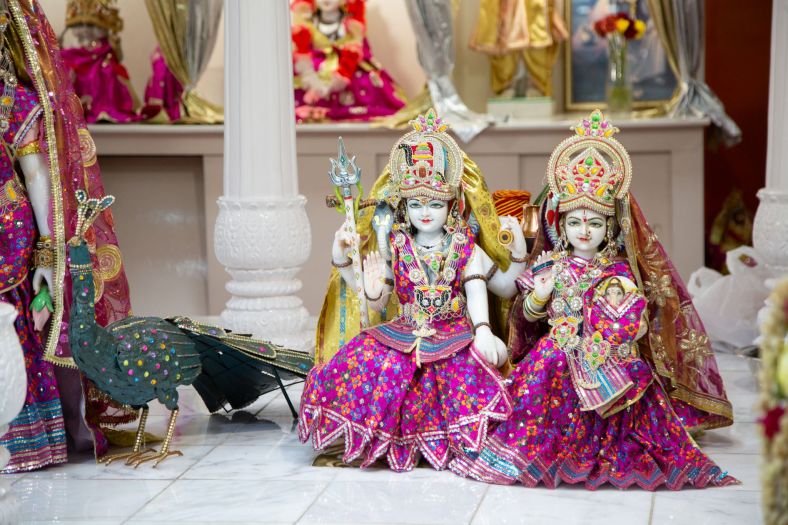
Who are the gods/ deities here?

Radhe answered: ‘Shiva (with Trident) Parvati Devi (also known as Durga). In her arms Ganesha.

That peacock is standing besides Radha and Krishna’ 

“Abode of Krishna is called VrindaVan (Forest of Tulsi plants – one type of basil) 

So eternally Krishna lives in a forest..residents of VrindaVan possess pure love for Krishna.

So in eternal vrindavan Krishna z devotees are in the eternally in the form of trees, parrots, peacocks, cows, cowherd boys, cowherd girls. Their forms are based on how they want to love Krishna…that will be a long discussion 

Anyways, the story goes once Krishna was playing on his flute and has invited the animals of VrindaVan for a dance. Peacocks were dancing very gracefully. Soon Krishna joined their dance, looking at Krishna dancing peacocks started marveling his dancing.

Then the peacocks offered their best possession to Krishna, peacock feather. Krishna accepted their offering and honored it by always wearing peacock feather on his head.

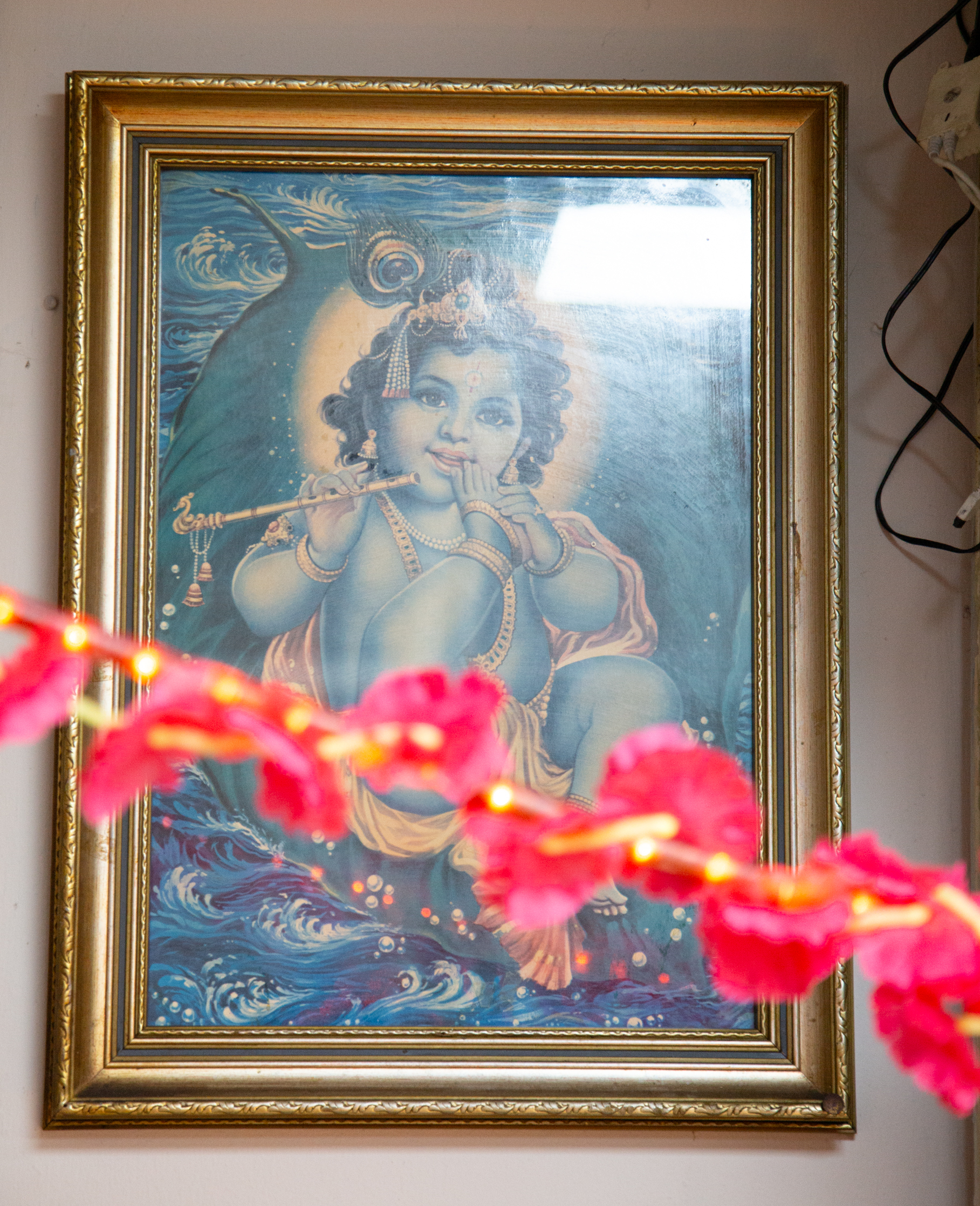
In the middle, if I see correctly is Gopal – baby form of Krishna. Krishna reciprocates to the desires of his devotees. Many devotees want to love him as their own child so they worship him as Baby Gopal.

We worship deities by offering them clothes, food, jewellery.

So the deities are dressed in different colours the day you visited the dress happened to be of purple colour. Their is no particular significance of purple colour.

Next time if you ever choose to go you may see them in a different colour.

Traditionally on full moon day deities are offered a white dress.

On ekadashi (one day from the lunar calendar) offered a red dress.

By offering service to deity form of the Lord one can get purified of sinful desires. Sometimes people offer such service as an expression of gratitude.”

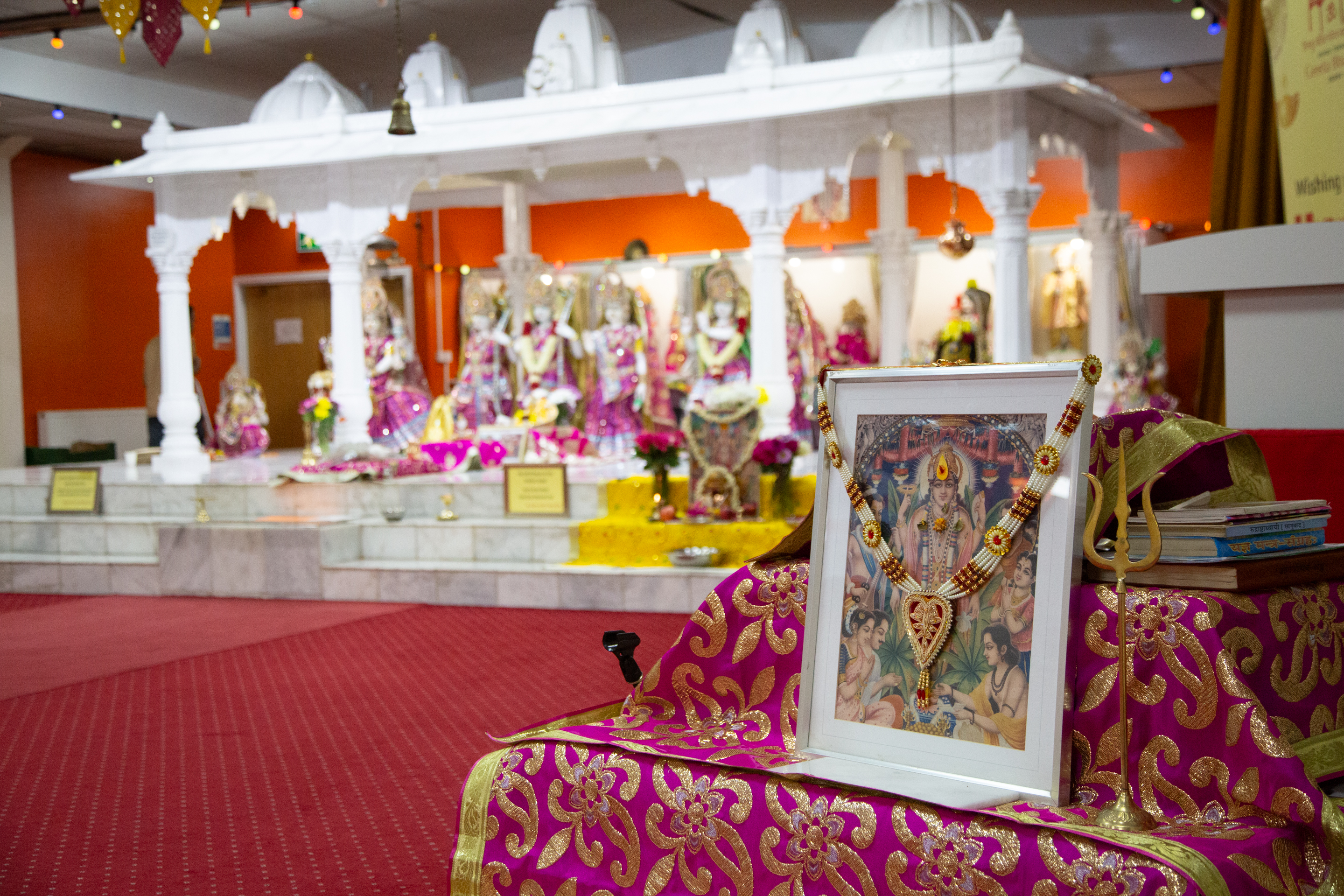
“Food has an significant impact on our consciousness. In Bhagvad Gita you may have studied about Sattvik, Rajasik, Tamasik.

We offer Sattvik food to the Krishna. When he accepts that offering it becomes Prasadam (which means Grace/mercy)

Prasadam will purify our consciousness.

That fruit was Prasadam. (…)

You visited the Temple on Diwali day, on Diwali people worship Lakshmi Devi and ask for prosperity.

[In the framed photo] is Lakshmi Devi, goddess of wealth.”

I also asked Sarbjit who visits the temple to tell me about a senior person who was distributing fruit towards the end of the prayer as I did not know who he was. Sarbjit replied, “If that man was wearing different clothes, then it was a Pandit. Otherwise, he could be a sevadar (volunteer).” During the worship people walk around the alter and worship each god separately after that they receive a piece of fruit, just before they leave the temple. The man very humbly told me that he is not a scholar in the study of religion and that there was someone else there who could have done it if I was there a lot earlier. But what he said, was that the most important thing is to remember that the gods/ the deities are indestructible and that what we as human beings cannot correct, they will do it for us. They will correct all the wrongs. This message I found to be most comforting. I hope you do too.

Happy Thanksgiving. May the light of Diwali keep on shining on us.

Thank you to Nikhila and Karthik for agreeing to be featured in the photographs for this blog post. Additional gratitude goes to Radhe and Sarbjit who supported me with their understanding of the customs here. Thank you very much.

Any comments and corrections more than welcome. :) Thank you all.

The text I referred to in the article is:

Finnis, J. (2011) Natural Law and Natural Rights. Oxford University Press: Oxford.
Thankful Tuesday: The National Tree Week and Writing a Novel

How have you been lately? We are in the National Tree Week in the UK right now and it seems utterly wrong to me not to acknowledge it. In the simplest of terms possible, trees keep us going, don’t they? To them and because of them. Sometimes it is their depth that invites us, other times it’s their shadow. Kind enough to overlook our mischief, tender enough to sense our sadness, generous enough to handle our joys. We return energized after reconnecting with their and our essence. We become ourselves and I guess that British English informal saying ‘To be out of one’s tree’ (meaning to behave somewhat crazy) is to a large extent an indicator of our reliance on trees for long-lasting sanity. It is a shared feeling, isn’t it?

Well.. to give trees and our connection to them a just thought and an appreciative stance, I wrote a few verses for this week and read a few pages of The Power of Trees by Peter Wohlleben to get myself into the topic. It is one of my favourite texts on trees and a consistent inspiration for me as the novel that I am writing is primarily based in an ancient woodland. Alfred Wainwright, a British walker, illustrator and the author of A Pictorial Guide to the Lakeland Fells, gave himself 13 years, if I remember correctly, to finish his guides, I haven’t given myself that much time but my novel finds it hard to become a coherent piece. Nonetheless, I plan to finish it by the end of July 2026. It is a labour of love and I would like it to stay so. Are there any texts among your favourites that speak of trees and forests?

After I wrote the post about The Gita for Children by Roopa Pai, a few amazing things happened. One event led to me receiving the original Gita by post from someone. We were also invited to a lecture on the differences between Christ and Krishna (photos soon). I embraced it all because sometimes The Essence wants to come to us through multiple channels. I know that the Gita takes nature seriously and I am very curious of its approach to it. After all, our spiritual lives are one of our primary influences in shaping our ecopsychologies and our mindsets for scarcity or abundance, gratitude or non-recognition.

Hello you, Tree.
Make us See.
That without you,
The course of life
Forgets to breathe
And goes wrong ways.

Through the dungeons of politics
As dense as a carved slice of fog
Placed in a jar of uncast votes
That suffocate the future.

The tree, oh comfort and respite.

It stays potent and flexibly solid
With its roots extending to neighbouring hills
and branches simultaneously strong and tender
protected by years of genetic experience
against the utterly predictable
forces of chaos.

The tree sways
and it is its strength.

Chaos reigns
Itself out of recognition.
And it is its catastrophe.

The tree makes only one promise.
To grow
It gives you oxygen
In partial compensation
for space taken.
As if it had to…

Furniture, instruments, books, crayons, utensils
Firewood, bird-nests, frames and sledges
are the givens
within but in fact beyond expectations.
This is how the tree excels
Even after death.

If you like being inspired by woodland photography, see Nigel Danson’s Gallery for woodland and landscape photography. The gallery feels like a gentle massage for the mind and I can assure you it will be one of those moments of giving oneself some caring love to look through Nigel’s photos. They are great pieces of art. Enjoy them.

And let me know, how you are, will you?

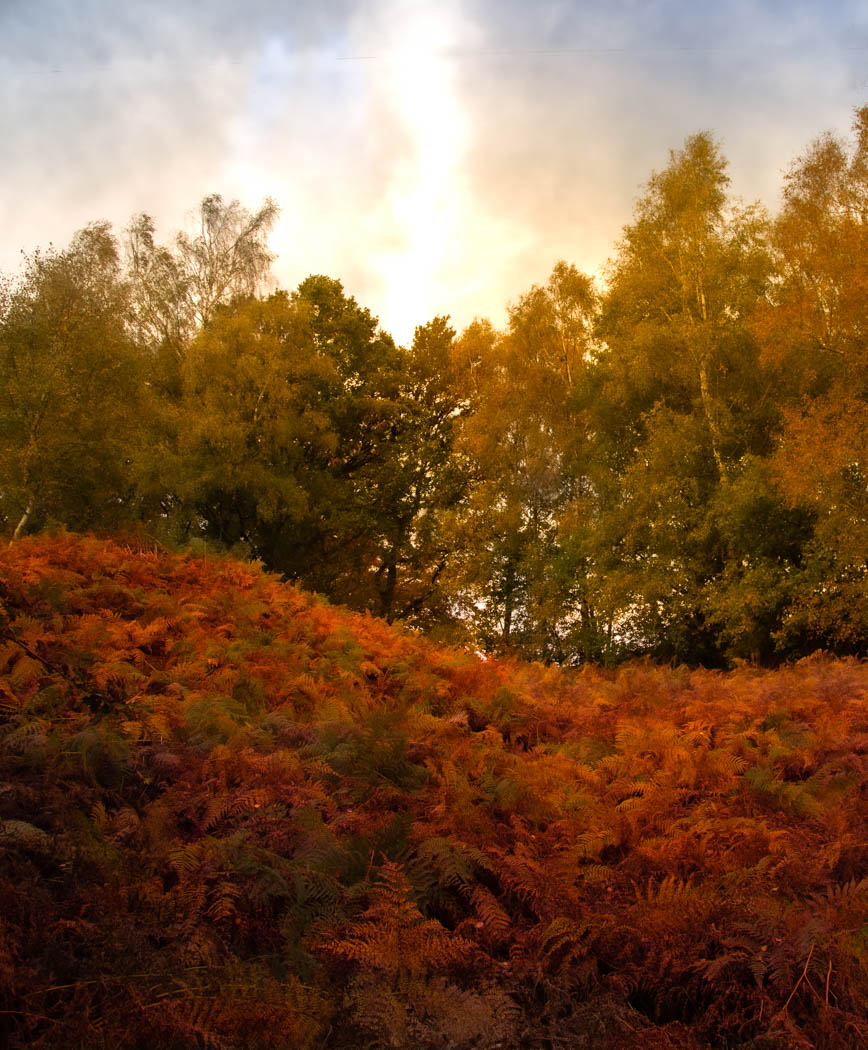
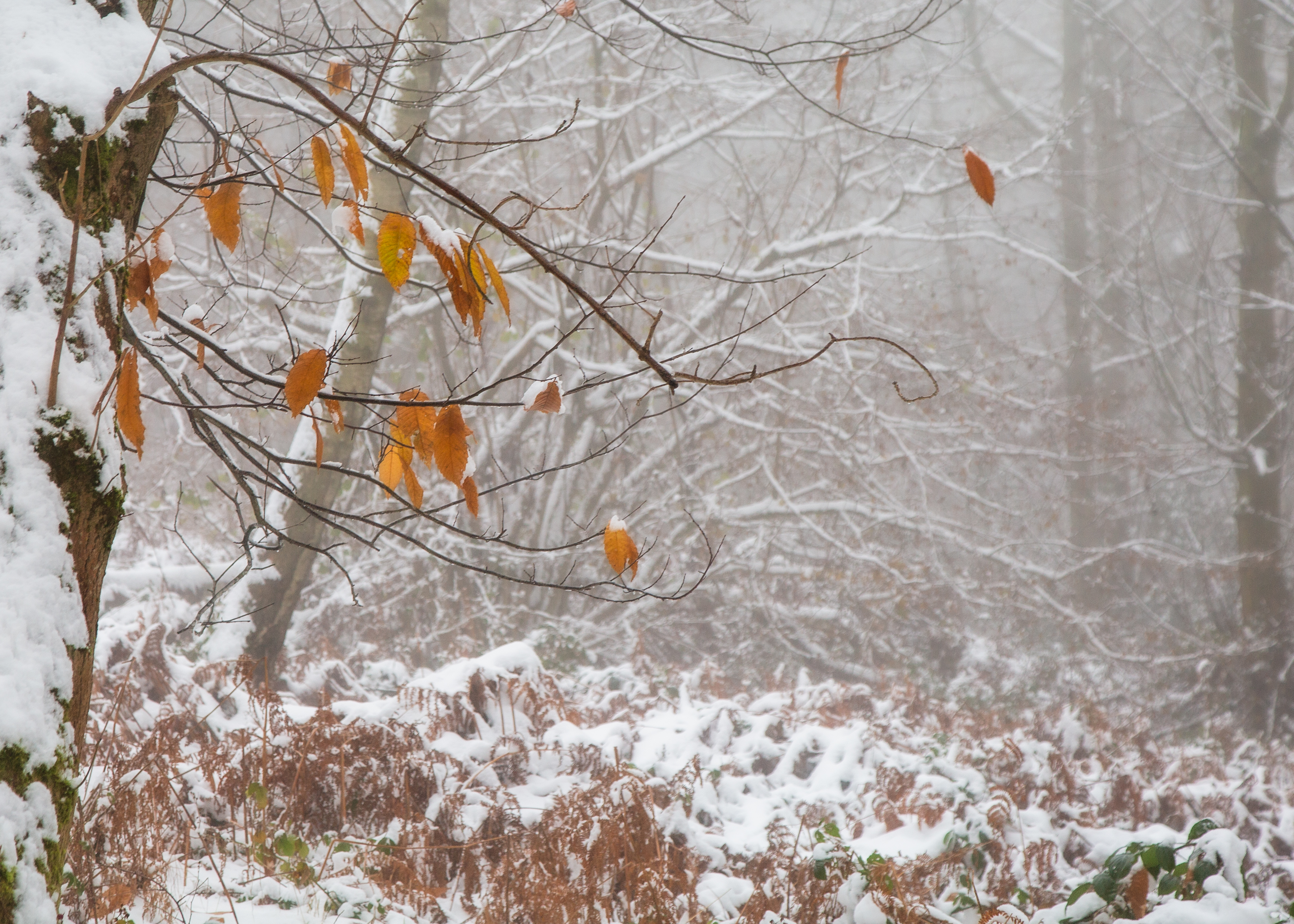
The photos were taken in The Birches, Ambergate, Derbyshire as well as in our local park in Derby.

Thankful Tuesday: Being flamboyant about my gratitudes

Irrespective if you are someone flamboyant about your gratitudes or modest in expressing them, Tuesdays seem to be the right day to create a list of blessings and positive experiences. To ward off the anxieties that might be resurfacing midweek and to keep our mind calm and to make our heart palpitate gladly.

The Life with The Crew started The Thankful Tuesdays. I want to cultivate this blogging custom. I believe it serves us all well. Do you want to join in?

Here I go with mine. Today I am grateful for:

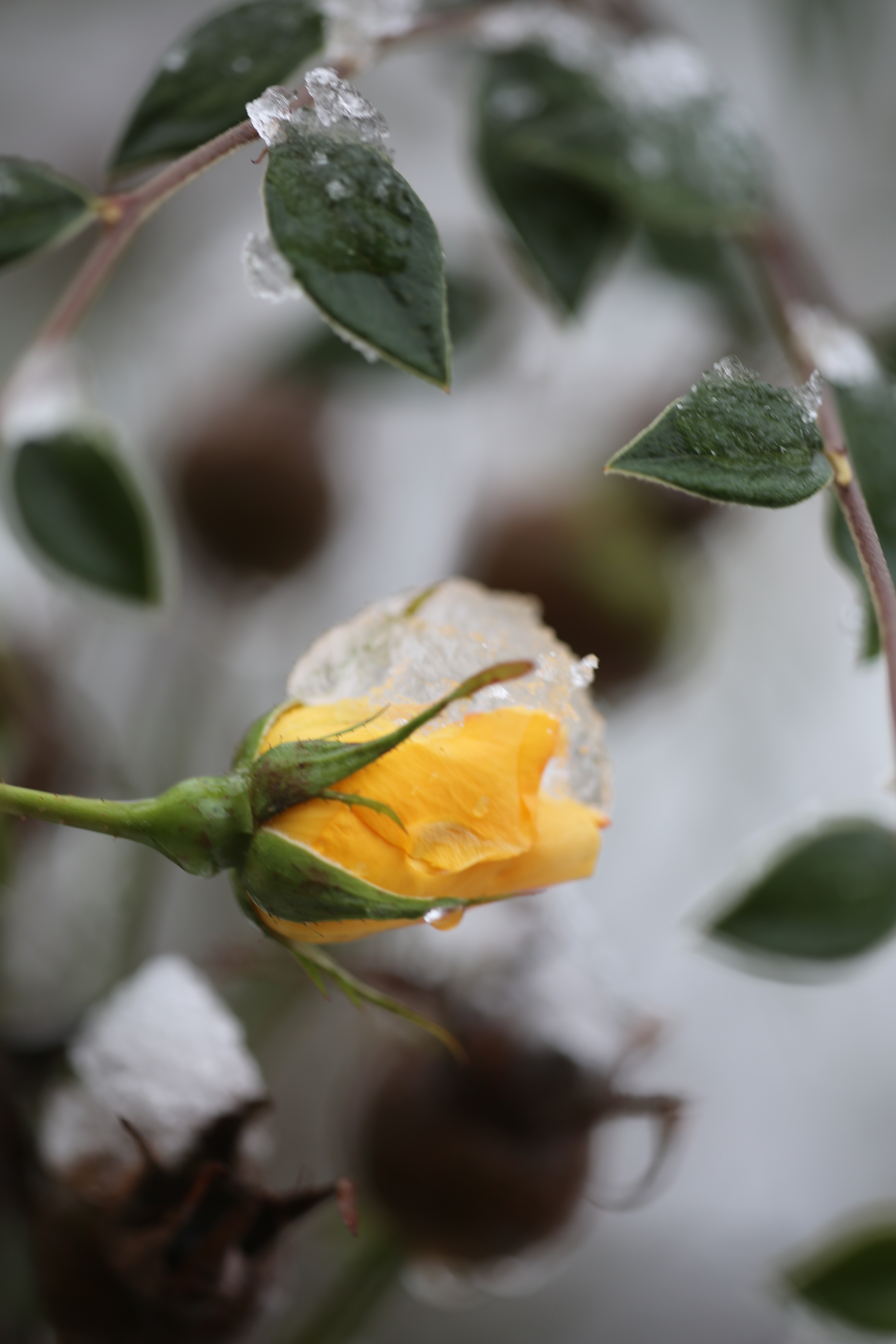
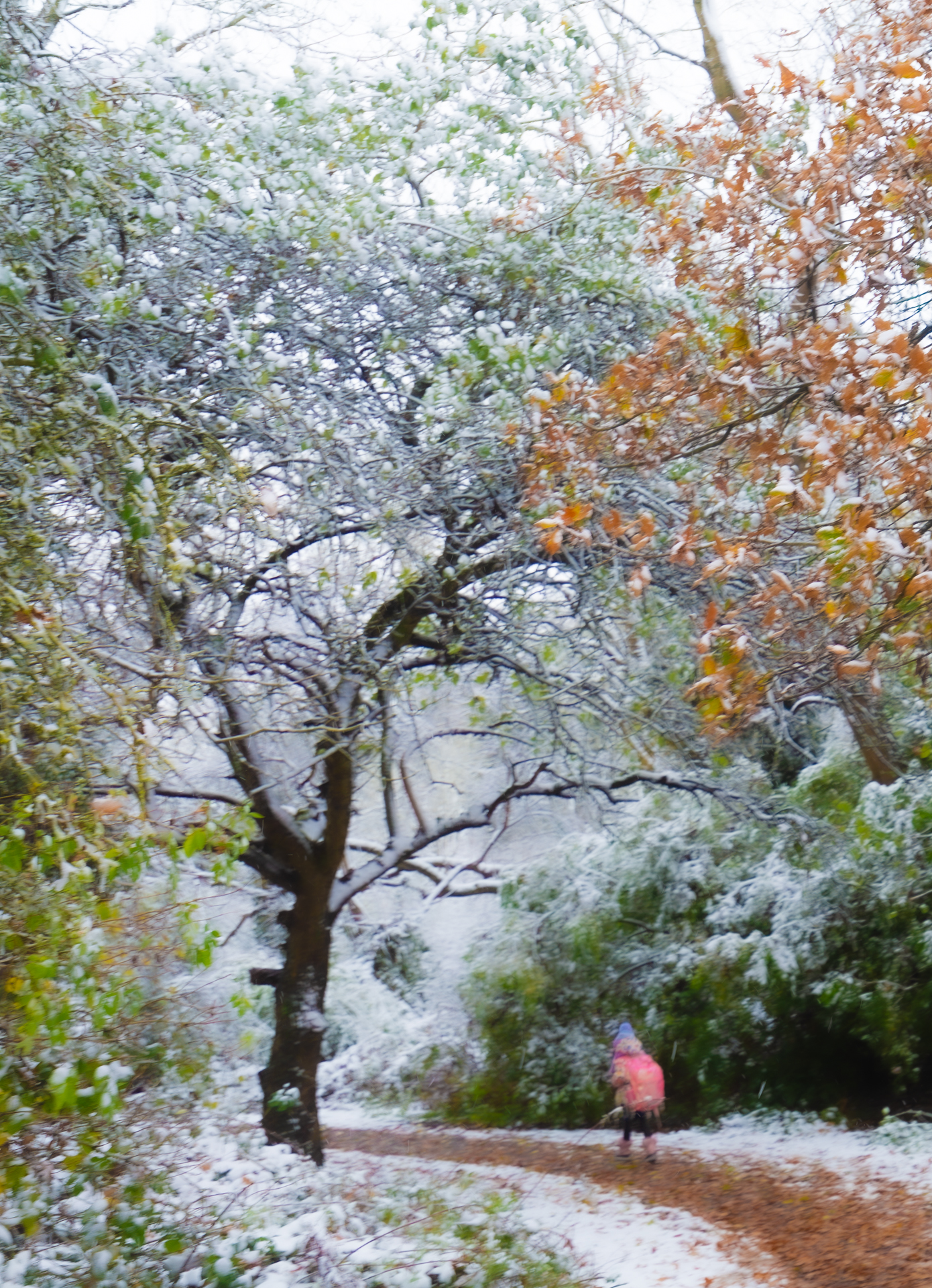
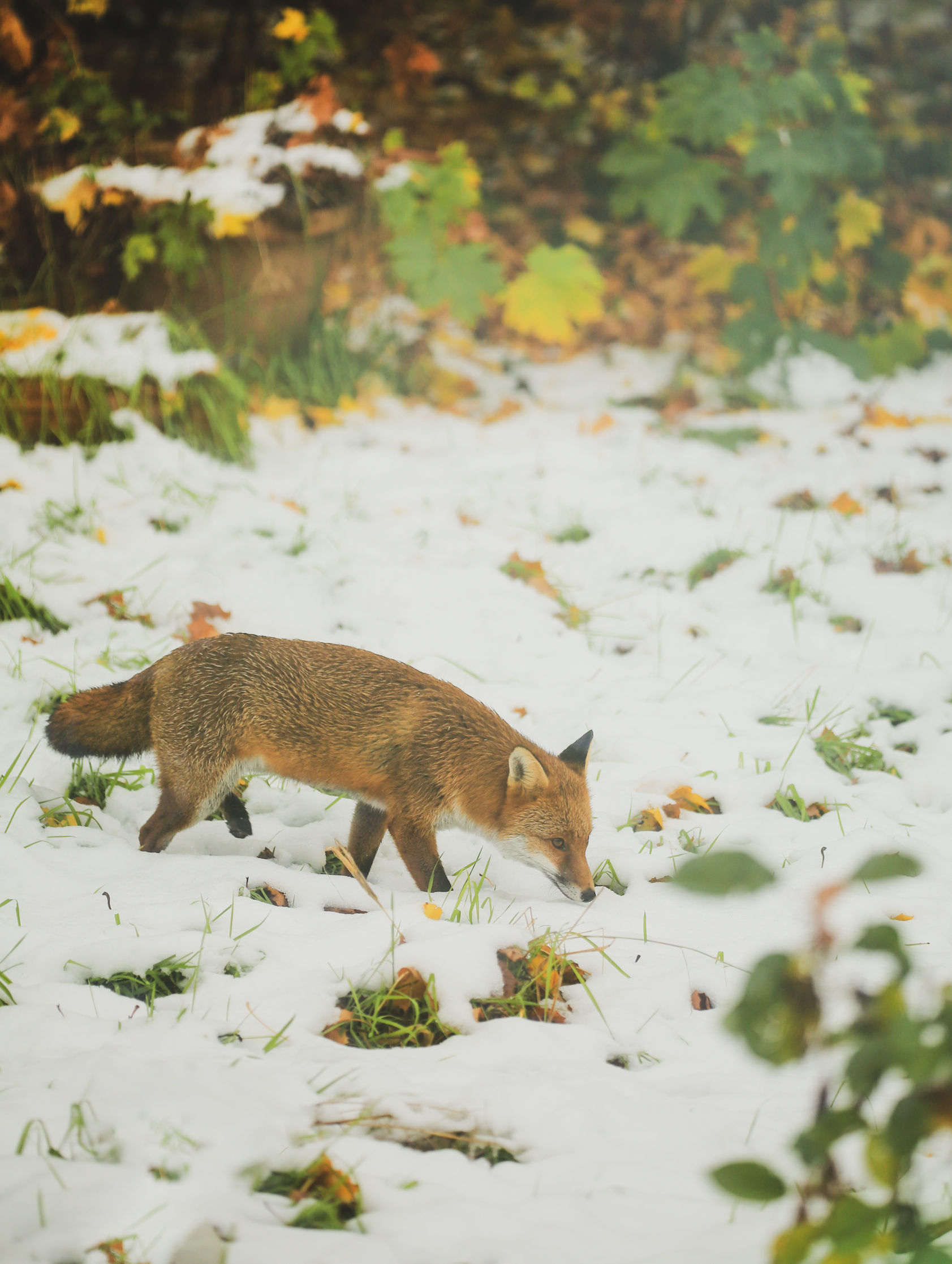
– the snow, the snow, the snow… that did not melt too quickly and the fox that appeared in our garden just after midday

– my friend’s successful knee operation and his quick recovery and our chat over a cup of coffee and his sharing of insights and wisdom from life

– for a very considerate friend who dropped Castor oil at my doorstep to improve blood circulation in the shoulders

– a husband who made a lovely Mediterranean style lentil dish with leek and green pumpkin and parsley (on the blog soon)

– translators who translate children’s stories and allow us to move between languages but within the same storytelling sphere: Room on the Broom by Julia Donaldson, La Strega Rosella – translated by the incredbly skilled Laura Pelaschiar, and the Polish version entitled ‘Miejsce na Miotle’ by translated by the excellent MichaÅ‚ Rusinek

– Jodie Wilson from Practising Simplicity for encouraging Yoga as a gentle exercise for busy lives, very useful for frozen shoulders too and any problems with posture that result from attached monkeys to our hips (be it kids or cameras) and also for her indirect encouragement to contact blog readers

– for Adam Phillips’ book On Getting Better and his ability to put into words what we tend to hide from ourselves, i.e. that our transferences and regressions intensify with our resistance :)

– for our daughter who said today that she wants to do her homework on her own and allowed me to load the dishwasher in the meantime

– for the recent Outdoor Photography Magazine and the glorious portfolio review by Massimo Leotardi and their reminder that we are soon going into a National Tree Week that is uniting all the tree lovers in the UK (see treecouncil.org.uk). This is one of our favourite magazines at home and we like to have a conversation over the photographs in the morning either by exiling tensions over the landscape photographs or by giggling and wowing over aquatic creatures or mice hiding in a hollow apple

– our morning routine that has just greatly improved due to a managerial trick, i.e. a checklist with all that needs to be taken to schools. Seriously, we need it. Our working memory is only capable of remembering six items at once. Everything else is an excess. We also use a simple linguistic change of words. Instead of saying ‘Speed up’, we say ‘Focus on buttoning up your shirt’, etc. So we focus on the actual activity that we want the children to complete and use the verb ‘focus on’. In that way, the morning routine is smoother for all of us and we have nicer starts to the day.

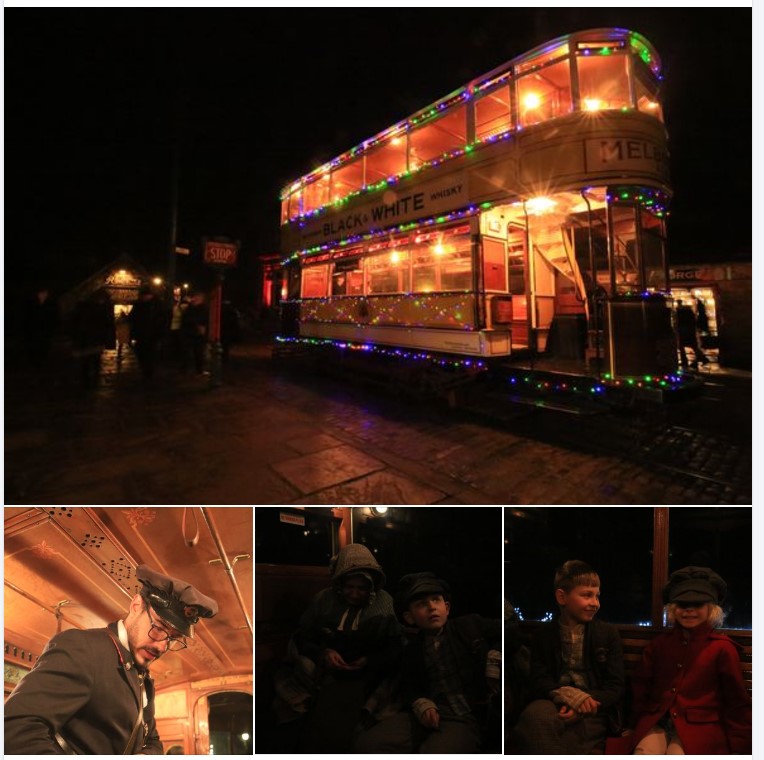
– for a glorious Journey Through Time and Light event at Crich Tramway Village that has put us in a festive mood and brought a huge anticipation of joy for the coming Christmas season

– for finding ways of preparing our son for his weekly Polish dictation tests at his Saturday School.. gosh this was a hard nut to crack..

What would you put on your list?

At Crich Tramway Village, A Journey Through Time and Light, Derbyshire, 2024

A question for you

Hi there,

I am sharing with you a blog post. I wrote it years ago while writing about living simply for a year.

I hope you don’t mind me asking if you are still interested in this topic? Also, would you like me to continue writing about living simply? I have departed quite a lot from the topic over the years. Since you are still subscribing, I wonder what you would like to read about? What has initially triggered your interest in Postcards Without Stamps? I definitely need to return to living simply.

What do you like reading about?

I am so eager to hear you answers. Can’t wait..

x

Alicja

Sweet postcards from Diwali (Part 1)

We are very lucky in Derby to be surrounded with cultures. I often feel that we timidly coexist while in fact inside we are almost bursting with curiosity and a wish to get to know each other and to join in with each other’s customs at least in some manner.

The Gita for Children by Roopa Pai has planted a strong seed in me. On that Halloween day, I felt a desire. I wanted to see Diwali celebrated for at least a few minutes. After all, it does not happen often enough when the two coincide.

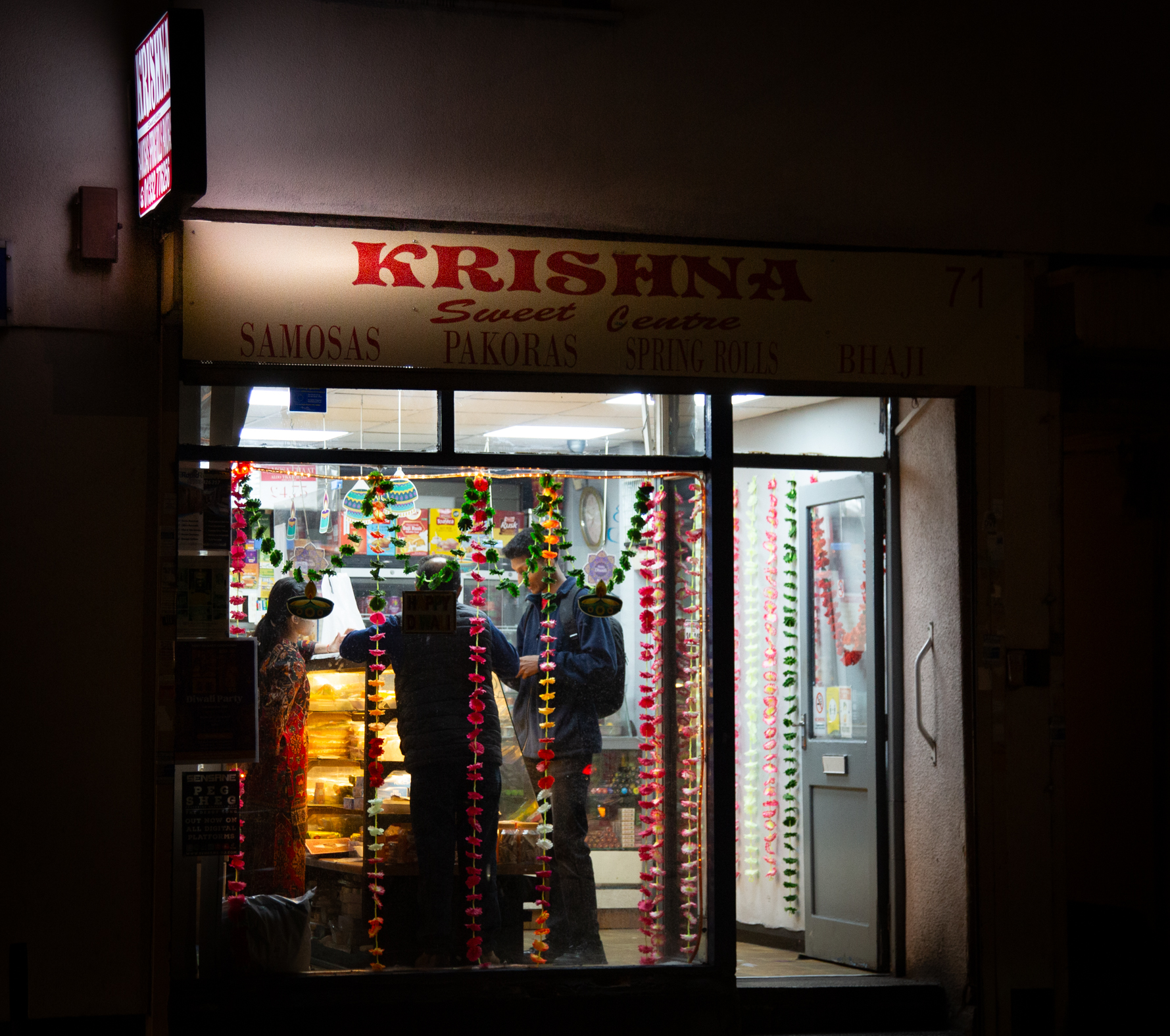
This was a very short and spontaneous visit to a nearby shop. I got stuck in traffic on my way to our local Polish shop to buy a few things for our trip to the Lake District. While waiting in the car, I looked at the shop on the right. I felt instantaneously comforted. In the darkness that enveloped us, their lights were lit. People were joyfully chatting and pointing to the colourful sweets. They were about to take them home and share with their families. The atmosphere was festive and very inviting. I just finished trick-or-treating around our neighbourhood with my little ones. One was dressed as a black cat, the other as a ghost. I was pleased to see how many people celebrated both or all. There was an All Saints Day happening in our Catholic religion a day after.

This is the world we live in. I often sing this to myself while I’m trying to give myself the right to experience and celebrate our city’s diversity and the inherent beauty in what we can produce: in food, language, customs, lifestyles and endeavours. Living in Derby can be in so many ways like travelling the world…

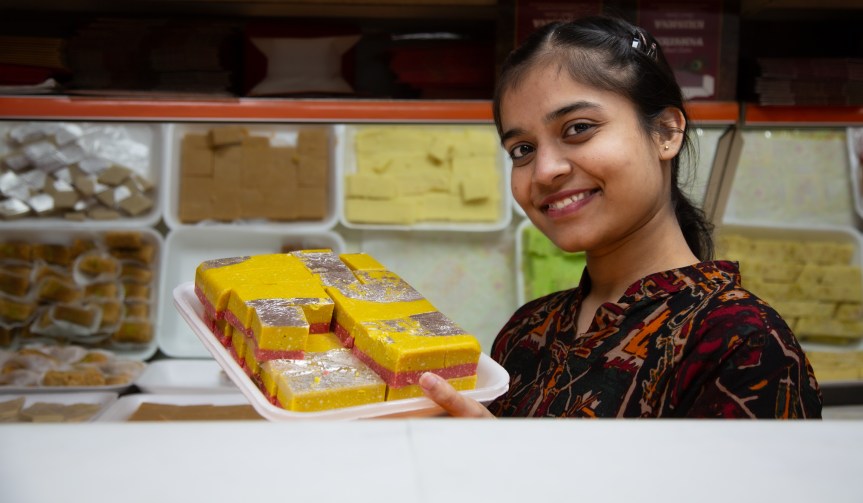
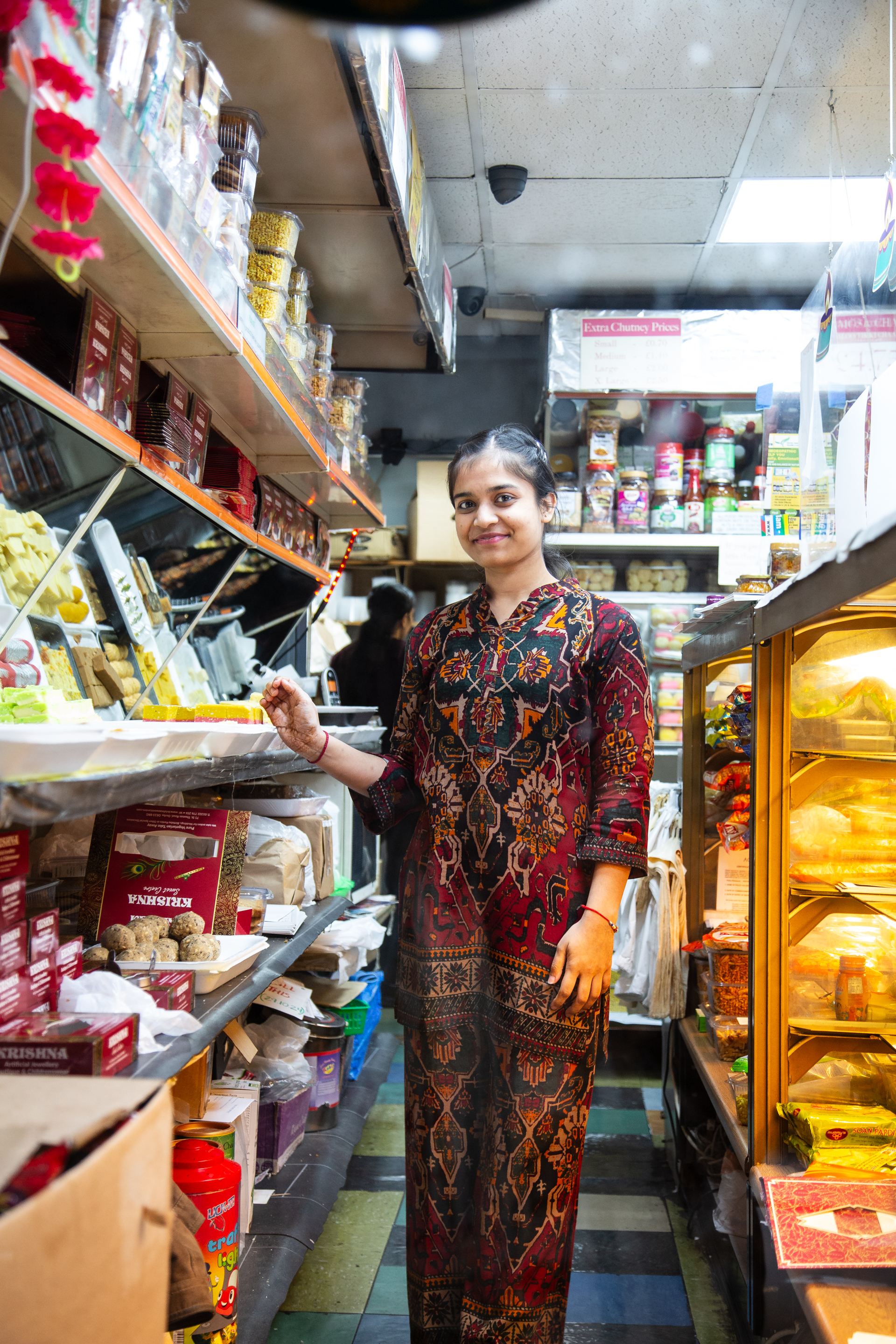
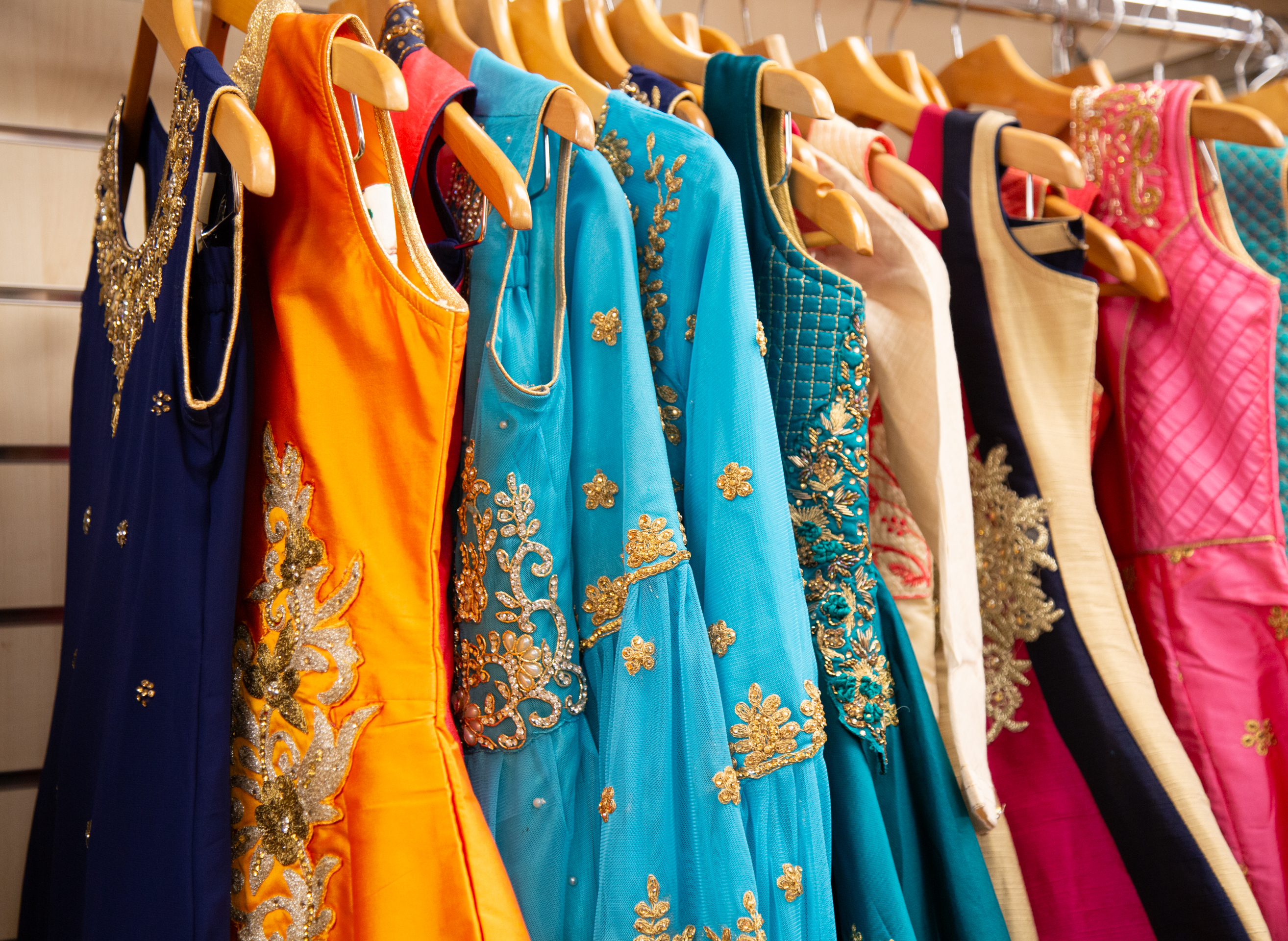
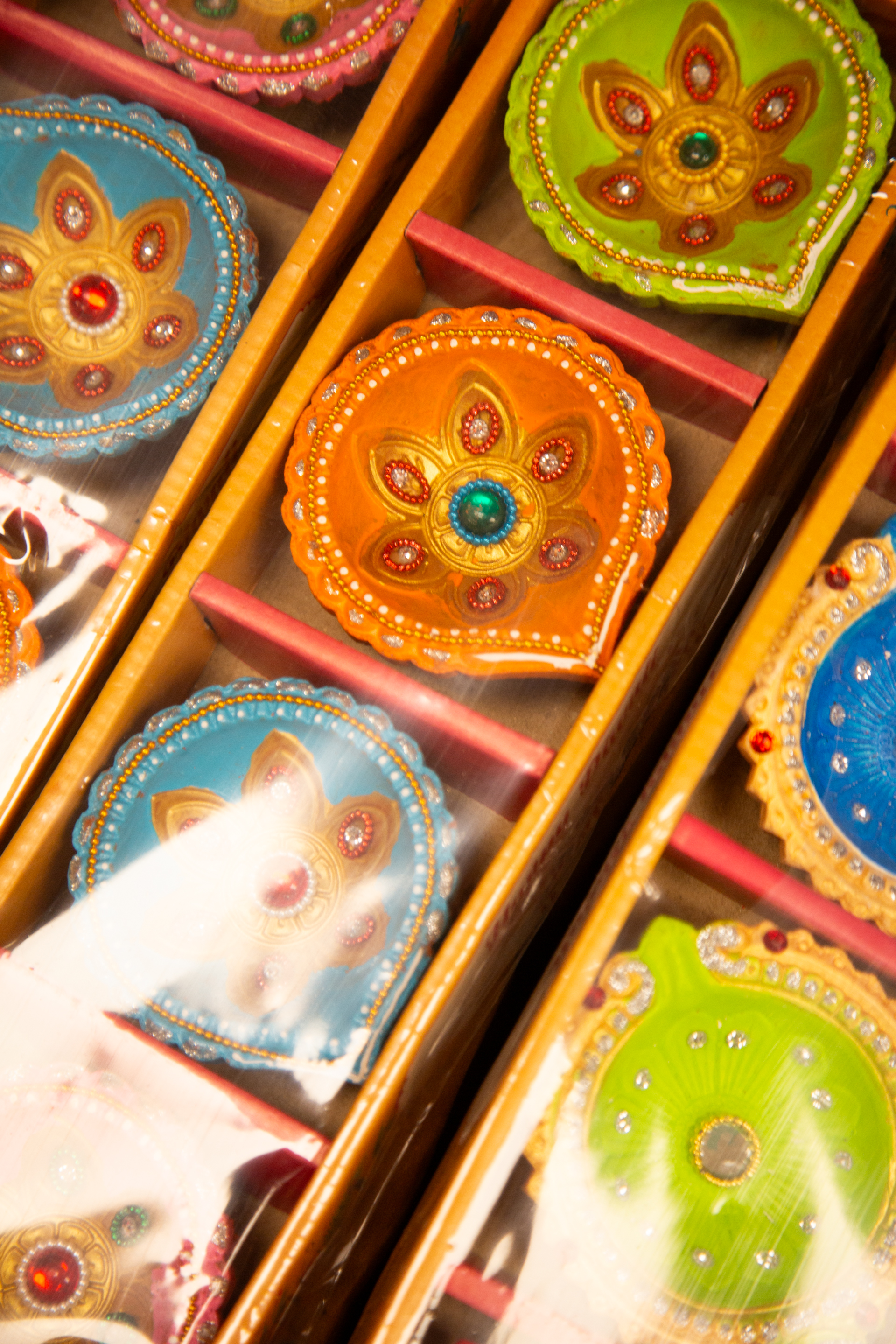
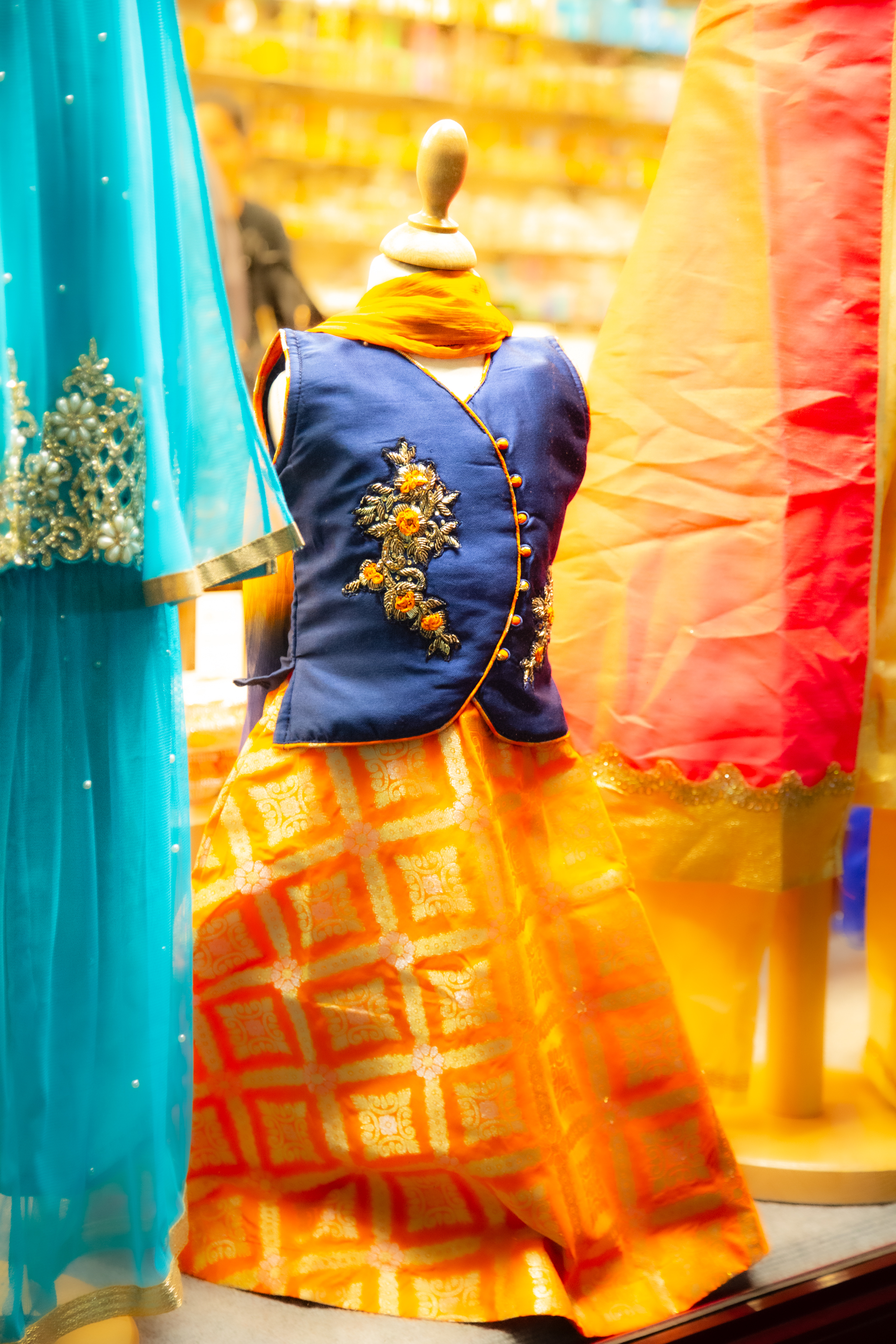
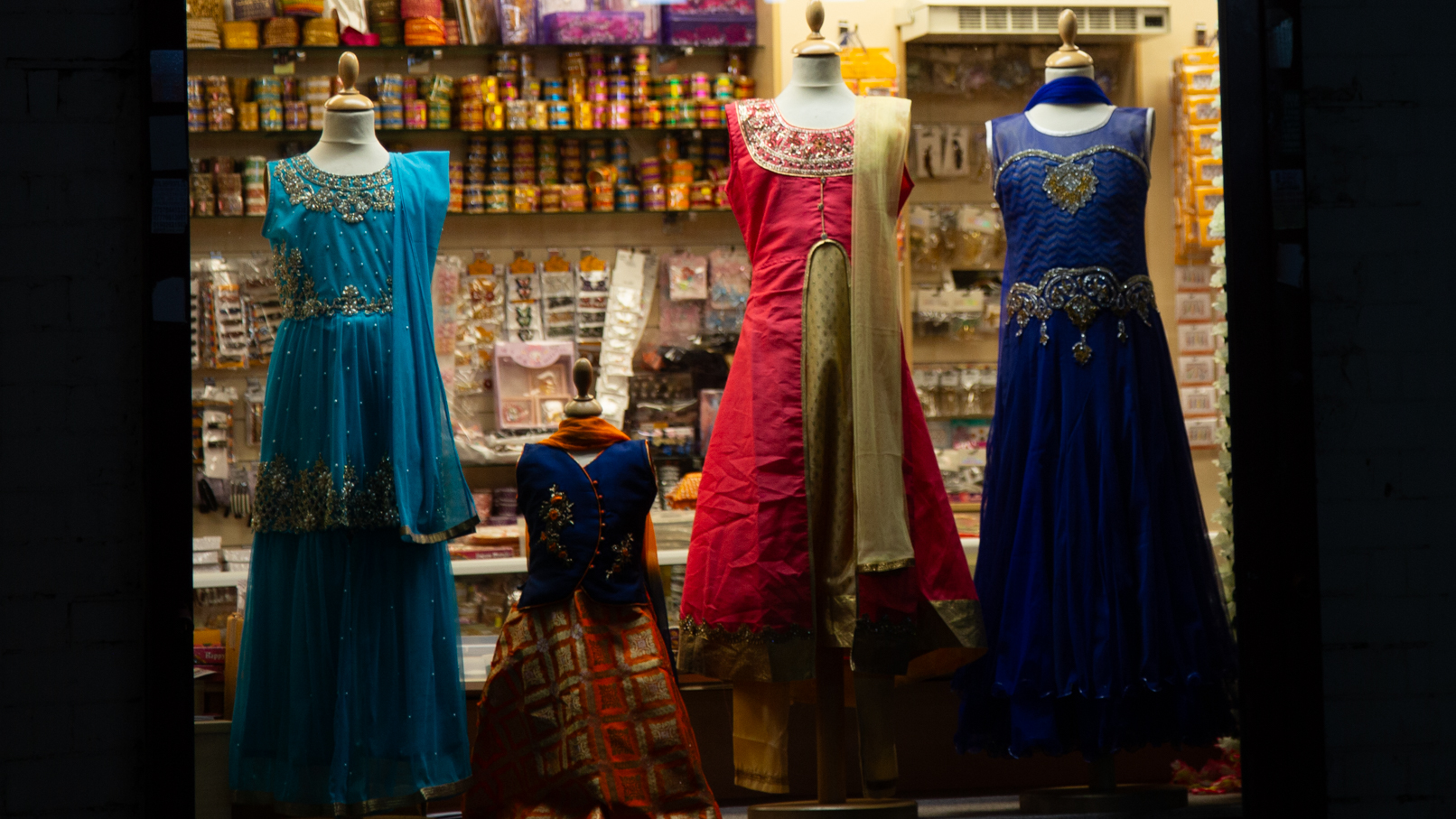
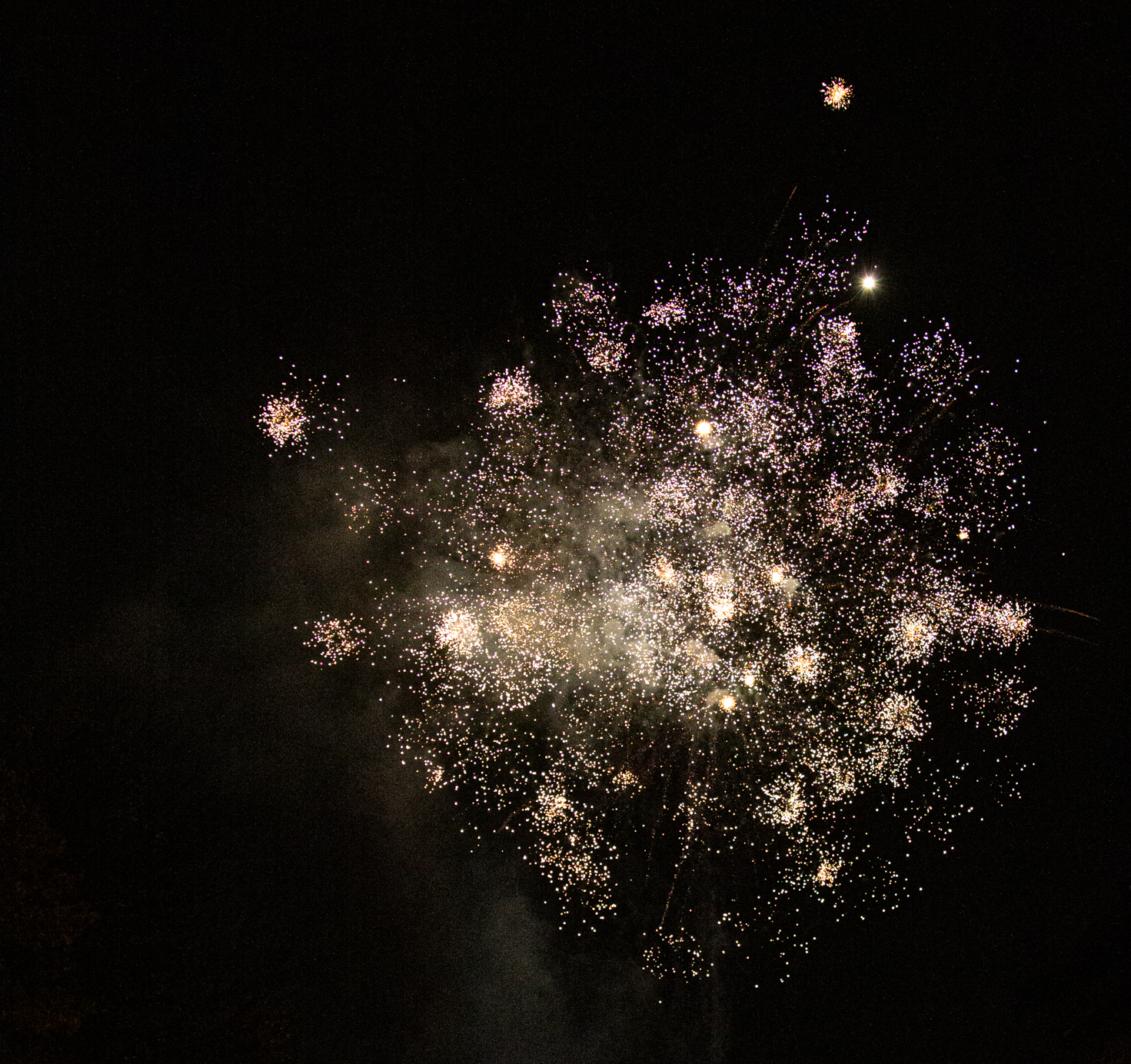
So above is a short photos essay from our local vegetarian Indian take-away and a sweet centre – Krishna Sweet Centre in Derby. The owner has kindly agreed for me to photograph his shop. It features clothing and traditional diyas – the candle and oil holders. They are adorned with traditional patterns. The shop also displays dresses and hair ornaments. He directed me to the Hindu temple Geeta Bhawan. There, I saw the fireworks while the stars were shining. I was reminded that Krishna is the god that plays the flute. I saw the offerings and rang a bell in the temple. I asked very politely to be guided around the praying custom. Everyone was so kind.

More on this in the next post.