In and out of the woods: coping with writing anxiety

The Society of Authors has recently justly expressed in ‘The Author The Journal of the Society of Authors’ its strong disapproval regarding authors’ work being sent to to A.I. generators to create texts for education. This is apparently frequently done without authors’ permissions or consultations. Similar doubts, I suspect, appear among online writers and bloggers who simply worry that their writing style, crafted for years, would be hacked into and reproduced in multiple ways depriving the original author of their well-earned and unique voice. These worries are of course not alien to me and I do often question online publishing knowing at the same time that a lack of online presence reduces greatly my own verbal productivity and outreach to minds that also like to create with words (or images). That said, on examining my own writing styles, I can simply say that I am also made out all that I read over the years and my own inner A.I. brain is defiantly activated when I read or hear good writing. Tuning into styles is very common for language learners and decoders and I think it is our common pleasure, just as artists like to create a bit in the style of someone.

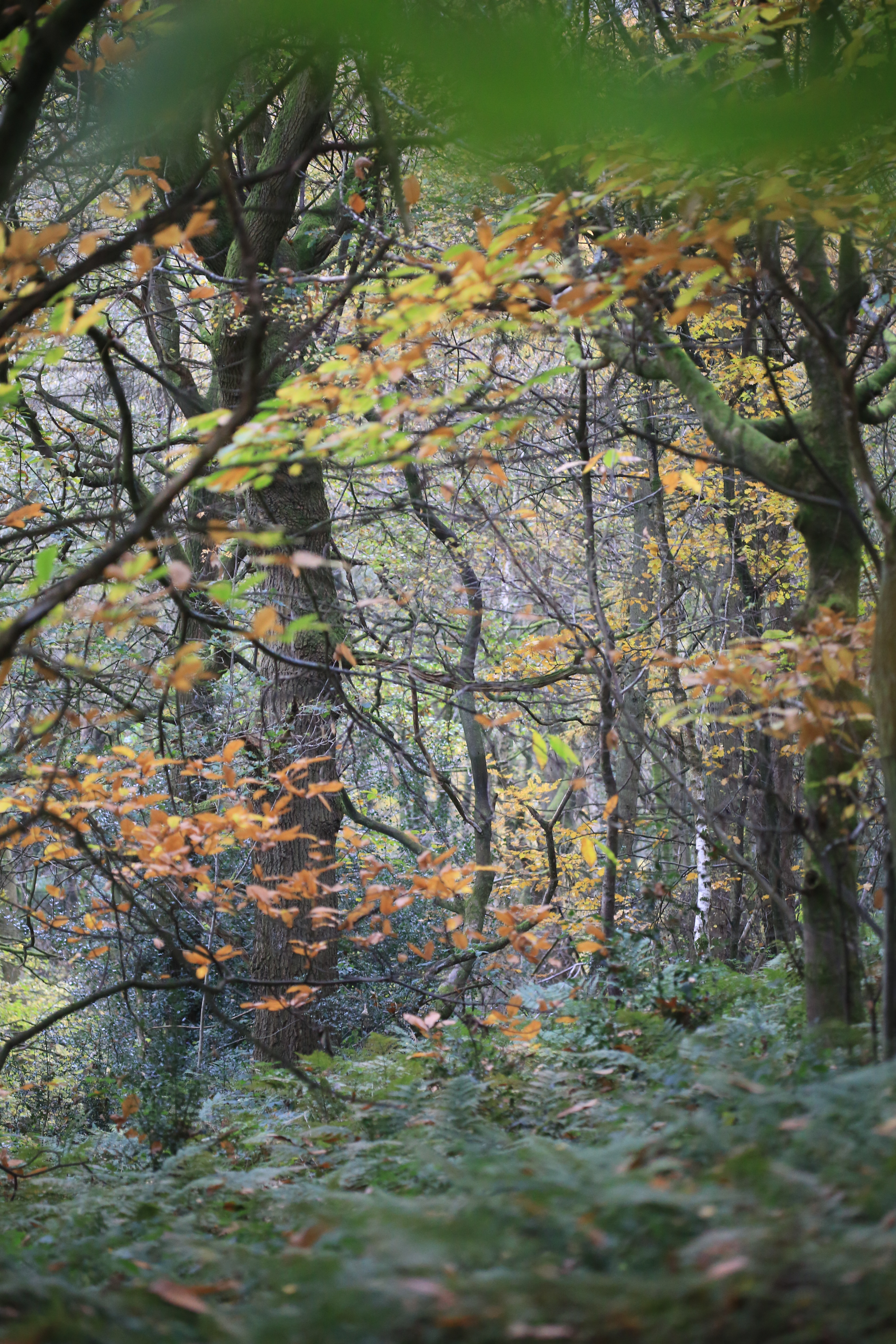
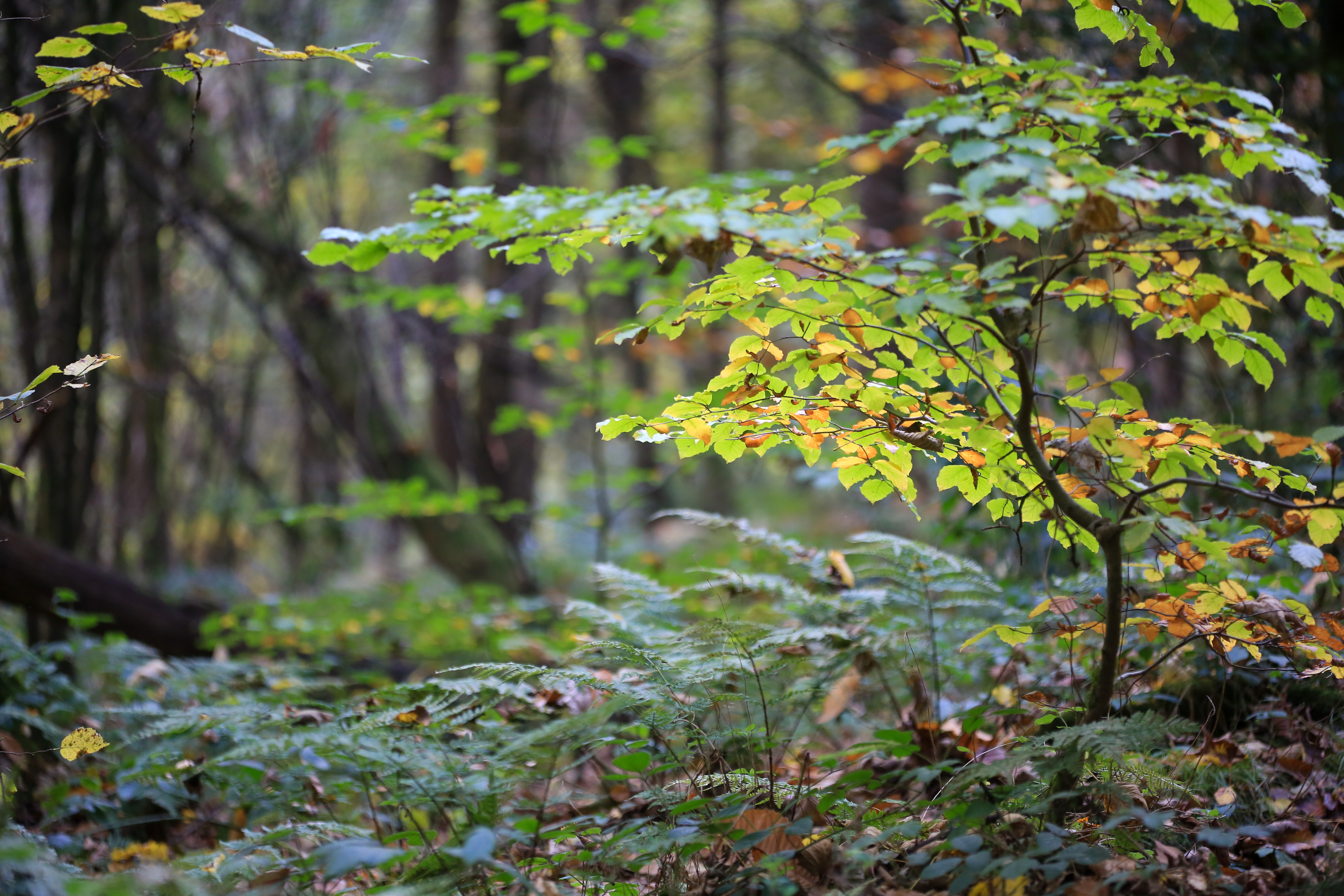
A long time ago I attended a photography talk at a camera club given by Paul Mitchell on woodland photography. I do remember being very much inspired by his work. To copy Paul Mitchell is impossible but to embrace his appreciation of the subject does not require much, especially if you happen to grow up next to a forest but were somehow dissuaded from heading that direction and then felt cheated when the adults went there themselves just before Christmas to find evergreens to decorate. ‘So is the forest safe or unsafe to visit?’

I know what answer The Woodland Trust would give, especially when it comes to visiting their trees, ferns and fungi..

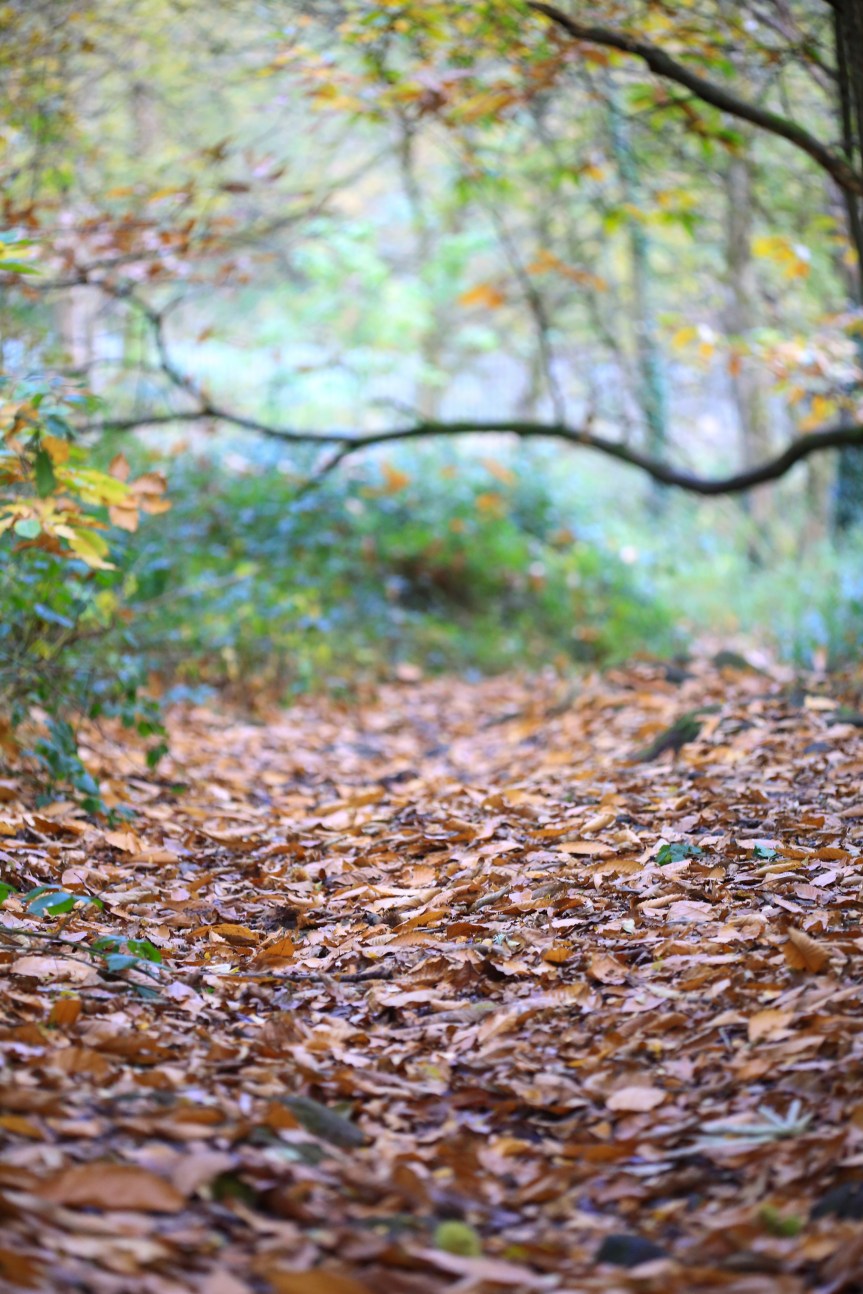
I have been writing for a while now some poetry and fiction that features little bits or significant elements of the woodland and I am overcoming my fear of being eaten by the A.I. monster. I hope you will find it enjoyable and I hope you will visit your nearest woodland soon before all the leaves are hijacked by the wind and pathways turn to mud.

Apparently, it’s going to be misty tomorrow… time to get the cameras ready.

Bye for now.

Poem

how sweet the sound of shadowed grass

made no disturbing threat unkind

how sweet the blacks on the bark unlit

that survived the wisdom

and the wit

of loving being so obtuse

that gave me no silence

no choice

but to refuse

the darkness so unkind to self

that went undone through childish maze

how kind of him to make me free

of liberty

to be all

I can be

i.e.

one

at

a

time…

Copyright Alicja Pyszka-Franceschini 2024

The poem forms part of the anthology ‘Bitter toes: Poems on Immaturity’ (title in development) or some other book of mine.

Living honestly and beautifully with oneself

reader

I like stalking authors online. I love listening to their stories of effort and creation, and about the moments that they’ve discovered that writing is what they want to pursue in life. Cheryl Strayed, the author of the memoirs called ‘Wild’, is one of the author’s whose voice is often heard on different media these days and it is the voice that so many people look forward to hear. It’s not difficult to identify with Cheryl Strayed. Her story is a story of loss, grief and self-destruction, but also a story of self-redemption, a story of coming back to one’s own ideals and life-path. The book is her true story of the lonely hike down eleven hundred miles of the Pacific Crest Trail that she took in order to deal with the sudden death of her mother and in order to pull herself out of a period of self-destruction that followed her mother’s death. Her walk is a rite of passage. It’s a source of reconciliation and strength. In her book she writes that the wilderness, the landscape of the hike, was

“A world I thought would both make me into the woman I knew I could become and turn back into the girl I’d once been.”

Cheryl Strayed’s book wonderfully shows how we deal with the most complex and emotionally-unbearable situations in life. Loss and rebelliousness (to the point of self-destruction) often go hand in hand in life. We can easily see for ourselves how our refusal to accept and awake to the life that is triggers our self-destructive or other-destructive tendencies. I’m not talking here about big things, but about small ones too, like over-working or not-eating, or even refusing to be kind to people. This is what I call self- or other-destructive tendencies. Realising that we have them is probably one of the things that we learn about ourselves when we truly decide to grow up.

What Cheryl Strayed’s book taught me was that after every major transition in life we need a rite of passage that would help us to somehow zip-up all the loss and rebelliousness associated with it and leave it behind us. I’ve been looking for my own rite of passage, for my own way of dealing with personal junctures. From Cheryl Strayed I’ve learnt that you need two things: nature and being on your own, on your own in doing something. I needed to feel discomfort and I needed wide open spaces. My family and friends joined me in my exploration of open spaces, but I gained my solitude through a very simple exercise. I’ve asked my husband not to help me with looking after our house for one hundred days, and as a result the house is dirtier than ever, and only on occasions is it delightful with colourful flowers in its various corners. You see, I’m a reader. I choose a book all the time. In my solitude I choose to study (or to chat to a friend on Facebook). There. That’s it. For a long time I’ve been trying to make myself into a mother and a wife that I thought I meant to be, but as my neighbour says, You cannot be what other people expect you to be. You are who you are. The solitude tells us a lot about our desires. Tells us a lot about who we really are.

I’ve been challenged in many areas of my life in the last few years, health-wise including. I think I went through a period of slight despair. Despair of not being able to conform to whatever I thought is right to do for a wife, a mum, a young researcher, a good patient, a good friend and a good daughter.

Wendell Berry wrote once that despair and pride are two sides of the same coin and the biggest enemies of creative work, I think that they are probably the biggest enemies of an honest life in general.

When we admit to our needs and desires, when we own them, we start creating space for them and the wide open space that we visit during weekends becomes all that we need to create spaces of fertile solitude during the rest of our week. And ironically, the better we use this space, the better companions we become.

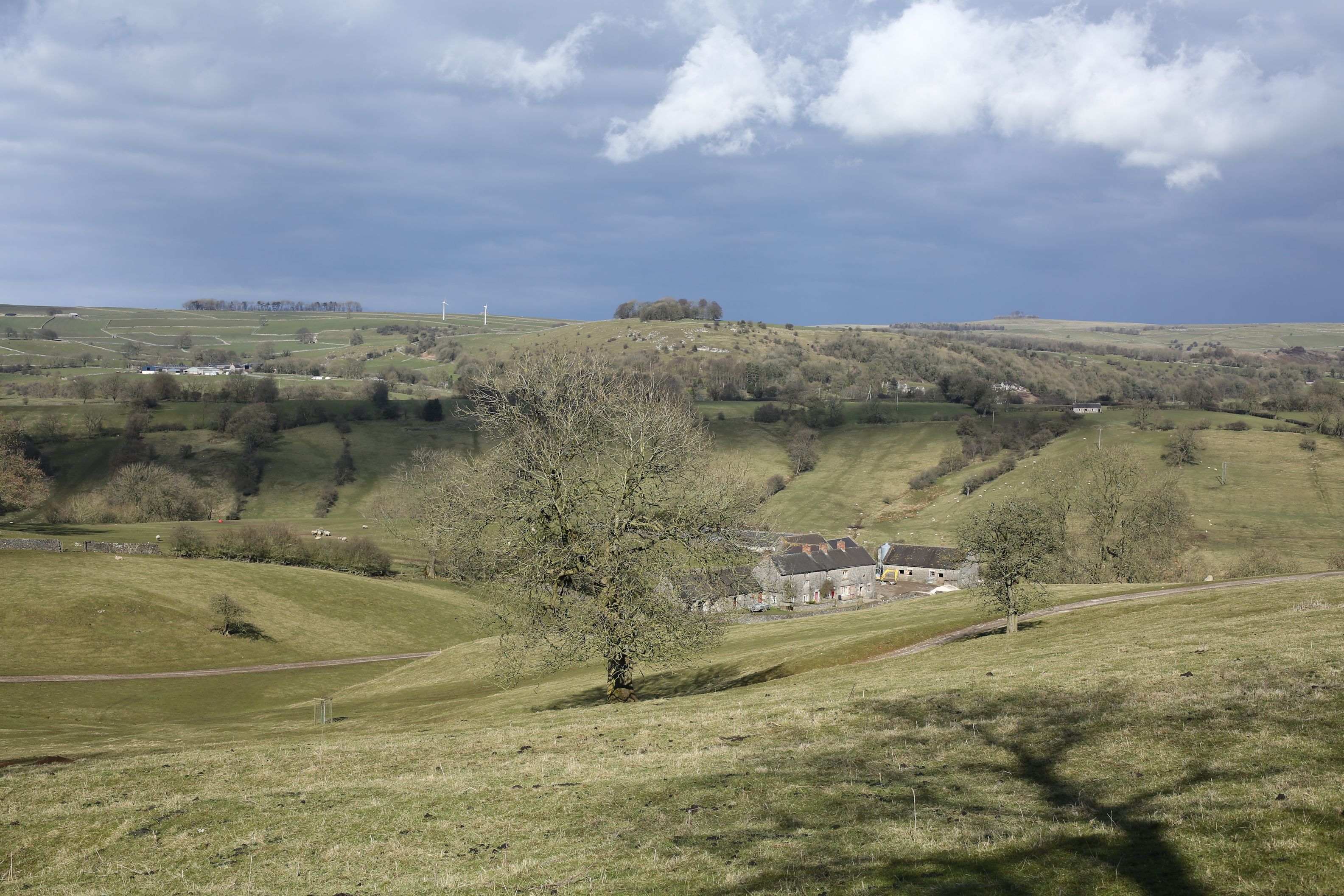
Peak District2

*Photo 1 taken at Gogol & Company, The most wonderful a bookshop in Milan, Italy.

*Photo 2, The Tissington Trail, The Peak District, UK.