
“And it was at that age.. Poetry arrived
in search of me. I don’t know, I don’t know where
it came from, from winter or a river.
I don’t know how or when,
…
But from a street I was summoned
…
And something started in my soul,
fever or forgotten wings,
and I made my own way,
deciphering
that fire”
Pablo Neruda, Poetry
There is a huge amount of bravery involved in deciphering the fires that consume our lives and senses; the fires that render each available minute joyful or that turn each minute into ash. Our passions. We know them for their powers to make us feel alive and for their powers to contradict and challenge our other priorities and values. Passions when untamed can turn things into meaningless speckles of dust, they can suffocate our existence to such an extent that we just want to bury our faces in our palms and weep with dismay. For passions are sometimes too much to handle.
They are sometimes too overpowering, too enthralling, too sneaky in the way they operate, to even notice and to ask oneself: What is it that I am trying to cope with here? What is that force that gives me wings in one moment and crash-lands in the next, most likely with hundreds of flashing warning lights that I systematically and stubbornly ignore? What is that force that simultaneously suppresses and expands my skills for self-expression and permeates the scars and sensitivities of my chest, unobtrusively, and just to give an indecent exposure of my longings, misunderstandings, yearnings, cravings and appreciations to the outside world?
When photography arrived in search of me, I felt as if I had a swollen eye from the grasshopper’s bite and I could not quite lift my eyelid – as if part of life was too hard to see. The camera forces you to see what you might omit with one swollen eyelid (although ironically you take a photo with one eye closed), i.e. the evidence for shoddy or meticulous existence. The evidence for fondness, self-care or neglect. See or die, it says. See and never ever go to sleep again. It shakes you, it shakes your perception for as long as it takes for you to awaken to reality.
When we learn to live with passion, we learn to touch the peripheries of our capacity to feel excitement. Sometimes we define and circumscribe our powers to explore things so narrowly that our results are quiet and timid, other times we learn to roar. Passion will always give you a pat on your shoulder though, for the quiet and timid efforts and for the louder ones too. But if you are listening carefully, it will also ask you the big question: Is this sincerely truly, fully and factually what caught your heart and attention in the first place?
When photography is a visual response of the heart and mind to the outside world then it also forces us to rebel against accommodating disappointments in our personal, social or political spheres. A passion doesn’t want us to be docile. It asks us to match its energy and to prove to ourselves that we can handle it. Passions have got dialogical aims; they don’t like when you lapse into silence. With ease or dis-ease, but we must respond to them. That’s the deal, the eternal deal that we sign off for the continued experience of aliveness. ‘Work on me.’ – says passion, ‘this is how you’ll make your way to joy.’ It woos you, entices you and it hopes that you will put it to shape, that you will give it a character and you know you will, on one condition, that you will put it in service of the higher values, the higher purpose. And you agree, of course, there is no other choice for you to make, but now you have to train on both hands, lift them up in unison, the passion and the values and then you calm down because it all makes sense for once. You feel safe because you get your head straight and you came to your senses to understand that it is not the spirit that lives in the body but the body that lives in the spirit and now the bait is taken off your heart, you are no longer on a rod, you are no longer pushed and pulled. And passion writes all about it. And it is safe.
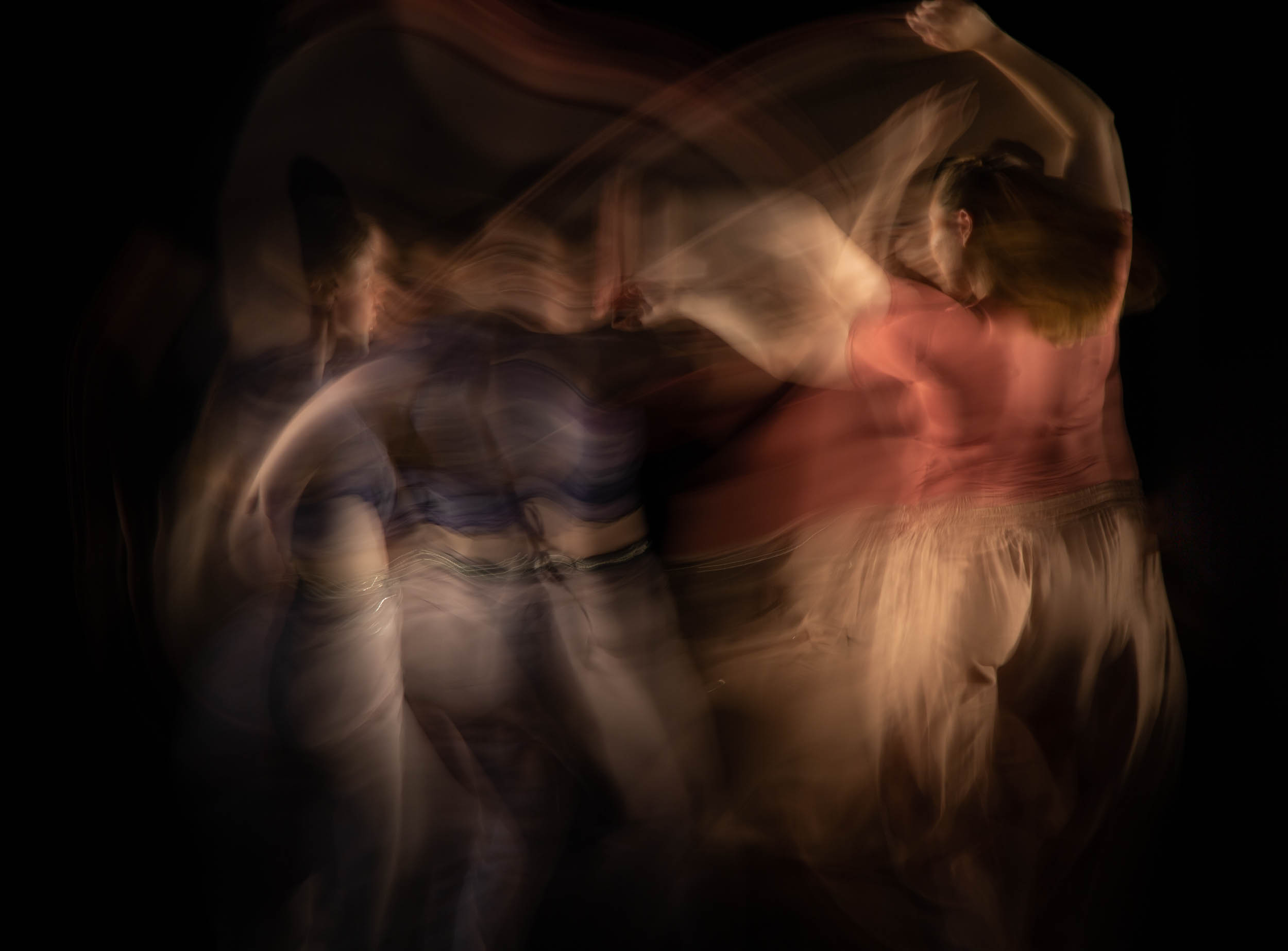
*photograph taken by Alicja Pyszka-Franceschini during a dance photography workshop with Paul Hill and Maria Falconer, Nottingham.